Liberia took a major step toward justice and accountability on Wednesday, May 6, 2026, as President Joseph Nyuma Boakai officially received draft laws for the establishment of the War and Economic Crimes Court and the National Anti-Corruption Court, signaling what many describe as a historic move to confront the country’s painful past and strengthen the fight against corruption.
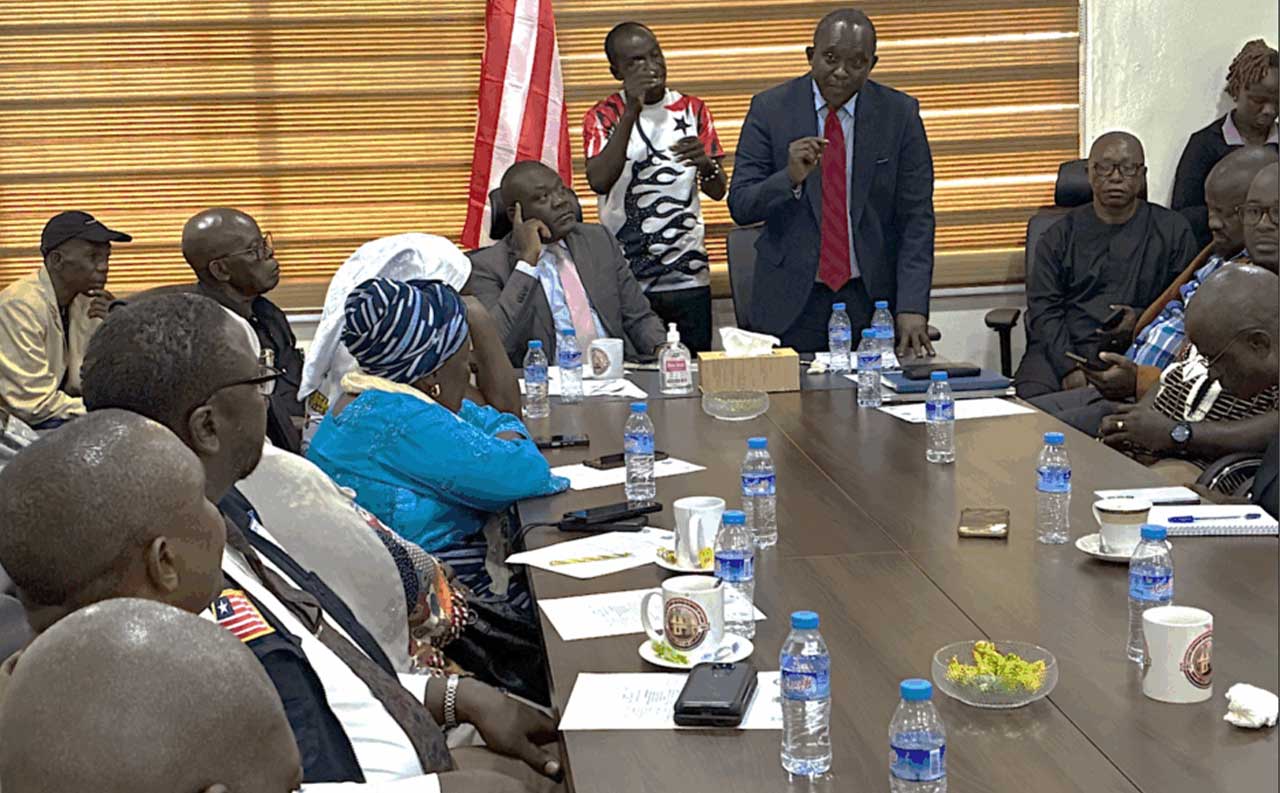
The presentation ceremony, held at the Executive Mansion in Monrovia, was led by Dr. Cllr. Jallah A. Barbu, Executive Director of the Office for the Establishment of the War and Economic Crimes Court for Liberia who described the two draft laws as “historic instruments” aimed at delivering justice, accountability, healing, and national reconciliation.
Addressing President Boakai and senior government officials, Barbu said the draft laws were the result of extensive national and international consultations, sustained public engagement, technical legal work, and collaboration with multiple institutions and stakeholders.
He explained that the draft law for the War and Economic Crimes Court establishes a clear legal foundation for the court by defining its jurisdiction, powers, and procedures while ensuring safeguards for judicial independence and compliance with international human rights standards.
According to him, the National Anti-Corruption Court draft law is designed to strengthen Liberia’s anti-graft architecture by granting strong investigative and prosecutorial powers, promoting transparency in public service, and creating avenues for citizen participation and oversight.
“The establishment of these two courts is a novel development in our justice system. Consequently, compelling conditions were put in place to ensure the highest standards possible were achieved,” Barbu stated.
He revealed that the drafting process included nationwide consultations involving civil society organizations, religious institutions, women and youth groups, traditional leaders, and academia to ensure that the voices of both war-affected communities and broader society were reflected.
Barbu also noted that legal scholars, international justice experts, and anti-corruption practitioners were engaged to align the proposed laws with Liberia’s constitutional framework and international obligations.
He said the office had reviewed historical records, past commission reports, including the Truth and Reconciliation Commission Final Report of July 1997, and comparative experiences from countries that have established similar courts and anti-corruption institutions.
The Executive Director disclosed that both draft laws have already undergone initial peer review and are being prepared for public hearings before the Honorable Legislature. He further announced that technical committees are finalizing explanatory memoranda and legislative briefs to support lawmakers in understanding the implications of the proposed laws.
“We have initiated dialogue with several members of the Legislature to build consensus and secure bipartisan support,” he said, adding that public awareness campaigns would also be intensified to ensure the passage of the laws is not only a legislative act but a citizen-driven demand.
Barbu urged Liberians to see the initiative as a national responsibility, emphasizing that justice must be delivered in accordance with international human rights standards and with full transparency.
Before concluding his remarks, he called for a moment of silence in honor of more than 250,000 people killed during Liberia’s civil war and reaffirmed solidarity with all actors involved in the country’s transitional justice process.
The move is expected to reignite national debate over war crimes accountability and anti-corruption reforms, two issues that have remained central to Liberia’s governance and reconciliation agenda for years.