Liberia’s Vice President Jeremiah K. Koung has disclosed that the Government of Liberia will rigorously enforce existing laws that reserve specific business sectors exclusively for Liberian citizens within 30 days.
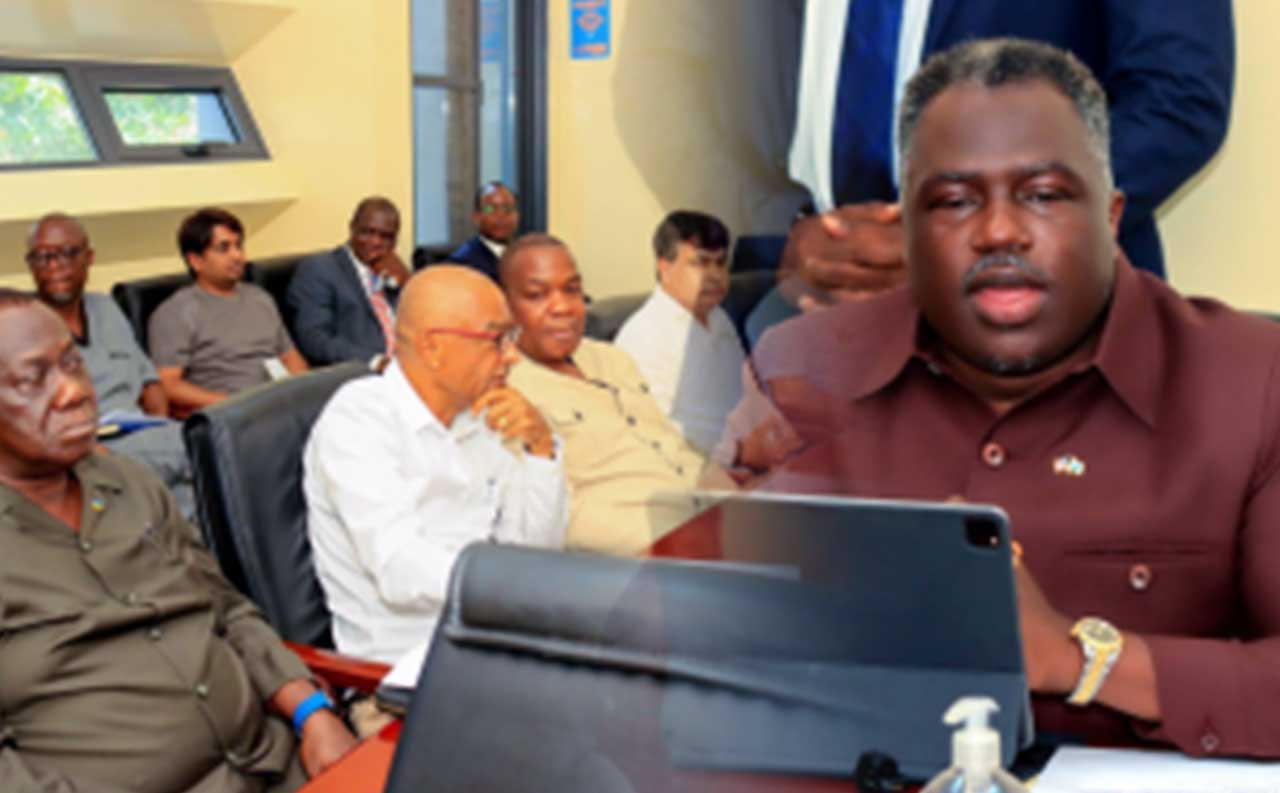
Vice President Koung, on May 6, 2026, held a meeting at his office on Capitol Hill, bringing together local manufacturers and distributors, including JRC Nelson Oniyama of Monrovia Brewery, Ravikant of NICOM Distilleries, Rabih BarBar of Liberty Investments, and Sewa Singh of RITCO Distillery.
Liberian distributors in attendance include Tomah S. Floyd of Jungle Water, Bill Delamou of Bill Delamou Trading, Henry Jackson of Exodus, and Taro Dekpah of Taro & Sons Enterprise, along with Labor Minister Cllr. Cooper Kruah, Senators Francis Dopoh and Augustine Chea, and Immigration head Elijah Rufus.
Vice President Koung told manufacturers that the government is fully prepared to enforce the law to the letter and warned that the administration’s current friendly approach should not be mistaken for weakness.
“The market is getting very bad, and the President is serious about this. We will go all out, and let me make it clear: those violations will no longer be tolerated. If you break the law, we will come after you,” the Vice President bluntly stated. He mentioned that the persistent flouting of Liberian‑only distribution rules has kept Liberians jobless and excluded from key economic activities.
Koung added that a friend once told him that in Buchanan, most of the country’s foreign friends are from Bangladesh, Pakistan, and other places, who are almost taking over the businesses in Buchanan, Grand Bassa County. He indicated that these are some of the reasons why most Liberians are closing their businesses and running after government jobs, which the government thinks is not good.
Speaking with journalists, the CEO of Jungle Group of Companies, Floyd Tomah, warned against what he described as “fronting” schemes in the business sector while backing the government’s new push to restructure supply chains.
Tomah said Liberian businesses must operate with transparency as the government moves to redefine how products are distributed nationwide. He revealed that the committee headed by the Vice President has given stakeholders a 30-day window to develop a workable system, describing it as a critical test phase for the new policy direction.
“It’s not possible for us to have any compromise; they might try to bypass the system by bringing in a local name as distributor and giving small payments. That is fronting, and it must be filtered out,” he stated. He argued that while manufacturers may already have established partners, the current reform effort is to correct market leakages and ensure genuine Liberian ownership in distribution channels.
Tomah also addressed concerns about capacity gaps among Liberian businesses, insisting that credibility and logistics strength already exist locally and should be fully utilized instead of being sidelined. According to him, the bigger goal is not just business opportunities, but restructuring the supply chain to ensure fair pricing, stronger regulation, and wider local participation, without disruption to the market.