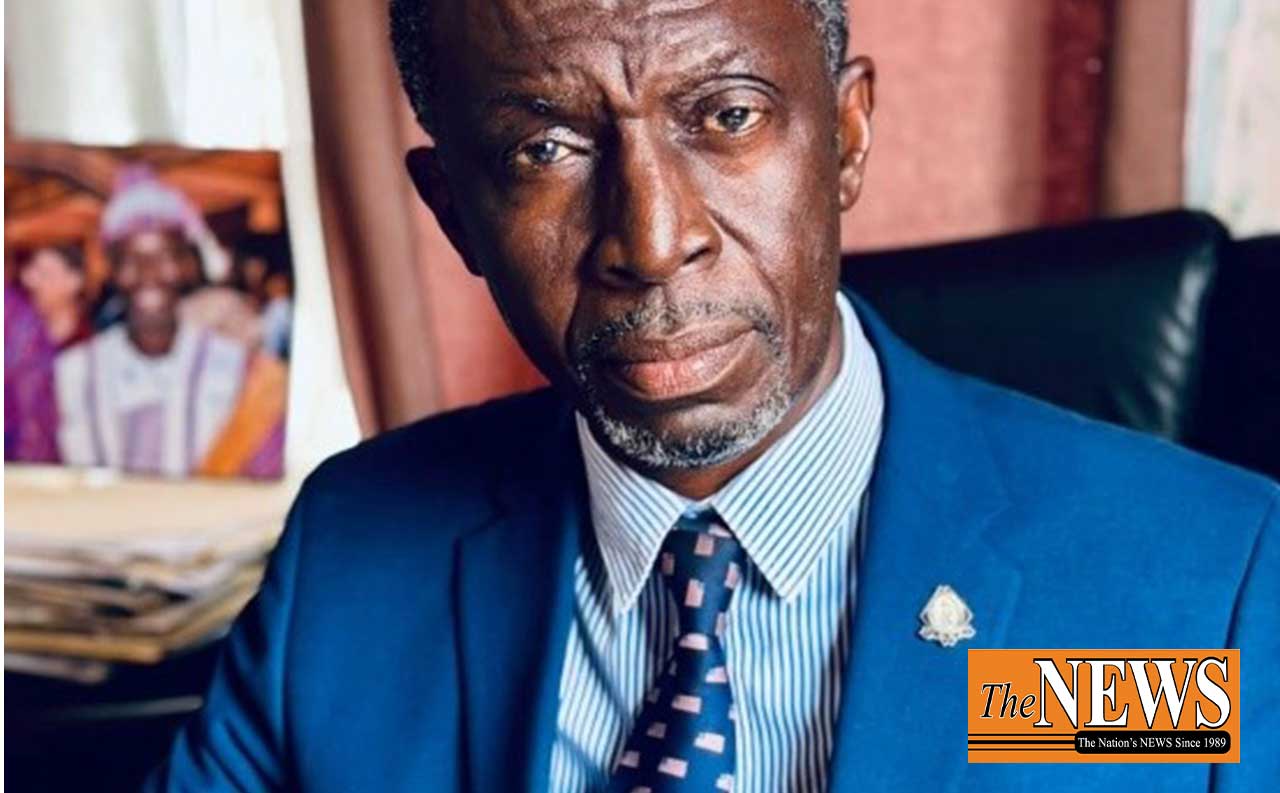
After more than 60 days of intense legal proceedings, a 12-member jury on Friday, May 8, 2026, handed down a long-awaited and highly scrutinized verdict in the US$6.2 million corruption trial involving five former public officials.
The verdict which acquitted two defendants including Samuel D. Tweah and Moses P. Cooper and convicted three on select charges which brought an end to weeks of arguments, cross-examinations, and public debate surrounding one of Liberia’s most closely watched corruption cases. The trial, heard at Criminal Court “C”, centered on allegations of Theft of Public Funds, Money Laundering, Criminal Conspiracy, Criminal Facilitation, and Economic Sabotage.
Despite all five defendants to include, Tweah and three others being jointly charged under a single indictment, the jury delivered a mixed verdict, convicting some defendants while clearing others entirely, and returning several hung verdicts where they could not reach the legal threshold for a decision.
Some legal analysts have referred to the outcome as “bogus,” claiming the jury’s decisions were inconsistent and confusing. Others argue that the verdict reflects the independent assessment of evidence against each accused. Former Minister of Finance and Development Planning Samuel D. Tweah secured a complete legal victory after being unanimously found not guilty on all five charges-Criminal Conspiracy Not Guilty, Criminal Facilitation Not Guilty Theft of Public Funds Not Guilty, Economic Sabotage Not Guilty, Money Laundering Not Guilty. Tweah’s acquittal came after weeks of testimony and public scrutiny. Former Comptroller General of the Financial Intelligence Agency (FIA), Moses P. Cooper, was also acquitted on all charges. Jurors ruled that prosecutors failed to link him to the alleged financial crimes.
But Cllr. Nyenati Tuan, Stanley Ford and Jefferson Karmoh were convicted on select charges. Former Acting Minister of Justice Cllr. Nyenati Tuan was found guilty of Criminal Facilitation, Theft of Public Funds, Theft of Property but was acquitted of Economic Sabotage, while the jury remained deadlocked on the Money Laundering charge.
Former National Security Advisor Jefferson Karmoh was found guilty of Criminal Facilitation, Criminal Conspiracy. Karmoh was acquitted of Economic Sabotage and Theft of Public Funds, while jurors hung on the Theft of Property charge.
While former Director General of the FIA Stanley S. Ford received the most inconclusive outcome of which the jury could not reach a verdict on four of his charges to include Criminal Conspiracy hung, Criminal Facilitation hung, Theft of Public Funds hung, Money Laundering hung but was acquitted of Economic Sabotage.
Can the court overturn the verdict? The answer to this question is No. Under the Liberian Law, Section 20.9 of the Criminal Procedure Law says, “Verdicts of a jury are binding on the court; that is, a court cannot overturn or change a jury’s verdict once it is legally delivered except in extremely rare circumstances such as proven juror misconduct or defective procedures.”
Criminal Court “C,” which is a jury-based court under Liberian Law, is bound by the jury’s factual findings. Acquittals are final and cannot be reversed not even by the judge or the Supreme Court. Convictions may be appealed, but the jury’s determination of facts generally stands unless overturned on legal grounds. Therefore, even if legal experts or the public believe the verdict is flawed or “bogus,” the court has no authority to simply throw it out.
Why can jointly-charged defendants receive different verdicts?
Being jointly charged means the defendants were accused together in the same indictment, but the evidence against each person is evaluated individually. The Criminal Procedure Law Section 14.1, talks about Joint Trial-This law permits defendants to be tried together but states clearly that the jury must decide each defendant’s case on the evidence relating to that defendant. Joint trials may be conducted, but each defendant’s participation in the offense must be established by evidence admissible against him, especially in jury trials, verdicts are based on individual culpability, not group accusation.
If evidence strongly links one defendant to a crime but weakly links another, the jury can properly convict one, acquit another, hang on others all in the same case. This principle is standard in Liberian and international criminal justice systems. Thus, separate verdicts do not weaken the indictment they reflect the jury’s assessment of who was proven guilty beyond a reasonable doubt.
What Happens Next?
With several charges unresolved due to hung verdicts, the prosecution must now decide whether to request a retrial on the undecided counts, or allow those charges to remain unresolved. For the three convicted defendants, the court will next schedule a sentencing hearing. Friday’s ruling represents a pivotal moment in Liberia’s ongoing fight against corruption a mix of closure, controversy, and unanswered questions as the justice system continues to unfold.