A dramatic and emotionally charged trial involving the death of police officer Mark D. Bracewell ended Monday, May 18, 2026, in a hung jury, compelling the court to declare a mistrial. Jurors failed to reach a unanimous verdict in the case of defendant Francis Nana, the commercial driver accused of murdering the officer with his vehicle in the Slipway Community.
The announcement came after hours of deliberation, during which the 12-member panel remained split six to six, leaving the presiding judge with no option but to dissolve the jury and schedule further instructions for the parties involved.
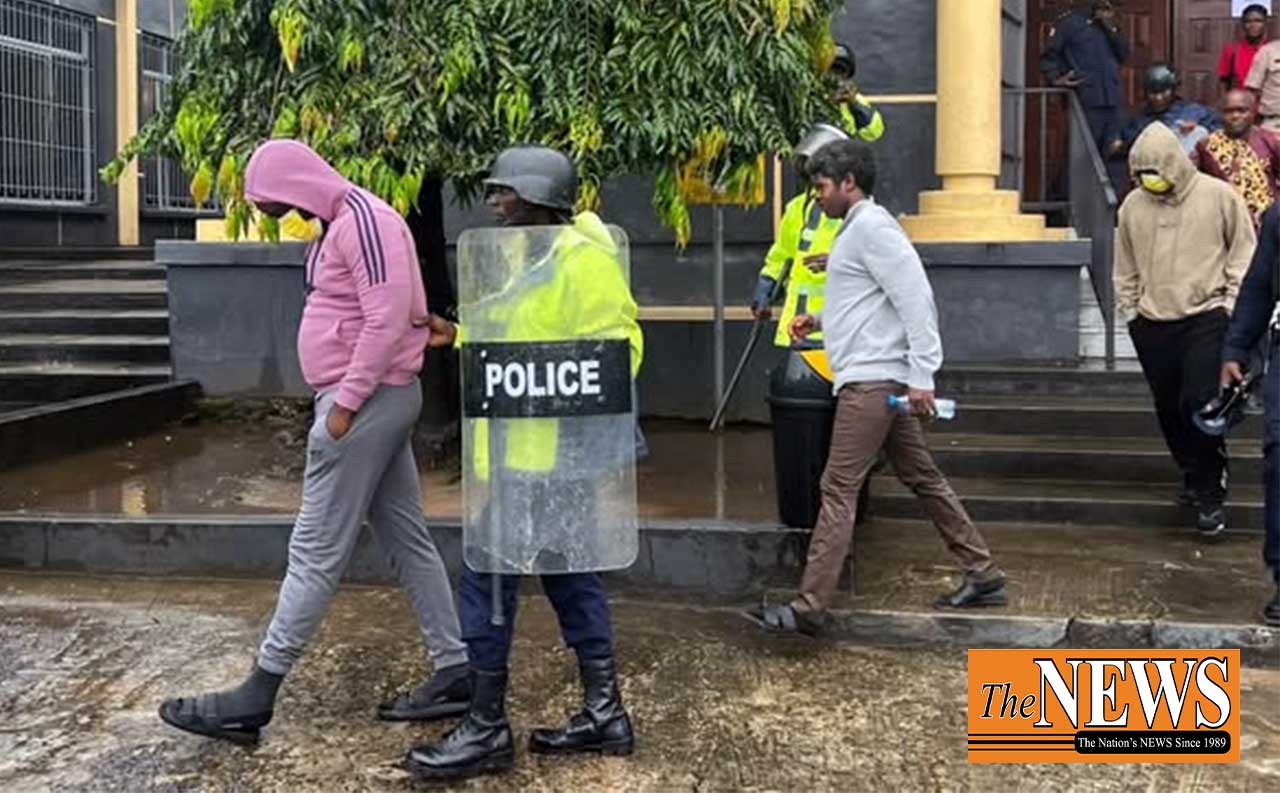
The Ministry of Justice has not stated whether it will pursue a retrial. More than 200 officers were in the courtroom to witness the highly anticipated Verdict, all dressed in black armbands as a show of solidarity for their fallen colleague.
Before the jury began deliberations, state prosecutors delivered a forceful closing argument, insisting that the circumstances surrounding Officer Bracewell’s death pointed unmistakably to criminal intent.
The prosecution presented six witnesses along with one rebuttal witness, while defense lawyers relied on Francis Nana as their key witness, supported by two hearsay witnesses, Nana’s fiancée and a taxi driver, who had left the scene before the incident occurred.
The prosecution’s prime witness, Emmanuel Gaye, whose testimony became the linchpin of the state’s case, told jurors he watched the incident unfold from a short distance.
He narrated that Officer Bracewell tried to stop Nana’s vehicle during a routine police operation. According to him, the officer approached the vehicle from the driver’s side, instructing Nana to park.
Nana then allegedly “sped off abruptly,” causing the officer’s arm or uniform to become lodged in the door. He claimed the vehicle dragged the officer for several meters before the officer fell violently to the ground. Gaye insisted the defendant looked back through the mirror but continued driving, behavior he described as “deliberate and cold.”
The prosecution argued that this testimony clearly showed the driver acted with a guilty mind and that his conduct was “far from accidental.” They concluded by telling jurors that Nana’s decision to accelerate in a crowded area and drag a human being was intentional. According to them, Nana’s failure to stop or report the incident also rose to the level of murder, urging the panel to return a guilty verdict and recommend life imprisonment.
Defense attorney Atty. Jeremiah Samuel Dugbo, I, countered that the state failed to establish the essential element of intent required for a murder conviction. He argued that the prosecution provided no evidence that Nana and Officer Bracewell knew each other or had any prior conflict, adding that no witness proved Nana intended to kill the officer.
He argued that Liberia sees many road fatalities each year, yet they are not classified as murder cases unless clear malice is shown. Atty. Dugbo also noted that eyewitness testimonies were inconsistent about distances, speeds, and whether the officer was actually dragged or fell while attempting to stop the moving vehicle.
The defense maintained that Nana was frightened during the police stop, panicked, and lost control an unfortunate but non-criminal event. On the witness stand, defendant Francis Nana testified that he did not see the officer clearly that night due to dim lighting. He claimed he believed criminals were attempting to harass him, not police, which caused him to accelerate.
Nana denied knowing that Officer Bracewell had made physical contact with the car and said he “never looked back,” insisting he did not realize someone had been hit until police later apprehended him.
Nana’s testimony prompted prosecutors to cross-examine him harshly, pointing out contradictions in his statements. Nana initially told investigators he thought someone “touched the vehicle,” but in court, he claimed he felt nothing at all.
He first described the area as “well lit,” then later said it was too dark to see officers. Nana told investigators he suspected an officer was trying to stop him, but in court, he declared he believed they were thieves.
His estimates of his driving speed also changed multiple times under oath. Prosecutors used these inconsistencies to argue that Nana was not credible and had intentionally misled the court. After the closing arguments, the jurors retired to deliberate. Hours later, their foreperson informed the bench that they remained sharply split. After both sides concluded their arguments, Judge Roosevelt Z. Willie issued a detailed charge to the jurors, urging them to remain fair, impartial, and guided strictly by the evidence presented during the trial. Judge Willie reminded them to weigh the facts transparently and without bias.
Despite multiple attempts by Judge Willie to encourage deeper reflection through his charge, the jury’s continued discussions failed to produce a unanimous decision, ultimately resulting in a hung jury.
The courtroom remained tense as the verdict was announced, with family members, law enforcement officers, and supporters looking on in silence. With the case ending in a mistrial, the Ministry of Justice must now decide whether to retry Francis Nana or drop the charges. Legal observers say a retrial is likely, given the public attention and the seriousness of the allegations. Officer Bracewell’s family, who attended every hearing, left the courtroom visibly disappointed but hopeful that justice will eventually prevail.