The Government of Liberia has launched what officials described as one of the country’s most ambitious aviation reform efforts in decades, as government officials, lawmakers, aviation regulators, and international partners formally commissioned a project team to pursue international certification for Roberts International Airport (RIA), signaling a renewed determination to restore Liberia’s status as a regional aviation hub.
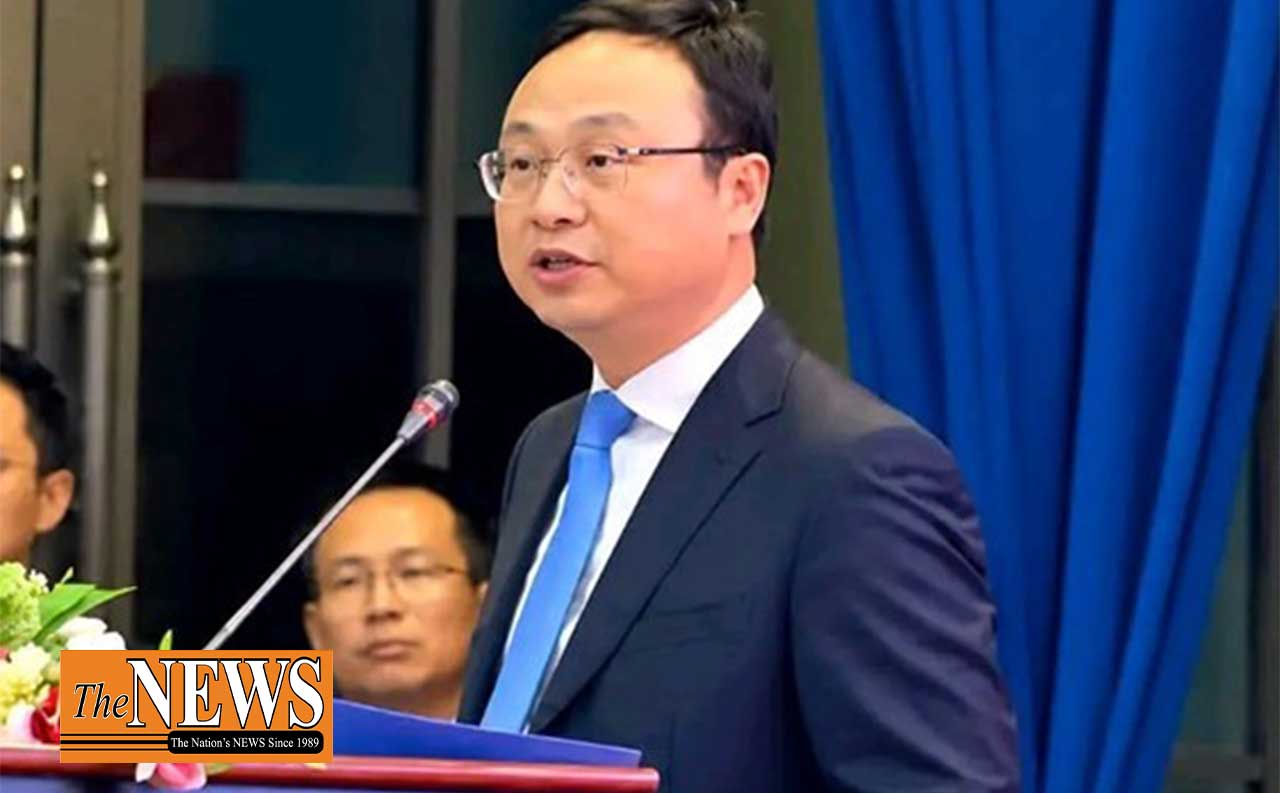
Speaking on Friday, May 29, 2026, during the launch ceremony at the EJS Ministerial Complex in Congo Town, Liberia’s Transport Minister, Sirleaf Tyler, emphasized that obtaining international airport certification represents Liberia’s commitment to safety, excellence, connectivity, and operational reliability.
“We are ready and we are back; the airport’s certification would guarantee passengers world-class service, improved safety standards, and operational efficiency,” the Minister added. He announced the establishment of a specially selected steering committee tasked with driving the certification process and ensuring full compliance with international aviation requirements. For his part, Ernest Hughes, Managing Director, Liberia Airport Authority (LAA) described the initiative as a national undertaking aligned with President Joseph Boakai’s development agenda.
Commissioning the certification project team, Director Hughes said the project is not simply about infrastructure and compliance but also about the people. According to him, the team members were selected based on competence and future leadership potential rather than seniority, describing them as “the next generation of aviation leaders.”
“The newly commissioned team will undergo technical training in airport operations, safety and security compliance, emergency management, international best practices, project management, and certification procedures,” he added.
The Director General of the Liberia Civil Aviation Authority (LCAA), Julius D. Dennis Jr., used the occasion to issue a broader call for reforms across the sector, warning that Liberia must urgently address long-standing weaknesses identified in previous international aviation assessments.
According to the LCAA boss, Liberia’s immediate objective is to improve its aviation implementation score from approximately 27.5 percent to at least 75 percent, the minimum internationally acceptable benchmark. He described Liberia’s aviation ambitions as larger than airport certification alone.
“In the coming years, Liberia will possess a world-class aviation sector that serves as an economic catalyst,” Director Dennis said. The LCAA head stressed that aviation reforms align with national development priorities, continental integration efforts, and international sustainability goals.
He further warned that success would require stronger cooperation among regulators, airport operators, security agencies, customs authorities, policymakers, and international partners. “The sky above us does not recognize political boundaries, institutional silos, nor individual agendas,” Dennis narrated.
Speaking on behalf of the Senate leadership, Senator Nyonblee Karnga-Lawrence, Pro-Tempore of the Liberian Senate, criticized the absence of women on the eight-member steering committee and called for adjustments.
Senator Lawrence nevertheless pledged the Senate’s unflinching support for aviation reforms, revealing that aviation remains among the legislature’s highest reform priorities. “The airport is the gateway and the image of our country starts from there,” she noted.
Representing President Joseph Boakai at the ceremony, Minister of State Samuel Stevquoah emphasized that the administration views airport infrastructure as a strategic national asset. He said the President fully supports the initiative and views aviation as critical to investment, tourism, commerce, innovation, and international engagement.
“Airports are gateways to trade, investment, tourism, commerce, innovation and international engagement,” Stevquoah said. He further stressed that reforms should not remain limited to Roberts International Airport alone but extend to regional airports across Liberia.
He, at the same time, reminded aviation authorities that certification must become part of a broader national aviation master plan rather than an isolated project. Addressing international partners, Stevquoah lauded aviation consultants and development partners for supporting Liberia’s efforts while emphasizing local ownership of the process.