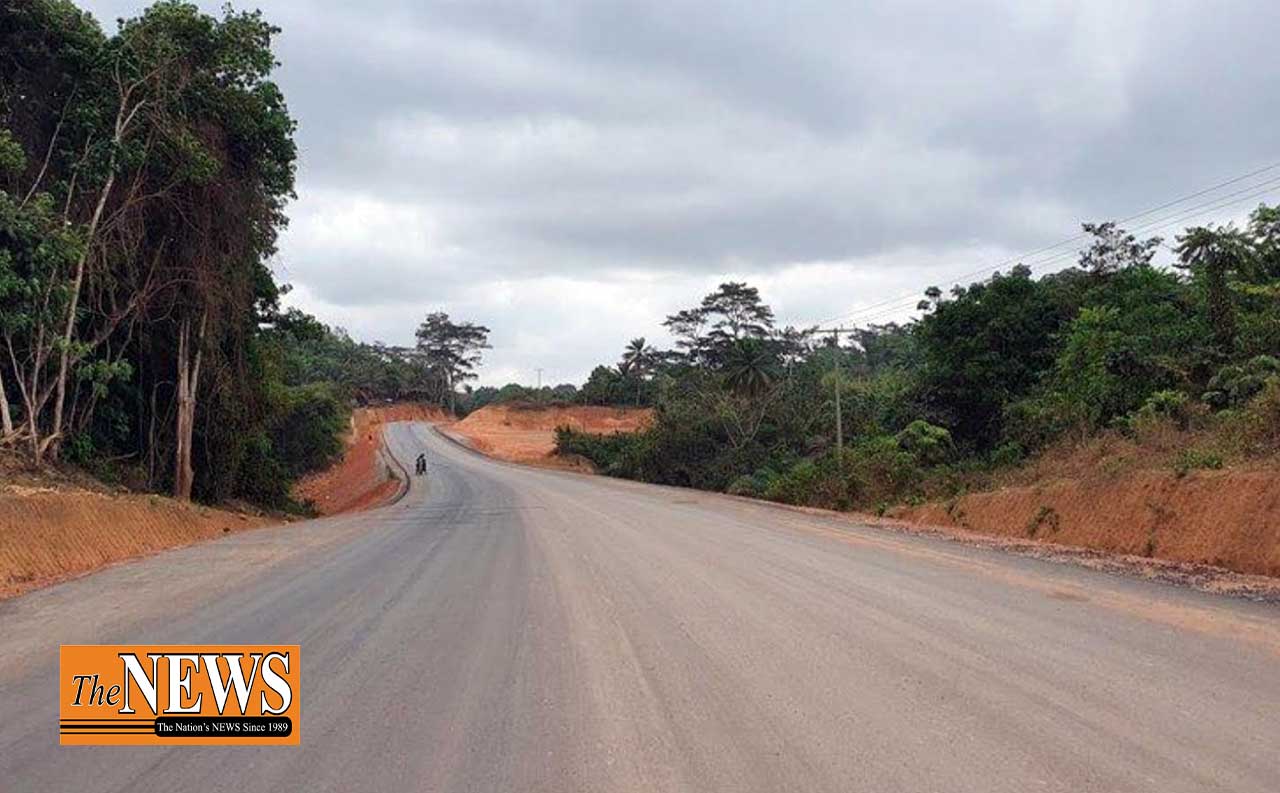
The Government of Liberia on Tuesday, July 28, 2026, officially dedicated the 81-kilometer Gbarnga–Salayea Road, marking the completion of a major infrastructure project that took nearly a decade to finish and is expected to transform transportation, trade and regional connectivity between Bong and Lofa counties.
Speaking at the dedication ceremony, President Joseph Nyuma Boakai said the projects represent far more than road construction, emphasizing that they symbolize strong partnerships, mutual trust, and a shared commitment to improving the lives of Liberians.
“You cannot eat a road, but a road will make you eat, explaining that good roads create opportunities for farmers, traders, students, businesses, and families by improving access to markets, education, and essential services,” the President stated.
He expressed gratitude to the Arab Coordinating Group and its member institutions, including BADEA, the Kuwait Fund for Arab Economic Development, and the Arab Fund for Economic and Social Development, for their continued support to Liberia’s development efforts. “Your investments are building more than roads,” President Boakai said.
According to him, “The partners are creating opportunities for our people, connecting communities, expanding economic opportunities, strengthening regional integration, and improving the quality of our communities.”
The Liberian leader reaffirmed his administration’s commitment to ensuring that all infrastructure projects are implemented with transparency, accountability, excellence, and completed on schedule under the ARREST Agenda for Inclusive Development.
President Boakai also acknowledged the collaboration of the Ministry of Public Works, the Ministry of Finance and Development Planning, members of the Legislature, contractors, development partners, and local communities for their contributions to the projects.
For his part, Liberia’s Minister of Finance and Development Planning (MFDP) Augustine Kpehe Ngafuan recounted that the process began in 2010 during Liberia’s debt relief negotiations under the Heavily Indebted Poor Countries (HIPC) Initiative.
He said then-President Ellen Johnson Sirleaf directed him to prioritize the highway, recognizing it as a key development project for Lofa County after major road investments had already been made in other parts of the country.
According to Ngafuan, then-Vice President Joseph Nyuma Boakai provided the original technical sketch for the highway, a design first prepared in 1989 before the civil war halted implementation.
He said the design was presented to the Kuwaiti Fund during debt cancellation talks, leading to an initial $2 million grant for a feasibility study and later mobilizing support from the Arab Coordination Group, including the Saudi Fund and other Arab development financiers. Ngafuan acknowledged that setbacks such as the Ebola outbreak delayed implementation but praised both past and present administrations for keeping the project alive.
Also, he credited President Boakai with reviving negotiations after taking office, noting that the President personally instructed the government delegation to return to Kuwait and reactivate the financing package.
The finance minister declared that funding is now fully secured, saying “money is not a problem,” and expressed confidence that the highway will unlock economic opportunities, improve access to markets, and accelerate development across Lofa County and neighboring regions.
Giving the overview of the project, Public Works Minister Roland Layfette Giddings explained that the road, which forms part of the Bong–Voinjama–Mendikorma Highway, was awarded in December 2017 to China Henan International Cooperation Group (CHICO). According to him, the construction began in 2018 and was originally scheduled for completion within 36 months, but repeated work suspensions extended the project to 99 months.
The minister disclosed that the original contract value of US$40.858 million increased to approximately US$51.9 million following two contract extensions and approved variations, while consultancy costs rose to about US$3.7 million.
According to the minister, the road has reached approximately 99 percent physical completion and was constructed to modern engineering standards, including asphalt pavement, improved drainage systems, pedestrian walkways, lay-bys, road safety features and urban upgrades across eight communities along the corridor.
He said the highway is designed for speeds of up to 80 kilometers per hour in rural sections and 50 kilometers per hour in built-up areas, while accommodating growing commercial and cross-border traffic.