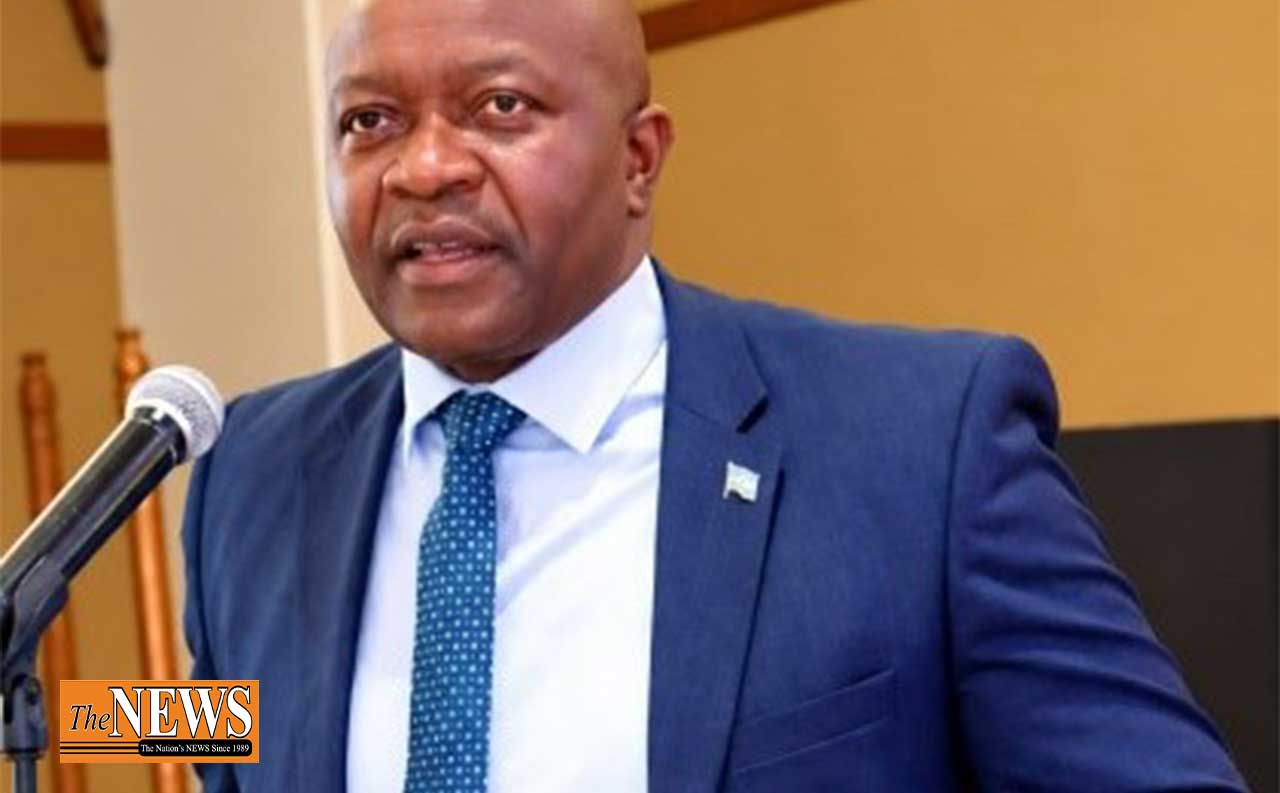
Liberia’s Finance and Development Planning Minister Augustine Kpehe Ngafuan has challenged Liberians in the diaspora and international investors to look beyond Liberia’s troubled past and consider the country’s emerging economic opportunities, citing sustained peace, stronger domestic revenue, economic growth and expanding infrastructure.
Ngafuan made the call Saturday, September 26, 2026, at the Liberian Diaspora Conference in Washington, D.C., where he delivered a presentation titled “Making an Investment Case for Liberia, Betting on Liberia.”
Speaking to Liberians, investors, development partners and government officials, the finance minister urged potential investors to assess Liberia based on its current trajectory rather than its history of civil conflict. “Look through the windshield, cautioning against judging Liberia primarily through the “rear-view mirror” of its past,” Ngafuan said.
He cited more than two decades of sustained peace, competitive elections, peaceful transfers of presidential power and Liberia’s current membership as a non-permanent member of the United Nations Security Council as evidence of the country’s institutional recovery.
But Ngafuan placed particular emphasis on what he described as a historic improvement in Liberia’s fiscal position, announcing that domestic revenue collections have surpassed US$1 billion for the first time in the country’s history.
Figures presented by the Minister showed domestic revenue increasing from approximately US$612 million in 2023 to US$699 million in 2024 and US$848 million in 2025, before exceeding the US$1 billion threshold in September 2026.
He stressed, however, that the milestone should not be interpreted as meaning Liberia has become financially wealthy. “Collecting one billion dollars does not mean Liberia has no more problems, noting that government resources must cover salaries, education, healthcare, security, infrastructure, county development, debt servicing and other national obligations,” Ngafuan said,.
Despite those challenges, he argued that stronger revenue collection provides an important signal to investors by demonstrating increased government capacity to meet its obligations and finance infrastructure needed to support private-sector activity.
Ngafuan also highlighted Liberia’s recent economic performance, saying the economy grew by approximately 5.1 percent in 2025, while the International Monetary Fund projects growth of about 5.5 percent in 2026.
According to the Minister, mining, construction and manufacturing are among the sectors contributing significantly to economic expansion. He further reported that inflation averaged about 4.5 percent during the first half of 2026, while the Liberian dollar remained broadly stable.
Ngafuan said an IMF-projected primary fiscal surplus, excluding grants, of approximately 2.4 percent of GDP in 2026, alongside improved budget execution and payment discipline, is also helping to strengthen investor confidence.
He said timely government payments have implications beyond public-sector accounting, arguing that they affect the ability of private businesses to pay workers, secure financing and complete projects on schedule. “When government pays on time, firms can pay workers, banks can lend with greater confidence, projects can remain on schedule and the entire economy functions better,” he said.
The Minister linked the investment case to President Joseph Boakai’s ARREST Agenda for Inclusive Development, which focuses on agriculture, roads, rule of law, education, sanitation, health and tourism.
He pointed to ongoing road construction, the planned Cavalla River Bridge connecting Liberia and Côte d’Ivoire, the deployment of road equipment across the 15 counties, expanded electricity access and the construction and rehabilitation of schools and health facilities.
Ngafuan said electricity access has risen from approximately 32 percent in 2024 to nearly 40 percent, with projects in Buchanan, Voinjama, Montserrado and other areas expected to further expand access.
Speaking, he highlighted the Special Agro-Industrial Processing Zone in Buchanan, describing it as part of the government’s strategy to increase domestic processing and reduce Liberia’s dependence on exporting raw commodities. “Our aim is straightforward: Liberia must not remain a country that exports raw potential and imports finished prosperity. We must add value at home,” he narrated.
Ngafuan said the Central Bank of Liberia’s Inclusive Instant Payment System, launched in December 2025, processed more than 1.5 million transactions valued at over L$1.4 billion and US$9 million during its first three months.
He said the planned National Electronic Payment Switch, targeted for March 2027, is expected to connect commercial banks, mobile-money platforms, government payment channels and other financial institutions.
According to Ngafuan, the system could reduce reliance on cash, improve tax collection, strengthen financial audit trails and make transactions more efficient for businesses and consumers. The Minister identified energy, roads, ports, logistics, housing, agro-processing, mining services, manufacturing, digital infrastructure, tourism, fisheries and the blue economy as sectors with investment potential.
He also pointed to Liberia’s approximately 580-kilometer Atlantic coastline, natural resources and access to regional African markets as potential advantages for investors seeking opportunities beyond Liberia’s domestic market. He however, acknowledged that significant challenges remain. “Are we perfect? No,” he said, citing high electricity costs, infrastructure deficits, limited access to finance, bureaucracy and the need for greater regulatory predictability.
Rather than portraying Liberia as a country without problems, he said the government’s argument is that the country is increasingly equipped to address them. “We do not present Liberia as a country without problems,” Ngafuan said. “We present Liberia as a country increasingly capable of solving problems.”
He also challenged Liberians in the diaspora to reconsider the way they contribute to Liberia’s economy, urging them to move beyond remittances primarily supporting household consumption and increase investment in productive sectors.
Ngafuan encouraged diaspora Liberians to explore opportunities in agribusiness, logistics, housing, tourism, healthcare, education, energy and digital services while leveraging their international networks to connect Liberia with global capital and markets.
At the same time, he cautioned diaspora investors against allowing patriotism to replace proper financial analysis. The Minister said, “We do not ask you to invest blindly because Liberia is home. We ask you to examine the opportunity seriously because Liberia is changing.” He urged prospective investors to demand reliable financial information, ask difficult questions, structure investments.