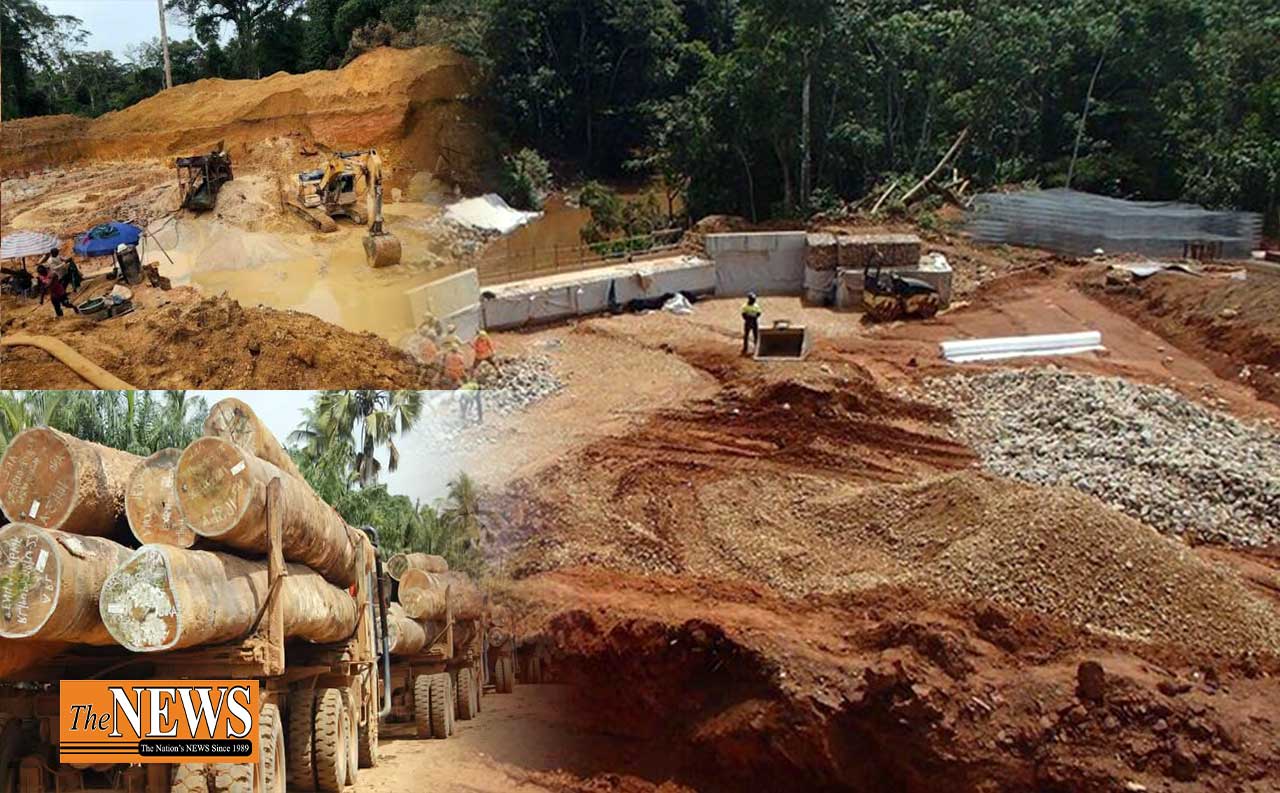
Liberia’s mining and forestry sectors are facing renewed scrutiny as Integrity Watch Liberia (IWL) calls for stronger corporate accountability and greater protection of communities and workers affected by business activities.
The organization made the call during a one-day technical training on Business and Human Rights held in Monrovia, bringing together representatives of government ministries and agencies, civil society organizations, development partners and the media.
The training, organized under an IWL project funded by the European Union, focused on human rights due diligence, corporate accountability, stakeholder engagement, grievance mechanisms and access to remedy.
Participants included officials from the Ministries of Justice, Labor, and Mines and Energy, the Environmental Protection Agency (EPA), Forestry Development Authority (FDA), Independent National Commission on Human Rights (INCHR), civil society organizations, development partners and the media.
Speaking, IWL Executive Director Harold Aidoo said the organization’s 24-month initiative seeks to strengthen inclusive participation, human rights protection and corporate accountability in Liberia’s forest and mining sectors.
Aidoo outlined three major pillars of the project that include, building the capacity of civil society organizations, increasing private-sector awareness of business and human rights principles, and supporting government institutions in addressing human rights concerns associated with business operations.
He acknowledged the contribution of businesses to Liberia’s economy through employment, economic activities, taxes and royalties, but stressed that companies must conduct their operations while respecting fundamental human rights.
According to Aidoo, IWL is working with civil society organizations in four counties to strengthen their ability to monitor business and human rights issues, document alleged abuses and produce reports that can assist government institutions and human rights actors.
He said the project is also engaging private companies to increase awareness of their responsibilities and encourage them to establish mechanisms through which workers and affected communities can report alleged violations and seek redress. He further emphasized that government institutions have a critical responsibility to ensure that businesses comply with national laws, including labor and human rights standards.
For his part, National Civil Society Council of Liberia Chairman Lawrence Yealue challenged civil society organizations to become more effective in defending communities affected by corporate activities. Yealue urged CSOs to strengthen their ability to influence policies, engage communities, provide legal education and pursue appropriate legal remedies where corporate activities allegedly infringe on community rights.
He also called for stronger cooperation between Liberian and international civil society organizations, arguing that transnational advocacy could help build solidarity and increase pressure for corporate accountability. Yealue encouraged CSOs to work more closely with lawyers and deepen their understanding of national and international legal frameworks governing business and human rights.
Meanwhile, Acting Chairperson of the Independent National Commission on Human Rights, Mohammed Fahnbulleh, said Liberia’s democratic development and human rights commitments require stronger institutions, greater accountability and sustained efforts to ensure that citizens enjoy rights guaranteed under national and international law.
Fahnbulleh warned that economic development in sectors including mining, agriculture, forestry and fisheries must remain grounded in respect for human rights. He highlighted concerns involving discrimination, exploitation, unsafe working conditions, unlawful termination and other potential violations of workers’ rights.
He also stressed the importance of ensuring that communities in resource-rich areas have meaningful access to information and participation in decisions affecting their land, livelihoods and environment.
Fahnbulleh called on companies operating in Liberia to establish effective human rights due diligence systems, transparency measures, grievance procedures and meaningful community engagement mechanisms.
He said protecting human rights is a shared responsibility among government, businesses, civil society and communities, while emphasizing the need to strengthen institutions responsible for human rights protection, environmental oversight and natural resource governance.
For his part, Christian Mukosa, a representative of the Office of the United Nations High Commissioner for Human Rights in Liberia, commended IWL for organizing the training and stressed that discussions around business and human rights must go beyond economic growth to address the protection of people affected by business activities.
Mukosa said Liberia became the fourth African country to adopt a National Action Plan on Business and Human Rights, following Kenya, Uganda and Nigeria, with Liberia’s plan launched in August 2024. He urged continued cooperation among government institutions, civil society, the private sector and development partners to ensure effective implementation of the National Action Plan.