Liberia and Egypt have moved to deepen their military ties with the signing of a new defense cooperation protocol designed to transform years of informal security engagements into a structured, long-term military partnership.
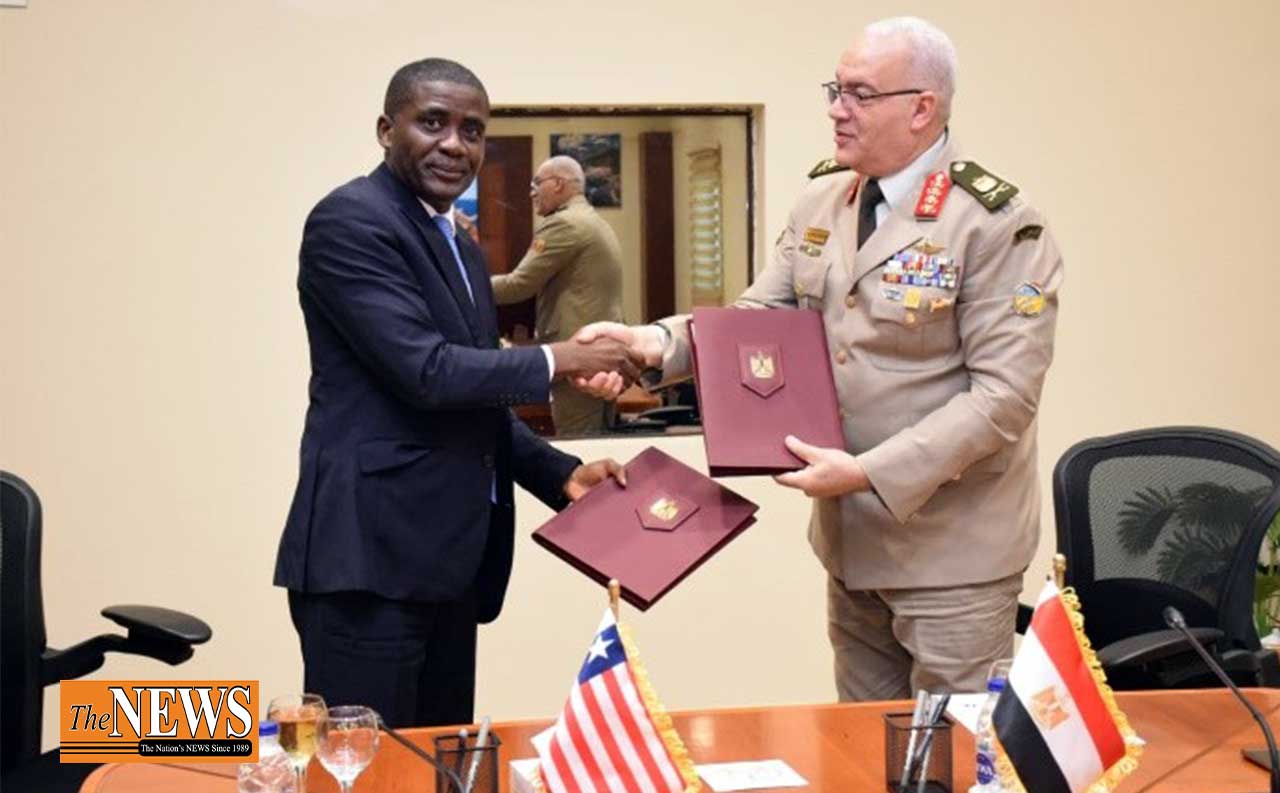
The agreement, signed Sunday, September 27, 2026, in Cairo, Egypt, between Liberia’s Ministry of National Defense and the Egyptian Ministry of Defense, provides a framework for cooperation in military training and education, intelligence and security, logistics, specialized military expertise and Special Forces operations.
According to the release, the deal represents a significant step in Liberia’s efforts to expand military partnerships and strengthen the professional and operational capabilities of the Armed Forces of Liberia.
Speaking during the ceremony, Liberia’s Deputy Minister of Defense for Operations, Spencer G.N. Leeco, signed the protocol on behalf of the Government of Liberia, while Maj. Gen. Walaa Adel Bibers, Assistant Minister of Defense for Foreign Relations, signed for the Arab Republic of Egypt.
Deputy Minister Leeco described the agreement as a milestone in the longstanding relationship between Liberia and Egypt, emphasizing the need to move beyond informal engagements toward a formal and sustainable defense cooperation framework.
“This ceremony is a milestone in the relations between our countries and indicative of the longstanding diplomatic ties that continue to flourish,” he said. Moreover, Leeco delivered fraternal greetings from Liberia’s Acting Minister of National Defense, Cllr. Natu Oswald Tweh, and the Liberian people.
Under the agreement, the two countries are expected to establish a predictable annual allocation of specialized military training programs, potentially expanding opportunities for Liberian military personnel to receive training and professional development in a wide range of disciplines.
The protocol identifies several areas of cooperation, including military training and education, intelligence and security, logistics services, and the exchange of military experts, technicians and professionals.
Also, a Joint Committee, with equal representation from Liberia and Egypt, will be established to oversee implementation of the agreement. Each country will also appoint focal points to organize and coordinate the committee’s activities following its first meeting.
In a move that could further strengthen the military relationship, the Liberian delegation formally requested the stationing of an Egyptian Defense Attaché at the Egyptian Embassy in Monrovia. The proposed Defense Attaché would provide an institutional channel for coordinating military cooperation and supporting implementation of the newly signed protocol.
Leeco also conveyed greetings from the Chief of Staff of the Armed Forces of Liberia, Maj. Gen. Davidson F. Forleh, and expressed hope that Forleh would undertake a high-level visit to Cairo to advance implementation of the agreement.
For his part, Maj. Gen. Bibers assured Liberia of Egypt’s full support in strengthening the capacity of the Liberian military. He encouraged Liberia to explore more than 100 military disciplines in which Egypt could potentially provide support and expertise. The agreement also carries a personal historical connection for Bibers, who previously served in Liberia under the United Nations Mission in Liberia (UNMIL).
In 2008, he served as a Military Observer with Team 3 in Kakata, Margibi County. The following year, he served as a staff officer at UNMIL Headquarters, working with the J2 Collection Coordination and Intelligence Requirements Management unit.
The latest agreement therefore brings Bibers back into Liberia’s security story years after his UNMIL assignment, this time as a senior Egyptian defense official involved in shaping a formal military partnership between the two countries.
The new protocol now places the responsibility on both governments to translate the agreement into concrete training, intelligence, logistical and professional exchanges as the Joint Committee begins its work.