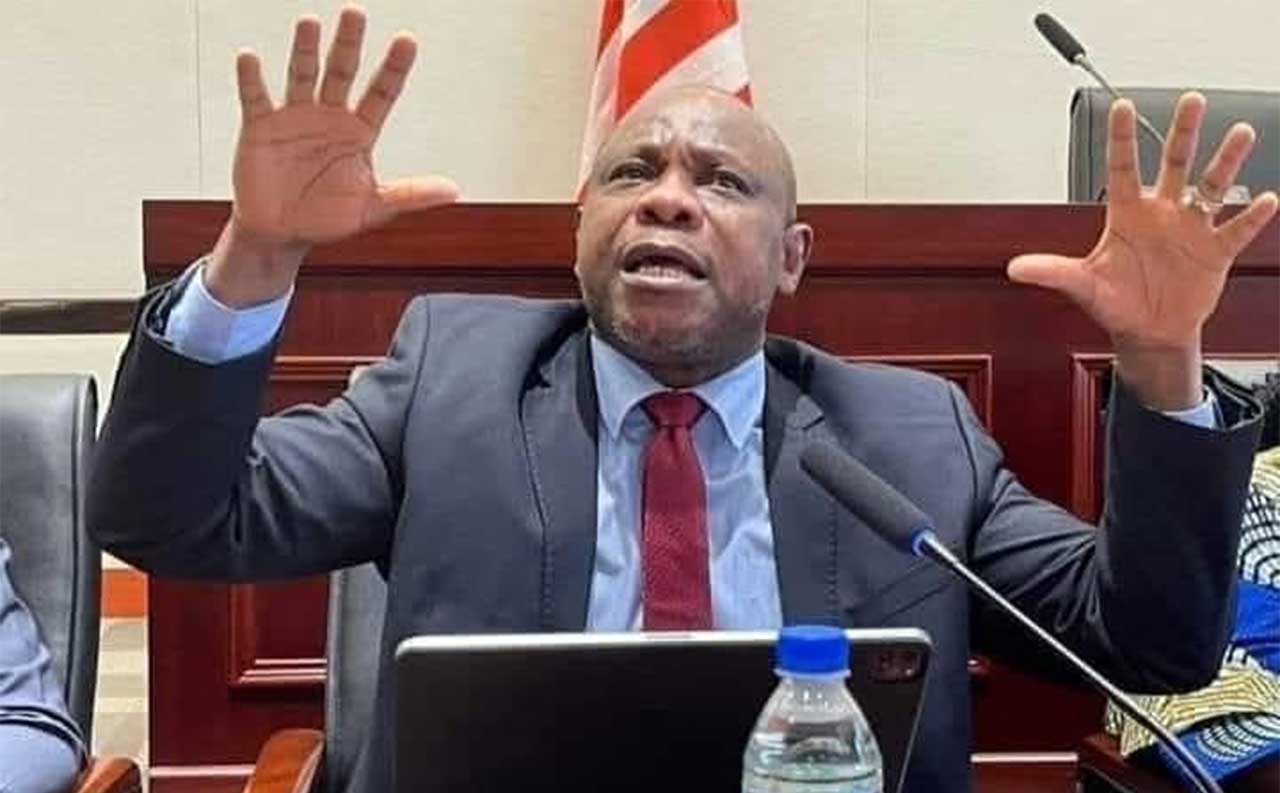
In a dramatic turn in the high-profile national security spending trial, jurors on Monday, April 27, 2026, confronted former Minister of Finance and Development Planning, Samuel D. Tweah, Jr., with a barrage of probing questions that cut directly to the core of the prosecution’s allegations of abuse of authority, irregular financial transfers, and the legality of emergency spending during his tenure.
After weeks of testimony, the prosecution rested following Tweah’s cross-examination, but the spotlight quickly shifted to the jury, whose inquiries signaled deep concerns about the justification of key decisions made by the former Finance Minister. The Jurors’ line of questioning took center stage when they began pressing Tweah to clarify his Terms of Reference under the Public Financial Management (PFM) Law. He responded that his statutory duty was to ensure proper handling of all public monies and enforce compliance on businesses paying government revenue.
When asked to whom he reported, the former minister emphasized that the law placed him directly under the President of Liberia, while also accountable to the Legislature that approves the national budget.
The exchange highlighted a major theme of the trial: how much discretion the Minister of Finance has when acting under presidential authority. Questions then shifted to the LACC investigation, with jurors asking whether Tweah had ever been summoned.
He insisted he had not, saying he was outside the country and only learned of the emailed invitations after being indicted. Jurors revisited the government’s controversial transfer of funds to the World Food Programme (WFP) during the COVID-19 pandemic.
Tweah defended the decision, describing the public health crisis as a national emergency that demanded rapid intervention. He acknowledged bypassing normal procurement procedures, but argued that in emergencies, “lawful consensus,” not competitive bidding, drives government action, particularly when international partners agree on the implementing entity.
In another pivotal exchange, jurors grilled Tweah on his earlier assertion that national security funds were sometimes disbursed through the Central Bank of Liberia (CBL). They asked whether the CBL was part of the National Joint Security (NJS), to which Tweah replied it was not, but that the bank routinely uncashed cheques for security agencies. Jurors also challenged him with testimony from CBL cashier Theo Larmie, who said he never handled NJS money. Tweah countered that Larmie operated on a need-to-know basis, noting that national security operations are classified and that financial procedures have existed “for more than 20 years.”
Jurors pressed further on the 2023 Financial Intelligence Agency (FIA) emergency that led to a controversial transfer. Tweah stated unequivocally that the request came through oral consensus of the National Security Council (NSC), a process the former Defense Minister, now a prosecution witness, also affirmed.
He maintained that written requests were not necessary for accountability, since the financial trail is established through allotments, approvals, and audit processes, not the mode through which the request was made.
Another round of juror questions focused on who has the power to declare a national emergency. Tweah reiterated that the President, as Commander-in-Chief and Chair of the NSC, may declare both public and non-public emergencies, triggering classified national security spending protocols. Jurors then directly confronted Tweah with his earlier statements that the prosecution’s case rested on “assumptions and rushed judgment.”
He stood by the claim, accusing investigators of failing to trace the funds properly, especially given the classified nature of national security transactions. Tweah reaffirmed that his transfers were legal, citing a triangle of authority where NSC approved, the approved National Budget, and the PFM Law, which he said empowered him to act swiftly during emergencies.
Jurors also scrutinized the National Elections Commission (NEC) funding, where Tweah admitted exceeding the approved budget. He argued that Section 26 of the PFM Law grants the Minister authority to exceed expenditure ceilings during emergencies, provided those overruns are reported in the end-of-year financial statement.
Asked whether legislative approval was required for the excess spending, he responded that the law mandates reporting, not endorsement, given that the Legislature itself granted that authority through the statute.
With the prosecution having rested following Tweah’s cross-examination, the case now enters a decisive stage. The jury’s pointed questions exposed the key fault lines: Was the Minister’s authority properly exercised? Were national security procedures followed legally? Do emergencies justify bypassing procurement? Did investigators fail to account for classified spending rules?
As the defense prepares its next steps, the weight of the jurors’ inquiries may shape the trajectory of a trial that has gripped the nation, raising profound questions about executive authority, national security secrecy, and financial accountability in Liberia’s governance system.