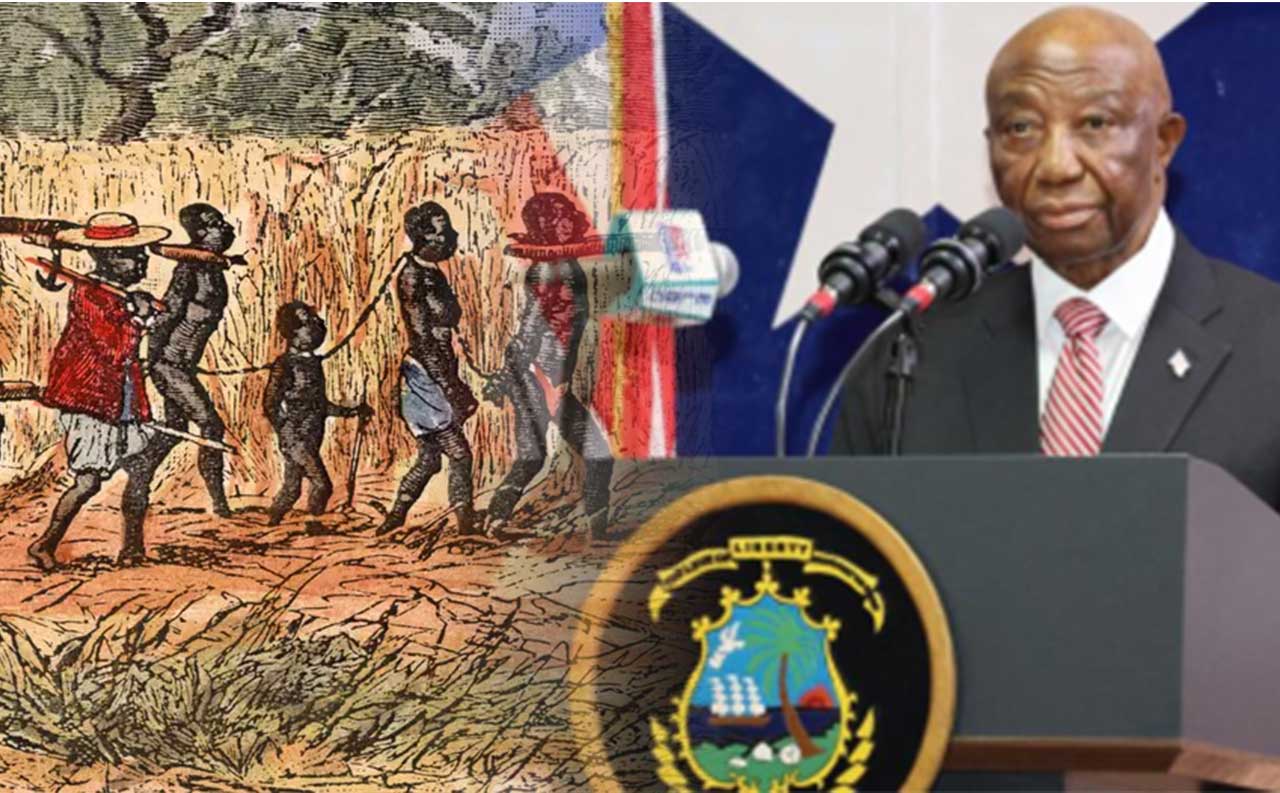
President Joseph Nyuma Boakai has called for a coordinated global effort to pursue reparatory justice for the descendants of Africans affected by the transatlantic slave trade, declaring that the world now faces a historic opportunity to transform recognition of past atrocities into concrete action.
Addressing a two-day High-Level Consultative Conference on the implementation of United Nations Resolution A/RES/80/250 in Accra on Thursday, June 18, 2026, President Boakai urged African nations, Caribbean states, the African diaspora, and the international community to unite behind a comprehensive framework aimed at addressing the enduring consequences of slavery.
“The question before us is simple: what must we do next?” Boakai told delegates, including heads of state, diplomats, representatives of international organizations, and civil society leaders.
The Liberian leader described the March 26, 2026 adoption of the UN resolution recognizing the trafficking and enslavement of Africans as among the gravest crimes against humanity as a “significant and necessary moral moment” that must be followed by meaningful implementation.
Also, Boakai emphasized that reparatory justice should extend beyond financial compensation, arguing that centuries of slavery left deep social, cultural, psychological, and political scars that continue to affect generations.
“For Liberia, the legacy of the transatlantic slave trade is woven into the fabric of our national story and continues to shape our understanding of identity, belonging, and nationhood,” he said.
However, the President outlined five key priorities for advancing the reparations agenda, which include the development of a common African position in partnership with Caribbean Community (CARICOM) nations and diaspora organizations, the establishment of an African Union-United Nations Expert Commission to create a global reparatory justice mechanism, and expanded efforts in education, historical research, and truth-telling.
He also advocated for the return of stolen African cultural artifacts and called for development partnerships aimed at addressing inequalities and underdevelopment rooted in slavery and colonial exploitation.
“The past has helped shape the inequities of the present, noting that the wealth generated from slave labor and resource extraction contributed significantly to global economic development while leaving Africa disadvantaged,” Boakai narrated.
In one of the strongest sections of his address, the President stressed that the pursuit of reparatory justice is not intended to assign personal blame to modern generations.
“The call for reparatory justice is not an effort to assign personal guilt to the present generation for the sins of the past. Rather, it is a call for understanding, empathy, and a willingness to confront uncomfortable truths,” he stated.
Moreover, Boakai challenged the international community to ensure that the UN resolution becomes more than a symbolic declaration, warning against allowing the issue to fade from global attention.
“Let this not be remembered as another conference or another resolution that stirred consciences briefly before fading into history. Let it be remembered as the moment when the world chose truth over silence, justice over hesitation, and moral courage over the comfort of the status quo,” he said.
Boakai concluded by calling on world leaders to seize what he described as a defining moment in history, saying future generations would judge today’s leaders not by their words but by their willingness to pursue justice, reconciliation, and healing for one of humanity’s darkest chapters.
The conference, hosted by Ghanaian President John Dramani Mahama, is expected to produce recommendations on implementing the landmark UN resolution and advancing international discussions on reparatory justice for slavery and its lasting impacts.