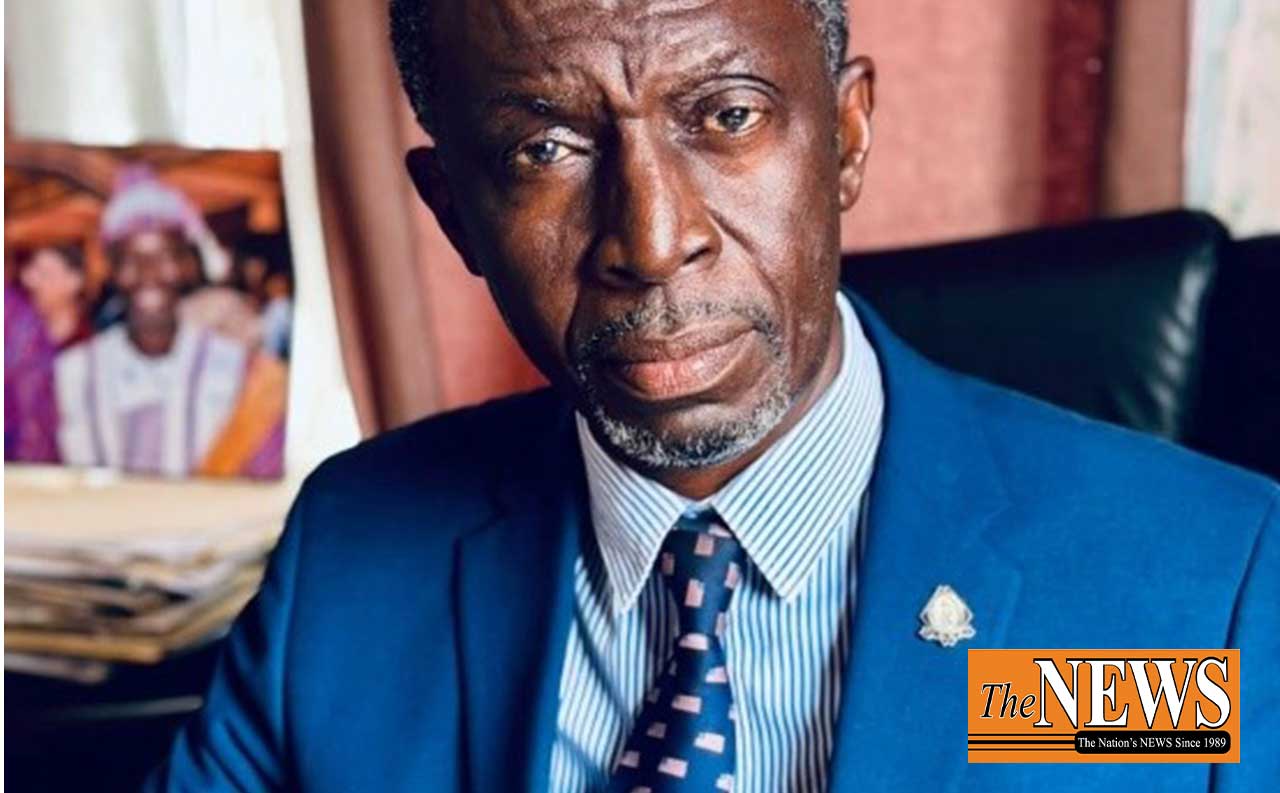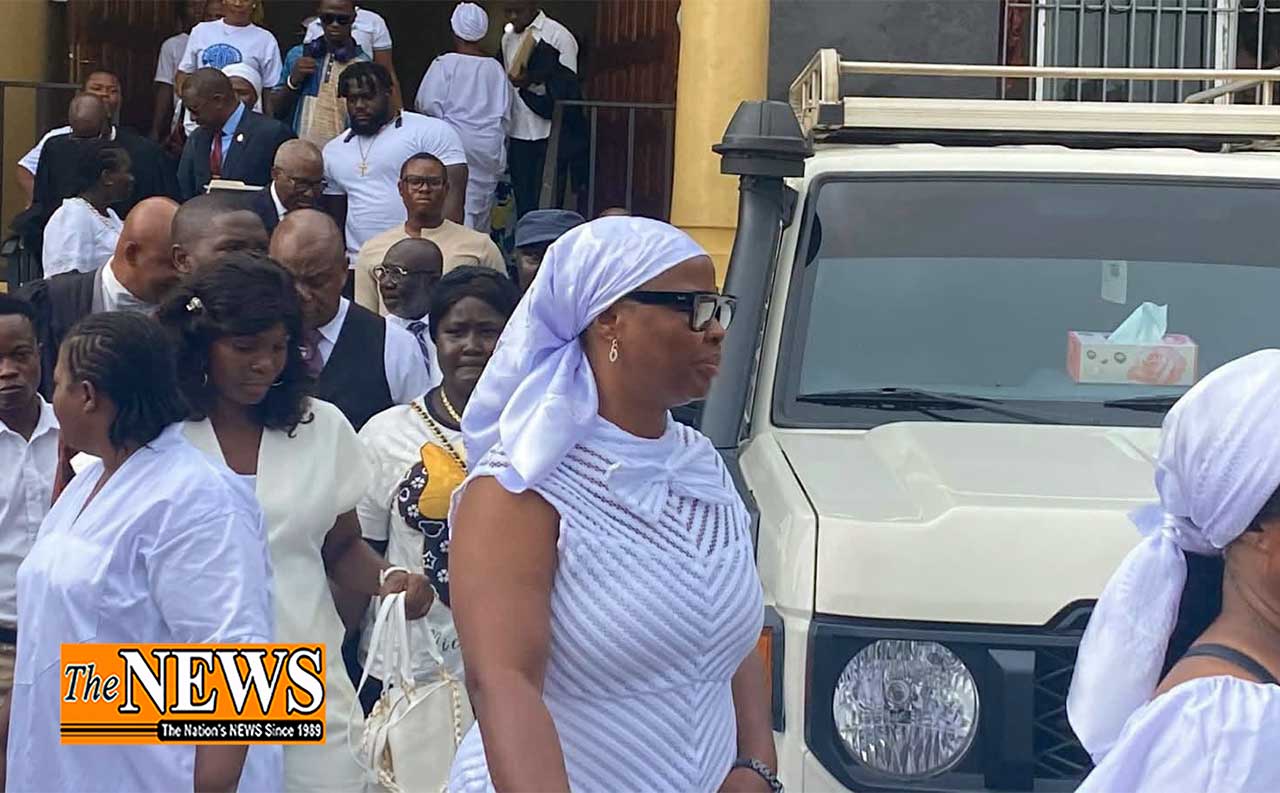
The Supreme Court of Liberia has ordered the immediate release of former Executive Mansion Chief of Protocol Nora Finda Bundoo from detention at the Monrovia Central Prison after she petitioned the high court for a Writ of Prohibition challenging proceedings before Criminal Court “C.”
According to an official communication issued by the Office of the Clerk of the Supreme Court and dated July 22, 2026, Associate Justice Yussif D. Kaba, sitting in Chambers, cited Criminal Court “C” Judge Ousman F. Feika to a conference scheduled for Tuesday, August 4, 2026, at 3:00 p.m. to address Bundoo’s petition.
The petition names Judge Ousman F. Feika as the First Respondent, while the Asset Recovery and Property Retrieval Task Force (AREPT), through its Chairman Cllr. Edwin K. Martin, together with the Ministry of Justice, are listed as the Second Respondents.
In the same directive, the Supreme Court ordered Judge Feika to release Bundoo to her legal counsel, Cllr. M. Watkins Wright and Cllr. Abraham Wade Simpson, pending the outcome of the conference before Justice Kaba.
The Court, however, imposed a condition on her release, ordering that Bundoo surrender her passport to the Sheriff of Criminal Court “C” while the matter remains before the Supreme Court.
The latest development temporarily suspends the immediate effect of Criminal Court “C”‘s order that sent Bundoo to the Monrovia Central Prison after her second criminal appearance bond was rejected and an US$8 million bond was imposed in the high-profile corruption case involving the alleged diversion and laundering of millions of dollars in public funds.
Bundoo’s legal team is asking the Supreme Court to prohibit further enforcement of Judge Feika’s ruling while the legality of the lower court’s actions is reviewed.
The conference on August 4 is expected to determine whether the Supreme Court will issue the writ sought by Bundoo or allow Criminal Court “C” to proceed with the criminal prosecution.
The Former Executive Mansion Chief of Protocol had petitioned the Supreme Court of Liberia to stop the enforcement of a Criminal Court “C” ruling that led to her incarceration at the Monrovia Central Prison.
In a Petition for a Writ of Prohibition filed before the Justice in Chambers, Bundoo is asked the nation’s highest court to overturn Judge Ousman F. Feika’s decision denying her motion to justify sureties, rejecting her criminal appearance bond, ordering her immediate arrest, and requiring her to post a US$8 million criminal appearance bond.
Finda Bundoo, one of more than 48 defendants indicted in a sweeping corruption case prosecuted by the Assets Recovery and Property Retrieval Task Force (AREPT), is facing charges of money laundering, theft of property, misuse of public money, property and records, criminal conspiracy, forgery, and criminal facilitation alongside several current and former government officials and private individuals.
According to the petition, Bundoo was outside Liberia receiving medical treatment when the Grand Jury returned the indictment on November 5, 2025. After learning of the charges, she voluntarily returned to Liberia on June 9, 2026, presented herself before Criminal Court “C,” accepted service of the writ of arrest and indictment, and immediately submitted herself to the jurisdiction of the court.
Her lawyers argued that her voluntary return demonstrates respect for the judicial process and undermines any suggestion that she intended to flee prosecution.
Court records show that Bundoo’s first criminal appearance bond was rejected after the court ruled that one surety, Cllr. Abraham Wade Simpson, could not legally serve as both defense counsel and surety, while another surety, Fallah Fallabou, was himself a defendant in the same criminal case. Judge Feika then granted Bundoo 72 hours to file another bond.
She subsequently filed a new bond backed by Cllr. John Moses Gbetee and Kai Garlo Farley, but prosecutors again objected, arguing that Gbetee’s property had already been pledged in several other criminal bonds and that the bond amount itself was insufficient because it did not correspond with the amount Bundoo allegedly misappropriated.
In his ruling delivered on July 21, Judge Feika agreed with the prosecution, finding that Gbetee’s property—valued at approximately US$350,000—had already been heavily encumbered by bonds totaling more than US$2 million, rendering it unsuitable as security.
The judge also accepted the prosecution’s position that Bundoo’s bond should reflect the amount attributed to her in the indictment and fixed her criminal appearance bond at US$8 million. He then ordered that Bundoo be immediately arrested and detained at the Monrovia Central Prison if she was not able to satisfy the court’s requirements.
In challenging the ruling, Bundoo’s legal team argued that Judge Feika acted contrary to Liberia’s Civil Procedure Law by denying her the legally mandated 72-hour period to file a replacement or additional bond after declaring her existing bond insufficient.
Her lawyers contend that instead of allowing the statutory period provided by law, the judge immediately ordered her imprisonment, an action they describe as unlawful and unconstitutional.
The petition further argues that the US$8 million bond violates Article 21 of the Liberian Constitution, which guarantees every accused person the right to reasonable bail and expressly prohibits excessive bail and excessive punishment.
According to the defense, Bundoo is only one of more than 48 jointly indicted defendants, many of whom have already secured their release on separate bonds. Requiring her alone to provide security valued at US$8 million, they argue, amounts to unequal treatment and imposes an impossible financial burden inconsistent with constitutional protections.
The petition also challenges what it describes as the trial court’s mistaken interpretation of Liberian law by requiring the value of a criminal appearance bond to equal the amount allegedly stolen.
Citing Supreme Court precedents, the defense argues that a criminal appearance bond is intended solely to guarantee a defendant’s appearance before the court and is not designed to indemnify the Government for alleged financial losses.
Another significant disclosure contained in the petition is Bundoo’s account of how she entered prison.
Her lawyers state that although she was absent from court when Judge Feika issued the arrest order, she did not attempt to evade law enforcement. Instead, she voluntarily reported to the Monrovia Central Prison, informed prison authorities of the court’s decision, personally contacted the court sheriff, and waited to be formally taken into custody. The defense said that action demonstrates good faith and confirms that Bundoo has consistently cooperated with the judicial process.