The National Public Health Institute of Liberia (NPHIL) says Liberia remains free of Ebola but has identified significant weaknesses in the country’s border surveillance, emergency response, laboratory infrastructure and logistics that require urgent attention to ensure the nation is prepared should the deadly virus cross its borders.
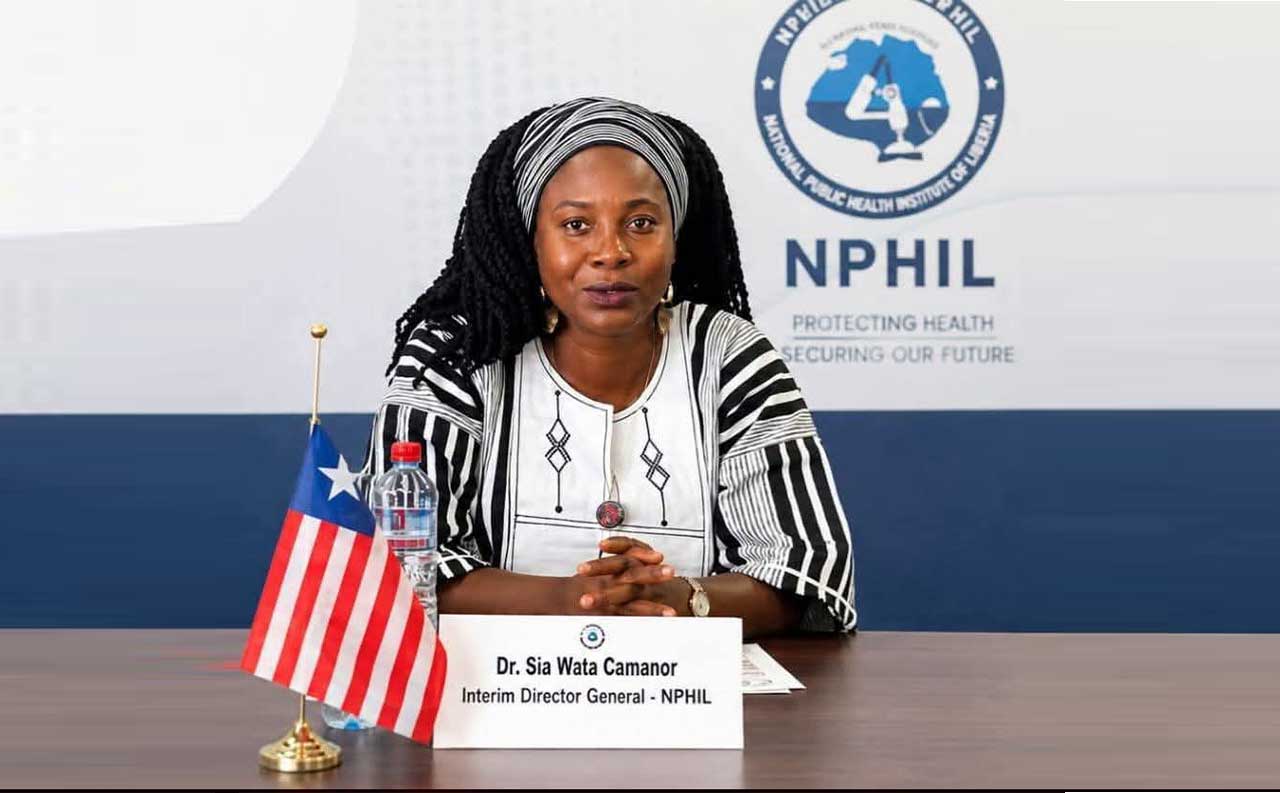
Presenting findings from a month-long nationwide Ebola preparedness assessment on Monday, July 13, 2026, NPHIL Acting Director-General Dr. Sia Wata Camanor said a multidisciplinary team toured all 15 counties from June 7 to July 8, 2026 to evaluate the country’s readiness amid ongoing Ebola outbreaks in parts of East and Central Africa.
The assessment, according to her, examined surveillance systems, emergency operations centers, laboratories, isolation facilities and 15 official points of entry, including land borders, seaports and airports. “Currently, there is still no Ebola in Liberia. This assessment was conducted as part of our commitment to preparedness and not because we have Ebola in the country. Preparedness is our strongest defense,” Dr. Camanor assured.
While emphasizing that Liberia is Ebola-free, the acting head of the NPHIL cautioned that frontline disease surveillance continues to face major logistical challenges. She said inadequate transportation, broken motorbikes, insufficient rain gear and limited operational support are affecting surveillance officers’ ability to respond quickly to suspected cases, particularly in remote communities.
According to her, Liberia has 98 district surveillance officers, 17 county surveillance officers and 22 zonal surveillance officers monitoring disease outbreaks nationwide, adding that to strengthen their mobility, he announced that 50 new motorbikes have already been procured through the World Bank-funded Health Security Project, with another 100 expected for nationwide distribution.
The NPHIL acting Director-General also disclosed that Liberia’s 16 Public Health Emergency Operations Centers remain functional but require major investments in computers, communications equipment, backup electricity, furniture and reliable internet services to improve emergency coordination.
Also, she commended the Africa Centre for Disease Control and Prevention (Africa CDC) for refurbishing the National Public Health Emergency Operations Center and acknowledged the U.S. Centers for Disease Control and Prevention (CDC) for supplying computers and printers to county emergency centers, adding that the World Bank has approved funding to install solar power systems and stable internet connectivity at all county emergency operations centers.
On border surveillance, Dr. Camanor revealed that since the World Health Organization declared the latest Ebola outbreak in May, Liberia has screened 987 travelers at Roberts International Airport, most of them returning Muslim pilgrims from the Hajj in Saudi Arabia. She reported that 966 travelers have completed the mandatory 21-day monitoring period, while 21 remain under active follow-up. None has developed Ebola symptoms.
Despite ongoing screening at airports, seaports and land borders, the assessment uncovered several critical weaknesses, including inadequate screening facilities, the absence of holding centers for suspected cases, shortages of ambulances and communication equipment, and continued dependence on volunteer port health workers who have yet to be placed on the government payroll.
Dr. Camanor, however, praised Liberia’s Joint Security and county health teams for maintaining strong cross-border surveillance and information-sharing with neighboring countries. She also announced plans to conduct integrated Ebola preparedness training for immigration officers, police, customs officials and other security personnel stationed at border crossings.
Concluding the briefing, she urged Liberians not to panic but to remain vigilant by practicing proper hygiene, reporting unusual illnesses through the national 445 hotline, cooperating with health authorities and relying only on official information from NPHIL and the Ministry of Health.
“The Government of Liberia remains fully committed to protecting every citizen. We will immediately begin implementing the recommendations from this assessment to ensure the country remains prepared for any public health emergency,” Dr. Camanor narrated.