The Kingdom of Morocco and Liberia have reached a key milestone in their strategic defense partnership.
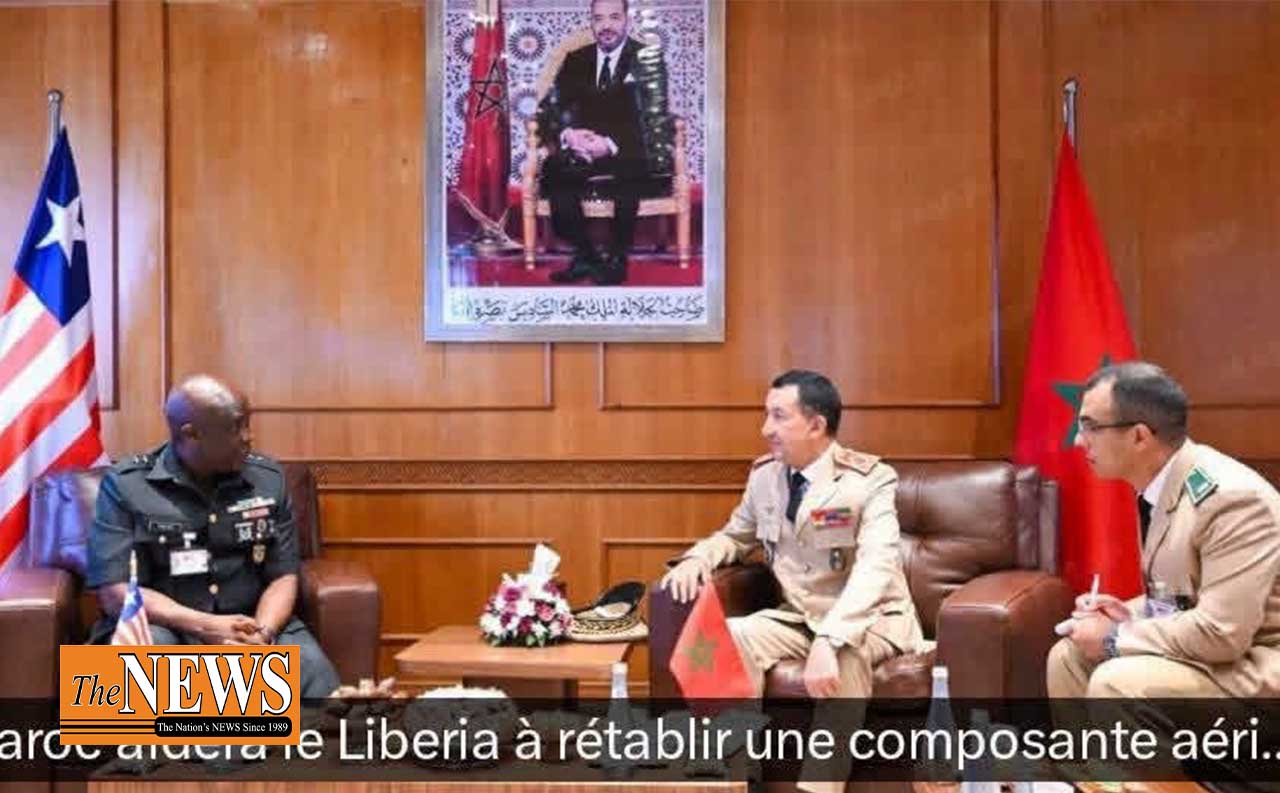
Following an official visit by the Liberian Chief of Staff to Rabat, the Royal Armed Forces (FAR) committed to supporting the setup of Monrovia’s very first air component, while also reinforcing training for its land and naval units.
Following the bilateral military cooperation agreement signed in October 2025, the visit to Rabat by General Davidson F. Forleh, Chief of Staff of the Armed Forces of Liberia (AFL), marks the operational launch of a major regional capacity-building project. Previously lacking a structured military air arm, Liberia will leverage the expertise of the Inspectorate of the Royal Air Force (FRA) to design and commission its own air force.
The framework extends beyond simple material support: Morocco will handle the entire human resource development required for air sovereignty, including training future pilots, instruction for maintenance technicians, and qualifying ground handling personnel. Liberian officers will also join courses at the Royal College of Higher Military Education (CREMS) to structure their command doctrine.
The established roadmap covers the full operational spectrum to provide Monrovia with an integrated defense doctrine:
Land Forces and Command: The FAR will handle tactical commando-level training for an elite Liberian company-sized detachment. This knowledge transfer comes alongside the delivery of instructional equipment, tactical gear, and four operational vehicles, including a mobile command unit.
Maritime Security and Coast Guard: Targeted consultations with the Royal Navy and the Moroccan Naval School aim to support Liberia in monitoring its Exclusive Economic Zone (EEZ) and boosting coast guard capabilities against maritime threats in the Gulf of Guinea.
Medical and Logistical Support: Cooperation includes military health initiatives providing for the treatment of complex pathologies in Moroccan military hospital facilities, paired with technical exchanges between specialists.
A joint bilateral military commission will be responsible for translating these strategic directions into precise annual programs, defining delivery schedules and training quotas. B2B Analysis and Geopolitical Stakes: Morocco as a Pivot for West African Security.
For Liberia, establishing an air component addresses a vital need to monitor land borders and secure remote areas—an essential logistical asset for post-reconstruction stability. For Morocco, this agreement illustrates the assertion of its defense diplomacy and its positioning as a continental training and aeronautical hub.
From an economic and industrial standpoint, this initiative highlights the emergence of intra-African defense skills and material flows. It underscores growing opportunities for MRO (maintenance, repair, and overhaul) providers, communication systems specialists, and aeronautical logistics players called upon to support the upgrading of regional armed forces.
This partnership prefigures a transformation in the West African military aviation market, where demand for light transport aircraft, surveillance platforms, and training infrastructure is steadily rising.
While fleet interoperability and financial sustainability remain the primary challenges for nations like Liberia, outsourcing training to seasoned continental players offers a rational and sustainable model for scaling capacity.