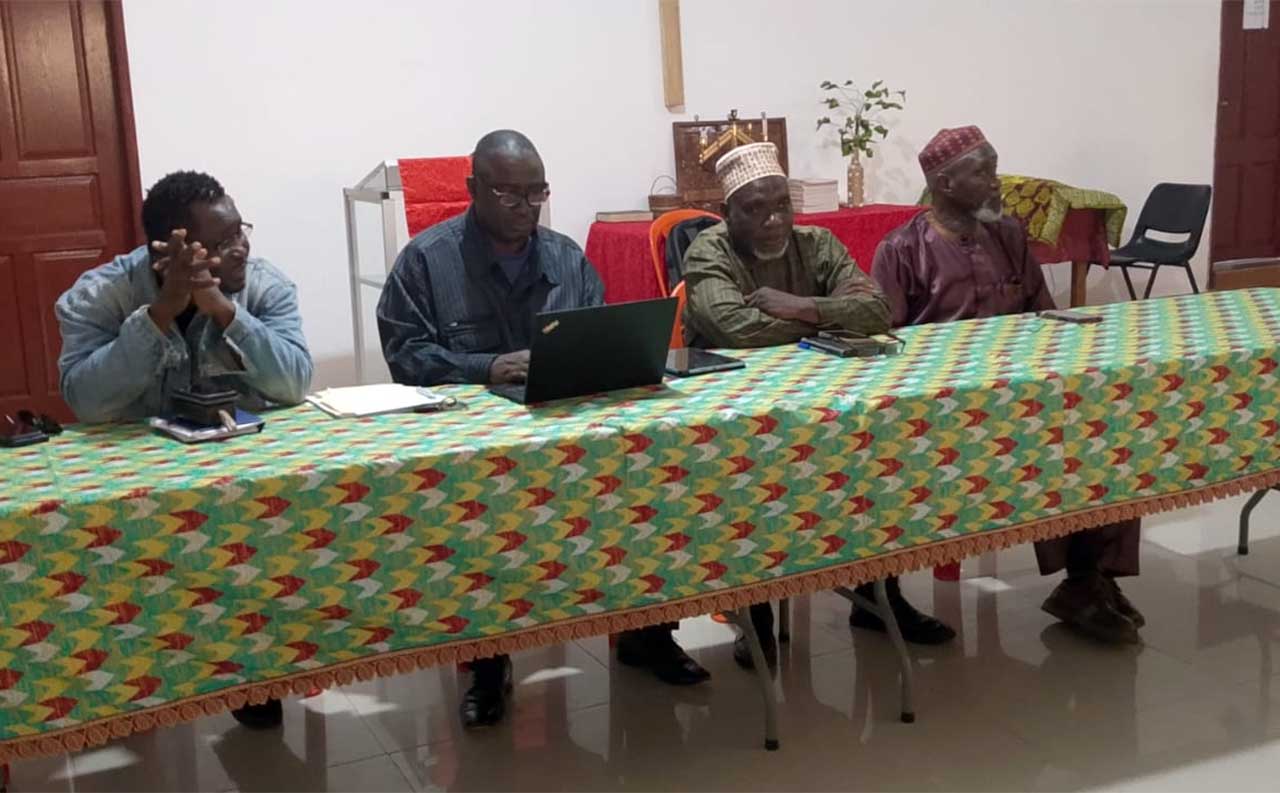
Liberia’s growing debate over family values, public health reforms, and social inclusion took a dramatic turn on Wednesday, June 3, 2026, after the Inter-Religious Council of Liberia (IRCL) publicly distanced itself from the planned “Strengthening Families” Conference while strongly backing the speedy passage of the Draft Public Health Bill.
Rev. Dr. Christopher Wleh Toe, Secretary General of the Liberia Council of Churches (LCC), told journalists that while they are committed to promoting strong families, peace, social cohesion, and human dignity, they cannot support initiatives that promote narrow definitions of family or fail to address the realities confronting ordinary Liberians.
According to him, the Council’s position places one of Liberia’s most influential religious institutions at the center of an increasingly sensitive national conversation surrounding family structures, healthcare access, and social policy.
“Families in Liberia have shown remarkable resilience through conflict, displacement, and economic challenges. Solutions intended to strengthen families must reflect Liberia’s diverse realities rather than restrictive frameworks,” he added.
Also, Rev. Dr. Toe argued that family well-being extends beyond traditional definitions and should account for social realities shaped by decades of civil conflict, migration, economic hardship, and changing social structures that have produced single-parent households, child-headed homes, extended family systems, and guardian-led households.
He expressed concern over what he described as insufficient attention being given to pressing social and health challenges affecting families, including maternal mortality, teenage pregnancy, gender-based violence, substance abuse, poverty, unemployment, unsafe abortion, and limited access to healthcare and accurate health information.
According to him, discussions about strengthening families cannot ignore the health, safety, and dignity of women, girls, young people, and vulnerable populations.
The Secretary General further disclosed that it had not been meaningfully consulted or engaged in planning discussions surrounding the conference despite its longstanding role in shaping religious and social dialogue in Liberia. “The Council’s exclusion from such discussions raises important questions about inclusivity, representation, and local ownership,” he noted.
While distancing itself from the conference and related initiatives that seek to shape Liberia’s future through restrictive approaches, the Council simultaneously mounted one of its strongest endorsements for the Draft Public Health Bill.
Speaking further, Rev. Dr. Toe, I described the proposed legislation as a critical opportunity to strengthen Liberia’s healthcare system, improve access to essential services, enhance public health preparedness, and expand protections for women, children, youth, and vulnerable communities.
He called on members of the National Legislature to prioritize and swiftly pass the bill while urging broader consultations among religious institutions, civil society organizations, women’s groups, youth organizations, community leaders, and development partners on issues affecting families and social development.