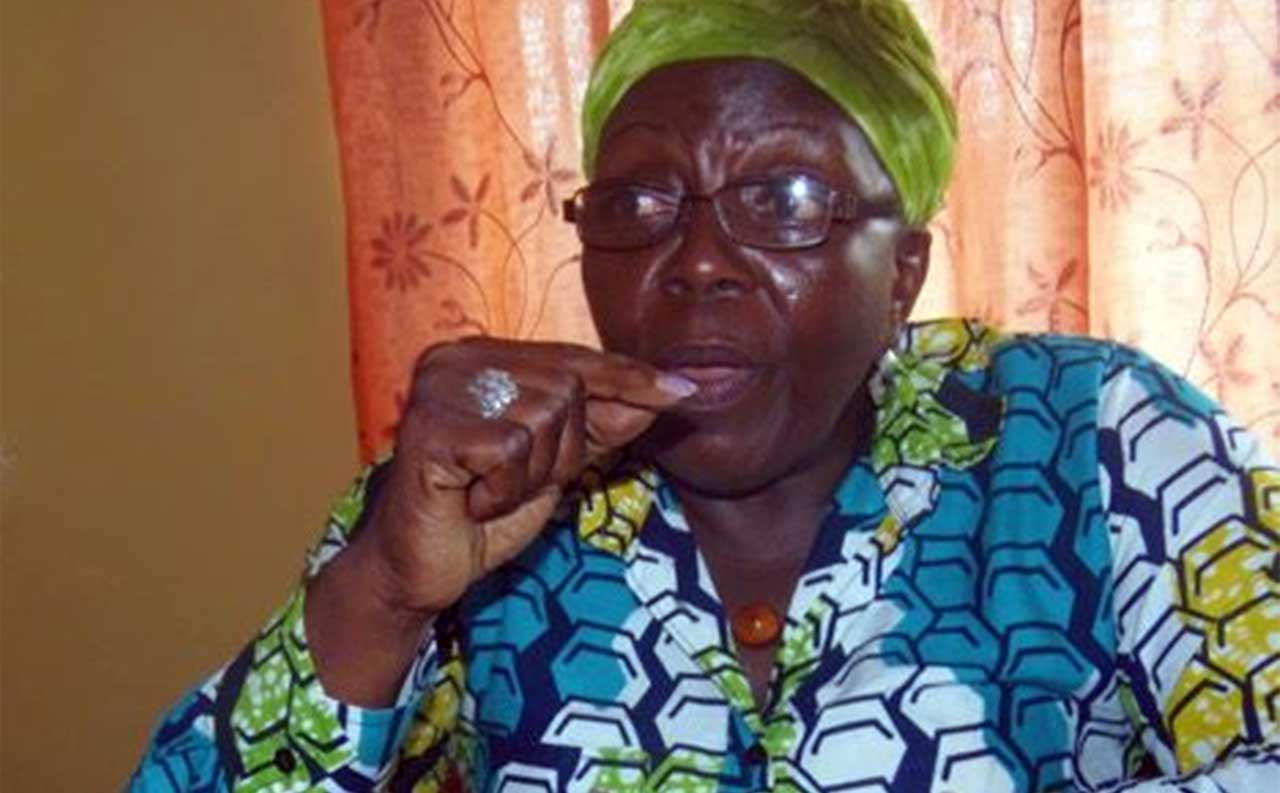
Former Chief Justice Gloria Musu Scott has argued that the Constitution does not allow lawmakers to issue administrative instructions to an executive branch agency, contrary to claims by Senators Amara Konneh and Jonathan Sogbie.
In a public statement, Cllr Scott said legislative authority does not extend to the daily operations of executive agencies. She argued that the Legislature’s oversight role cannot become an administrative mandate. Such action, according to her, would bypass the Presidency and interfere with the lawful functions of an executive agency.
Cllr. Scott addressed both senators directly, opening her statement as a response to a post they had made. The exchange points to a wider dispute over the limits of legislative power in Liberia and where oversight ends, and executive control begins.
Recently, Gbarpolu County Senator Amara M. Konneh and River Gee County Senator Jonathan B. Sogbie called the attention of the Liberian Senate to a jurisdictional conflict between the Liberia Petroleum Regulatory Authority (LPRA) and the National Oil Company of Liberia (NOCAL) in the implementation of the Petroleum (Exploration and Production) Act of 2014 (the “Petroleum Law”).
In a communication to Plenary on Tuesday, June 2, 2026, both Senators said the conflict, if left unresolved, poses risks to investor confidence, revenue generation, regulatory transparency, and the integrity of Liberia’s hydrocarbon governance.
Senators Konneh and Sogbie said when the Legislature enacted the Petroleum Law, it established a clear separation of functions: NOCAL was constituted as a commercial state-owned enterprise, and LPRA was vested with regulatory authority over the upstream petroleum sector, including NOCAL itself.
They said the governance architecture was designed to enforce accountability, prevent conflicts of interest, and align Liberia’s legal framework with international best practice. But the former Chief Justice of Liberia differed with the two lawmakers, challenging their authority over executive agency.
Madam Scott, who also served as Senator of Maryland County, is a former Liberian politician and jurist who served as Chief Justice of the Supreme Court from 1997 until 2003. Scott is a member of the Liberian National Bar Association and a co-founder of the Association of Female Lawyers of Liberia. She was an assistant professor at the Louis Arthur Grimes School of Law at the University of Liberia.
Scott was appointed Chief Justice of the five-member Supreme Court in 1997, after the court was reconstituted following the civil war and the election of Charles Taylor. In February 2003, Scott read a ruling of the court which said it did not have legal jurisdiction over the rebel Liberians United for Reconciliation and Democracy to stop the second civil war, and conduct a national census before the 2003 election. She served on the court until August 2003, when the transitional government took effect.
Scott served as Chairperson of the Constitution Review Committee (CRC), which convened from 2013 until 2015.
“Good morning, Senators Konneh and Sogbie. I am just reading your post. The Constitution of Liberia does not authorize you to give administrative instructions to an agency in the executive branch of government. The exercise of constitutional legislative authority does not extend to the administrative day-to-day operations of agencies of the Executive Branch,” Justice Scott noted.
She added, “With all due respect and deference, the oversight function of the Honorable Legislature is not and cannot be administrative mandates which bypass the Presidency and go directly to the lawful and legal day-to-day function of an agency in the Executive Branch.”