Residents of Monrovia will soon face stricter sanitation laws, mandatory waste collection fees, and stronger penalties for illegal dumping, roadside garages, noise pollution, and unauthorized street trading. This news comes as the Monrovia City Corporation (MCC) officially launches a new municipal administrative regulation alongside a Public-Private Partnership (PPP) Solid Waste Management Framework.
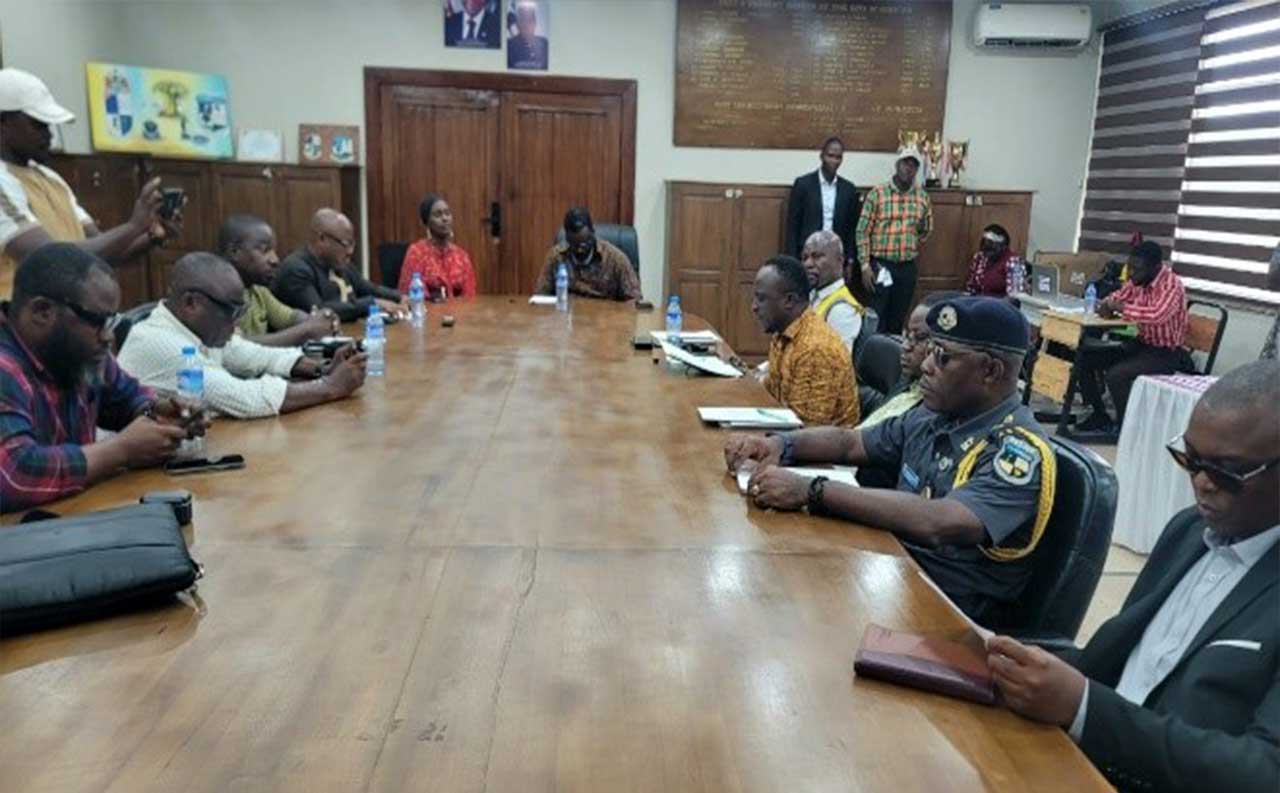
The announcement was made on Monday, May 18, 2026, during a major press briefing, where MCC Director General for Corporate Services, Able Blakie, outlined what city authorities described as one of the most significant urban governance reforms in recent years. Blakie said the initiative aims to restore urban order, improve sanitation, protect public health, strengthen environmental sustainability, and enhance the overall appearance of Monrovia.
He explained that under the new regulations, all households and businesses must subscribe to approved waste collection services. According to him, residents who dump garbage in drainage systems, wetlands, waterways, beaches, and public spaces will face immediate fines and possible prosecution.
Speaking, Blackie also introduced stricter control over street vending, construction permits, outdoor advertising, public events, and business operations, saying that illegal roadside structures, unauthorized garages, abandoned buildings, and makeshift gasoline sales on sidewalks will now attract enforcement actions.
“Entertainment centers, bars, clubs, religious institutions, and businesses causing excessive noise pollution will also face fines, suspension, or closure where necessary. Hotels, restaurants, factories, and other facilities must comply with mandatory sanitation and environmental health standards,” he added.
The MCC Director General for Corporate Services explained that the new PPP waste management framework, developed in partnership with the Liberia Solid Waste Association and the National Community-Based Enterprises, introduces a decentralized district-based waste collection system.
Under the arrangement, Blackie stated that Community-Based Enterprises (CBEs) will manage household and small business waste collection within assigned communities, while Small and Medium Enterprises (SMEs) will service larger businesses, institutions, and diplomatic facilities, stating that MCC will now function mainly as a regulatory, monitoring, and enforcement authority.
However, Blakie disclosed that the first implementation phase will begin on July 1, 2026, covering districts 7, 8, 9, and 16 for an initial six-month period before expansion to the remaining parts of Greater Monrovia.
Speaking on behalf of the City Council, officials noted that the ordinances were developed after months of consultations with residents, businesses, community leaders, and stakeholders, especially during the 2025 Monrovia Week celebrations, where citizens called for stronger enforcement and greater civic responsibility.
The MCC Council member stressed that the new ordinances are not simply about punishment, but about creating standards for a cleaner, safer, and more organized city that reflects the dignity of its people. Also speaking, the Mayor of Monrovia, John Siafa, urged residents to support the reforms, emphasizing that keeping Monrovia clean and orderly is not the government’s responsibility alone.
“These reforms are not meant to generate money, but to create discipline, accountability, and responsible city living, adding that offenders may also be assigned community service in addition to fines,” he stated. According to him, residents can access the full regulations, permit applications, and public notices through the official MCC platform and customer service center.
Moreover, the Major called on all residents, institutions, and businesses to cooperate fully, stressing that collective responsibility remains the only path toward building the modern Monrovia everyone desires.