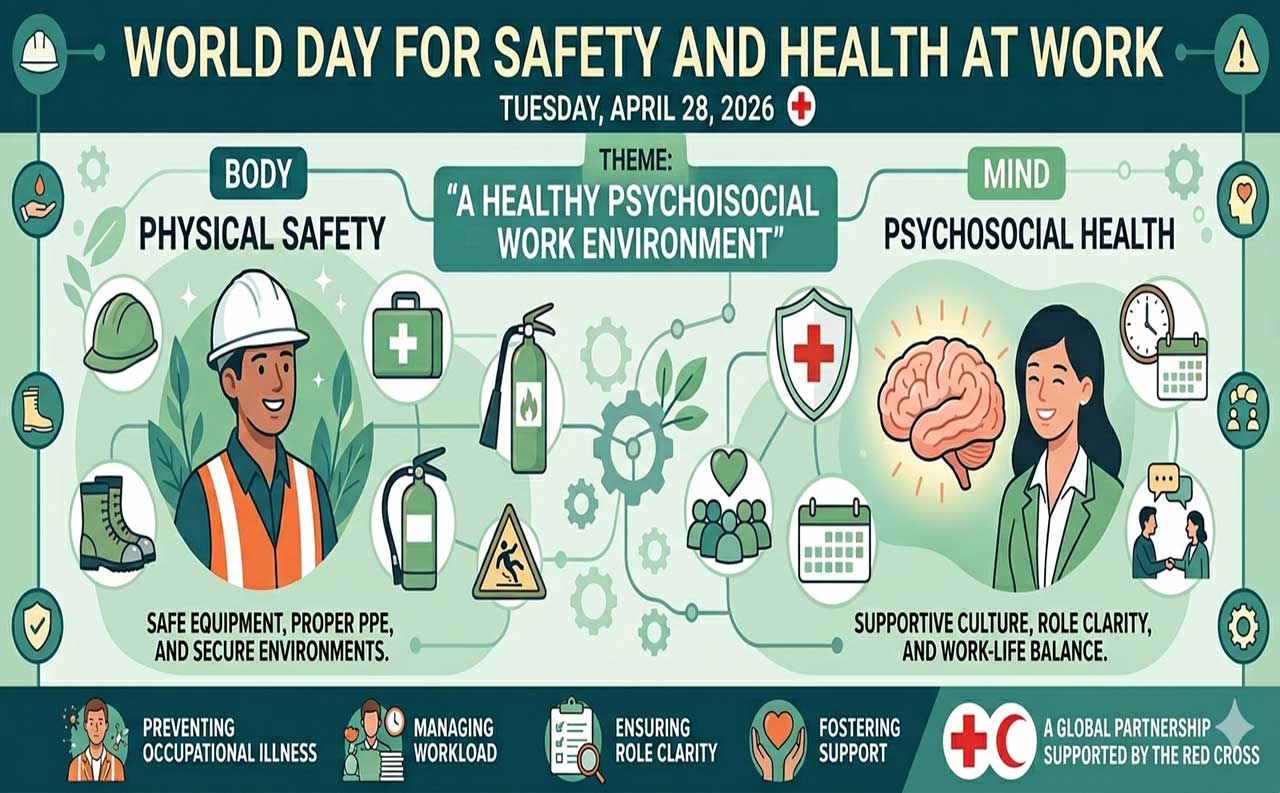
The Liberia National Red Cross Society (LNRCS) has raised serious concerns over growing workplace safety failures across Liberia, calling for urgent national action to prevent disasters, injuries, and deaths as the country joined the global celebration of World Safety and Health at Work Day 2026.
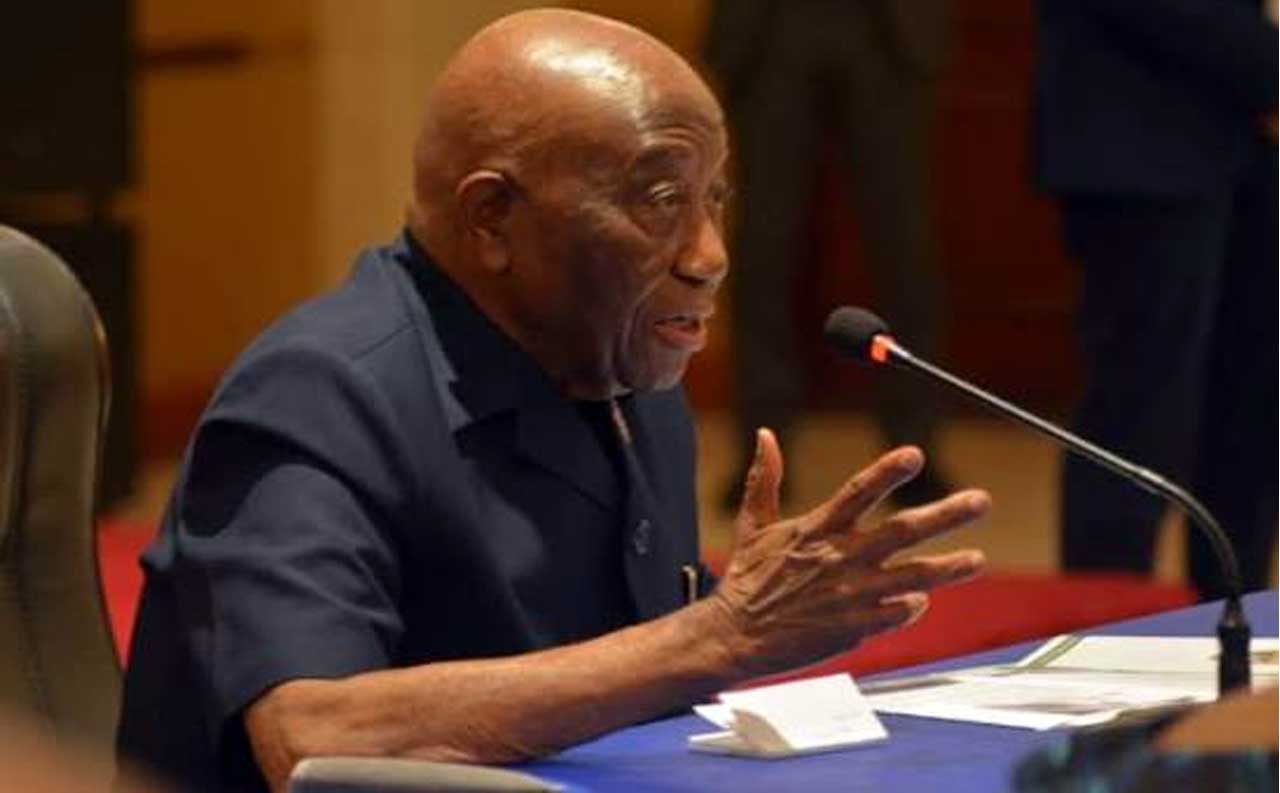
Speaking Tuesday, April 28, 2026, during the commemoration held in Monrovia under the theme, “Building Healthy Physical and Social Working Environments in the Workplace,” Col. Warsuwah Barvoul Sr., Director General, Liberia National Fire Service, stressed that workplace safety is not only about physical protection but also about mental well-being, dignity, and respect.
Serving as a Guest Speaker, he said a healthy workplace must ensure that every worker feels safe, valued, supported, and empowered to contribute meaningfully, noting that staff, volunteers, and partners remain the backbone of humanitarian service.
Col. Barvoul warned that Liberia continues to witness preventable workplace disasters due to poor safety compliance, weak emergency protocols, and negligence in handling hazardous equipment. The head of the National Fire Service referenced major incidents, including the September 2025 gas explosion on the Japan Freeway, industrial accidents at operational facilities that caused multiple deaths and injuries, and a recent devastating fire outbreak at an industrial factory that reportedly burned for nearly 24 hours.
“These incidents expose serious failures in workplace safety systems. We cannot continue to wait for tragedies before taking action,” he said.
However, Col. Barvoul called on the Environmental Protection Agency (EPA), the National Disaster Management Agency (NDMA), and the Liberia National Fire Service to strengthen joint inspections, enforce stricter regulations, and ensure employers comply with occupational safety standards.
He also urged institutions and businesses to prioritize hazard identification, emergency preparedness, regular safety drills, first aid training, and the provision of personal protective equipment for employees. According to him, safety must become a daily culture rather than a reaction after disasters strike. Earlier, National Society Development Officer Sigmund R. Holt described workplace safety as a core humanitarian value, emphasizing that protecting staff and volunteers directly strengthens humanitarian action across the country.
The event, according to him, also featured first aid practical demonstrations and awareness sessions on fire prevention, emergency response, and occupational health. The Liberia National Red Cross Society further appealed to national stakeholders to support victims of fire disasters and other workplace accidents through recovery programs and trauma care initiatives.
For his part, Gregory T. Blamo, Secretary General, Liberia National Red Cross Society, called for urgent national action to prevent disasters and improve workplace safety, warning that Liberia can no longer afford to wait for tragedies before responding.
Blamo said the country must shift from emergency response to prevention and anticipatory action. “We all know it can rain in Liberia. We learned it from elementary school that rain starts in April and ends in October. So if it rains, it should not surprise us,” he stated. He criticized the growing trend of people constructing homes in flood-prone swamp areas and later expecting government intervention when floods destroy their properties.
“People build in places they had no business going, and when it rains, and floods come, they cry for help. We need to start acting before these things become unmanageable and too expensive,” he stressed.
Blamo revealed that the Red Cross has moved beyond its traditional emergency response role of distributing relief items after disasters, and is now focusing on what he described as “anticipatory action”, preparing communities before disasters strike.
However, the Secretary General of LRCS recounted a visit with a foreign ambassador to a flood-affected community in Monrovia, where residents had been receiving assistance for three consecutive years.