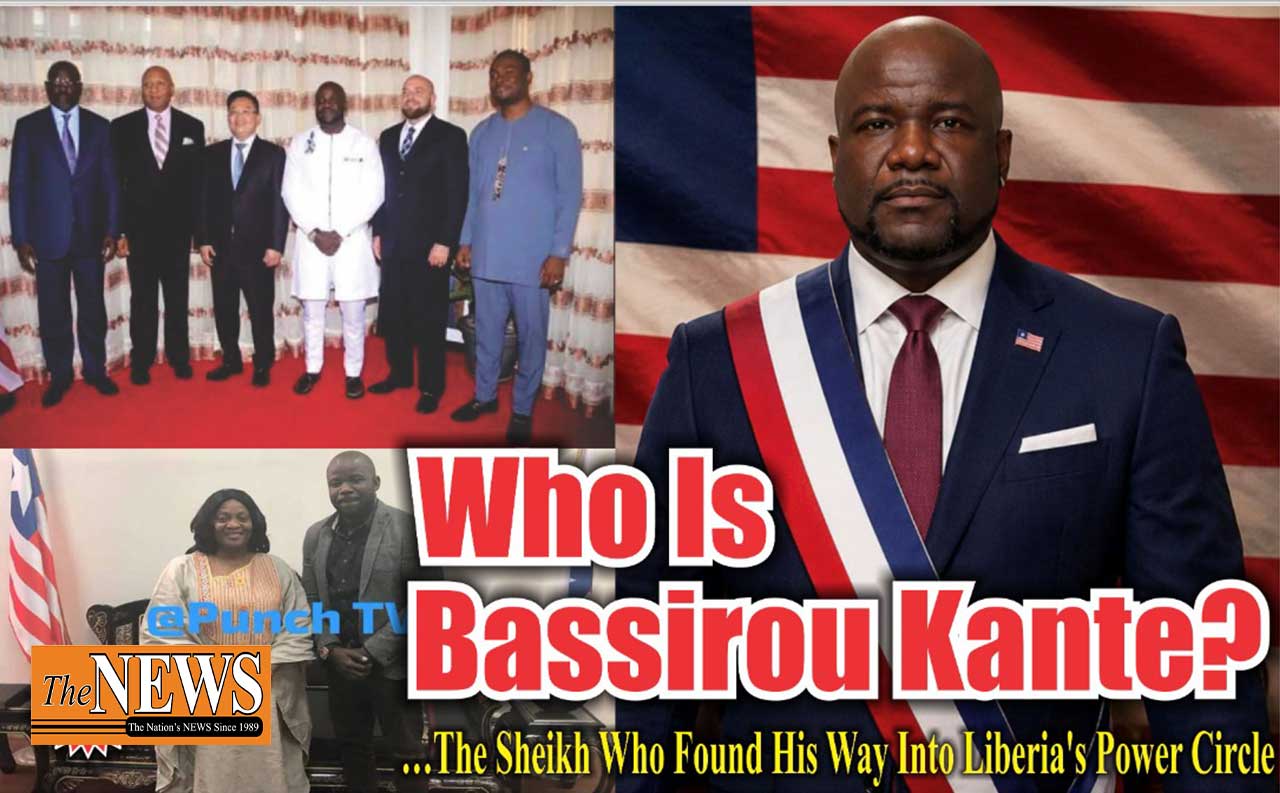
As Liberia’s cocaine investigation widens and increasingly powerful names are drawn into questioning, one shadowy figure deserves renewed public scrutiny: Sheikh Bassirou Kante. To many Liberians, Kante presented himself as a wealthy international businessman, philanthropist and well-connected socialite. He displayed luxury, traveled internationally, associated with influential people and appeared to move comfortably through Liberia’s political and business circles.
But behind the public image was a far more troubling record involving stolen money, shell companies, suspicious financial transactions, a diplomatic passport scandal and a federal money-laundering conviction in the United States. Now, according to confidential sources familiar with Liberia’s ongoing cocaine investigation, Kante has allegedly emerged in connection with the expanding inquiry.
The Man Behind “Royal Gold”
Sheikh Bassirou Kante, also known publicly as “Sheikh Royal” and “Royal Gold,” is a Liberian national who previously resided in Maryland. He was associated with Royal Gold Trading Company Inc., a business registered in Liberia in November 2021. According to the Liberian government, the company was officially registered to conduct post-harvest crop activities.
However, Liberia’s Ministry of Justice and Financial Intelligence Unit later alleged that Royal Gold was operating outside its registered purpose and had become involved in questionable financial activities. Authorities alleged that suspicious funds were structured and deposited into company and personal accounts connected to Kante and his associates. They also alleged that some of those funds may have been used to acquire property in Congo Town.
The Liberian government subsequently moved to freeze accounts connected to Kante, Royal Gold Trading Company and company managers at multiple Liberian banks. A freezing order does not automatically prove that every dollar or property involved was the proceeds of crime. However, it demonstrates that Liberia’s financial authorities believed there was sufficient cause to preserve the assets while investigating their origin.
The Multimillion-Dollar American Case
Kante’s most serious documented criminal matter unfolded in the United States. He was arrested by federal authorities in Maryland on April 20, 2022, in connection with a sophisticated Business Email Compromise operation. According to American investigators, criminals obtained access to legitimate business systems and redirected payments into accounts controlled by third parties.
One part of the investigation involved a healthcare company in Washington state. Investigators said stolen identification and electronic information were used to access the company’s billing system and replace legitimate banking instructions. Eight wire transfers totaling more than US$7 million were reportedly redirected.
A second incident involved an Ohio real estate transaction. Through a spoofed email address, more than US$80,000 intended as a condominium down payment was redirected. Federal investigators said Kante received portions of the stolen money, used companies to move the proceeds and transferred funds overseas, including to Nigeria and Liberia.
Kante ultimately pleaded guilty to conspiracy to commit money laundering and engaging in financial transactions involving property derived from criminal activity. This was not merely an allegation. It became a federal criminal conviction. He was reportedly sentenced to 20 months in prison, followed by three years of supervised release, and ordered to pay more than US$3 million in restitution.
The Diplomatic Passport Scandal
When American investigators searched Kante’s Maryland residence, they reportedly discovered a Liberian diplomatic passport, multiple passports from different countries and identification documents authorities considered fraudulent. Kante was not publicly known to be an accredited Liberian diplomat. So how did a convicted money launderer obtain one of Liberia’s most protected travel documents?
That question shook the Liberian government.
Former President George Weah instructed the Ministry of Foreign Affairs to investigate how the passport was issued. The scandal revived longstanding concerns that Liberian diplomatic passports had been distributed to politically connected businessmen and other individuals who were not legally entitled to possess them.
American investigators also reportedly uncovered emails exchanged between Kante and then Vice President Jewel Howard-Taylor. Howard-Taylor acknowledged interacting with Kante but denied involvement in securing his diplomatic passport. The existence of communications between two people does not, by itself, prove criminal collaboration. Nevertheless, their documented association became a legitimate matter of public interest because of Kante’s criminal case and his possession of the diplomatic passport.
The Liberian people were promised an investigation. Four years later, where is the complete report, who recommended Kante for the passport, who approved it, who processed it, what official position or diplomatic assignment supposedly qualified him, was anyone disciplined, dismissed or prosecuted? These are the baffling questions on the minds of Liberians as the investigation continues. A diplomatic passport does not issue itself. Someone with authority opened that door.
Wanted Again in the United States
After serving his federal sentence, Kante was released under court supervision. In October 2024, American authorities reportedly issued another warrant for him after he allegedly violated the conditions of his supervised release. By January 2025, the United States Marshals Service was publicly seeking him. Authorities reportedly considered him a flight risk because of his extensive connections to Liberia. The exact nature of the alleged supervised-release violation was not publicly explained in the report reviewed.
Social media accounts bearing Kante’s name have since displayed posts and videos apparently recorded in Liberia. However, social media activity alone cannot confirm who operated the accounts, where the videos were recorded or whether his American warrant remains active. The Liberian and American governments should clarify his present legal status.
Long before Sheikh Bassirou Kante’s name resurfaced in Liberia’s ongoing cocaine investigation, he had already become a familiar face around some of the country’s most powerful political figures. From his relationship with former Vice President Jewel Howard-Taylor to his reported interactions with senior officials during the administration of former President George Weah, Kante appeared to have found his way into Liberia’s political circles. Now, with Howard-Taylor facing multiple charges in connection with an alleged international cocaine trafficking network, Kante’s past connections are attracting renewed public attention.
The Diplomatic Passport
Kante’s name first drew major international attention in 2022 after U.S. authorities arrested him in a case involving allegations of wire fraud and money laundering. During the proceedings, a U.S. court cited evidence of what it described as Kante’s “close personal relationship” with then-Vice President Howard-Taylor. U.S. authorities also discovered a Liberian diplomatic passport in Kante’s possession. The passport raised questions because Kante was not known to hold a formal diplomatic position. The controversy prompted former President Weah to order an investigation into how the passport was obtained and to suspend the issuance of diplomatic passports without presidential authorization. Howard-Taylor’s office denied that she had recommended or facilitated the issuance of the passport.
The US$100,000 P-Square Show
Kante was not only connected to political circles. In 2022, he reportedly paid US$100,000 to facilitate Nigerian music duo P-Square’s appearance in Liberia during the country’s Bicentennial celebrations. The payment was presented as Kante’s contribution toward the national celebration and further placed him in the spotlight as a businessman with significant access and financial influence. His social-media posts from the period also showed him meeting and interacting with senior Liberian officials and other prominent figures during the CDC administration.
Now, The Cocaine Case
Years later, Kante’s name has resurfaced in a far more serious context. The government’s case against former Vice President Jewel Howard-Taylor alleges that Kante played a role in connecting her with foreign nationals’ investigators have linked to an alleged transnational cocaine trafficking network.
According to the allegations, Kante brought foreign nationals to Liberia and introduced them to Howard-Taylor. Investigators further alleged that money connected to the case passed through Kante. Howard-Taylor has denied wrongdoing, and the allegations remain subject to judicial determination. Kante’s earlier political connections, however, have now taken on renewed significance as investigators examine the relationships surrounding the case.
The Questions
How did a private businessman gain access to Liberia’s political elite? How did he come to possess a Liberian diplomatic passport? What was the extent of his relationship with senior officials during the Weah administration? And what role, if any, did he play in connecting Howard-Taylor with the foreign nationals now at the center of the cocaine investigation? Those questions remain unanswered. But one thing is clear: Bassirou Kante’s journey through Liberia’s corridors of power is now being viewed through a very different lens.