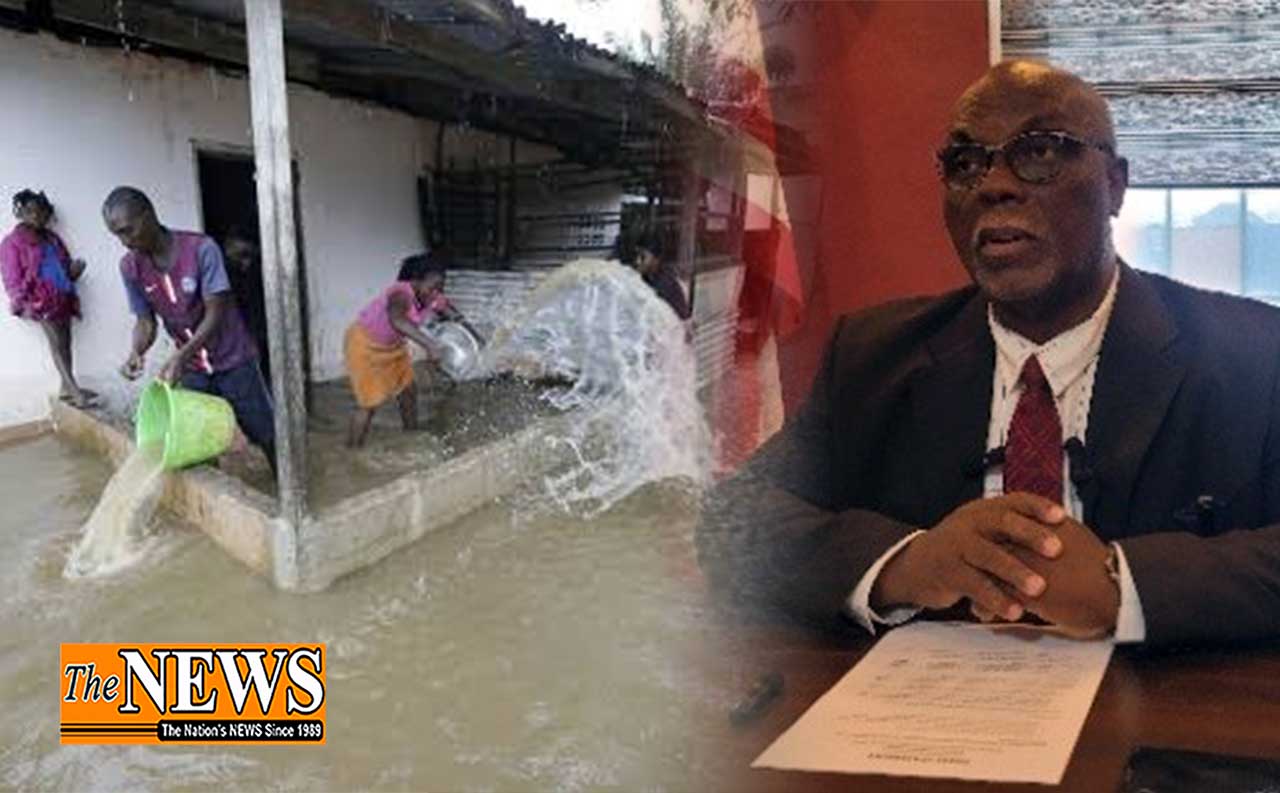
The Liberia National Red Cross Society (LNRCS) is concerned about the country’s worsening humanitarian situation, revealing that a sharp cut in government funding and the absence of local donations are crippling its ability to respond to devastating floods, fires and windstorms affecting thousands of Liberians.
Speaking Wednesday, July 22, 2026, at the organization’s headquarters in Monrovia, LNRCS Secretary General Gregory T. Blamoh disclosed that the government’s annual subsidy to the Red Cross had been reduced from US$100,000 in 2025 to US$40,000 in 2026, with only US$10,000 disbursed so far.
Blamoh warned that the limited funding has forced the Red Cross to dedicate its only government payment exclusively to emergency flood response, despite mounting requests for assistance from disaster victims across the country.
“We have received only US$10,000 of the US$40,000 promised this year, and that is the only money we have available for flood response. We don’t know how many people it can help, but we have committed it because that’s all we have,” he added.
The humanitarian organization said it assessed disasters across several counties earlier this year, documenting 61 houses destroyed by fire in Grand Cape Mount, Rivercess, Margibi, Nimba and Montserrado counties, affecting 1,643 people; it also recorded 213 houses damaged by windstorms in Nimba and Lofa counties, impacting 3,704 people.
Following assessments conducted in January and February, the Red Cross appealed for US$50,000 from Liberian businesses and citizens but received no local financial support. However, the Red Cross Secretary General disclosed that the International Federation of Red Cross and Red Crescent Societies (IFRC) approved US$365,000 for storm victims and US$170,000 for fire victims, while the Swedish Red Cross contributed an additional US$11,225, bringing total fire-response funding to US$181,225.
According to Blamoh, those international funds have already been fully committed to victims identified during the initial assessments. “The money we received has already gone to the 61 houses we assessed. If your house burned after that assessment period, unfortunately there is no funding available to help you unless we receive new support,” he explained.
LNRC Secretary General stressed that assistance is divided into two components: cash for immediate household and food needs, and separate financial support to purchase construction materials such as zinc, nails and planks to rebuild damaged homes.
The Red Cross said support for storm victims will conclude on July 31, while assistance for fire victims will continue until the end of August, after which final accountability reports will be submitted to donors.
Blamoh expressed disappointment that repeated appeals to local businesses and the Liberian public have yielded no contributions since March, despite growing humanitarian needs. He also disclosed that repeated efforts to secure meetings with officials at the Ministry of Health regarding the reduced subsidy have produced no clear explanation.
“I don’t know what is in their minds,” Blamoh said when asked why government support had been drastically reduced despite the country’s expanding national budget. “We have written several letters requesting appointments, but we have not received answers.”
Beyond funding concerns, Blamoh warned that Liberia’s annual flood disasters will continue unless authorities address the root causes. He attributed recurring flooding largely to the rapid growth of informal settlements in low-lying communities after the civil war and said relocating vulnerable residents and improving drainage systems remain the only sustainable solutions.
“We don’t have the authority to move people from flood-prone communities. That responsibility belongs to government. Until those communities are improved or people are relocated, we will continue responding to the same emergencies every year,” Blamoh stated.
The Red Cross also urged Liberians to adopt stronger fire prevention measures, including regularly inspecting electrical wiring, avoiding overloaded extension cords and switching off electrical breakers before leaving their homes.
Blamoh emphasized that while the Red Cross remains committed to responding to emergencies, its ability to save lives depends heavily on increased government support, donor assistance and public contributions.
He further noted that the organization continues to coordinate disaster response efforts with the National Disaster Management Agency (NDMA), which serves as Liberia’s lead disaster coordination body, bringing together humanitarian actors to maximize available resources in responding to emergencies nationwide.