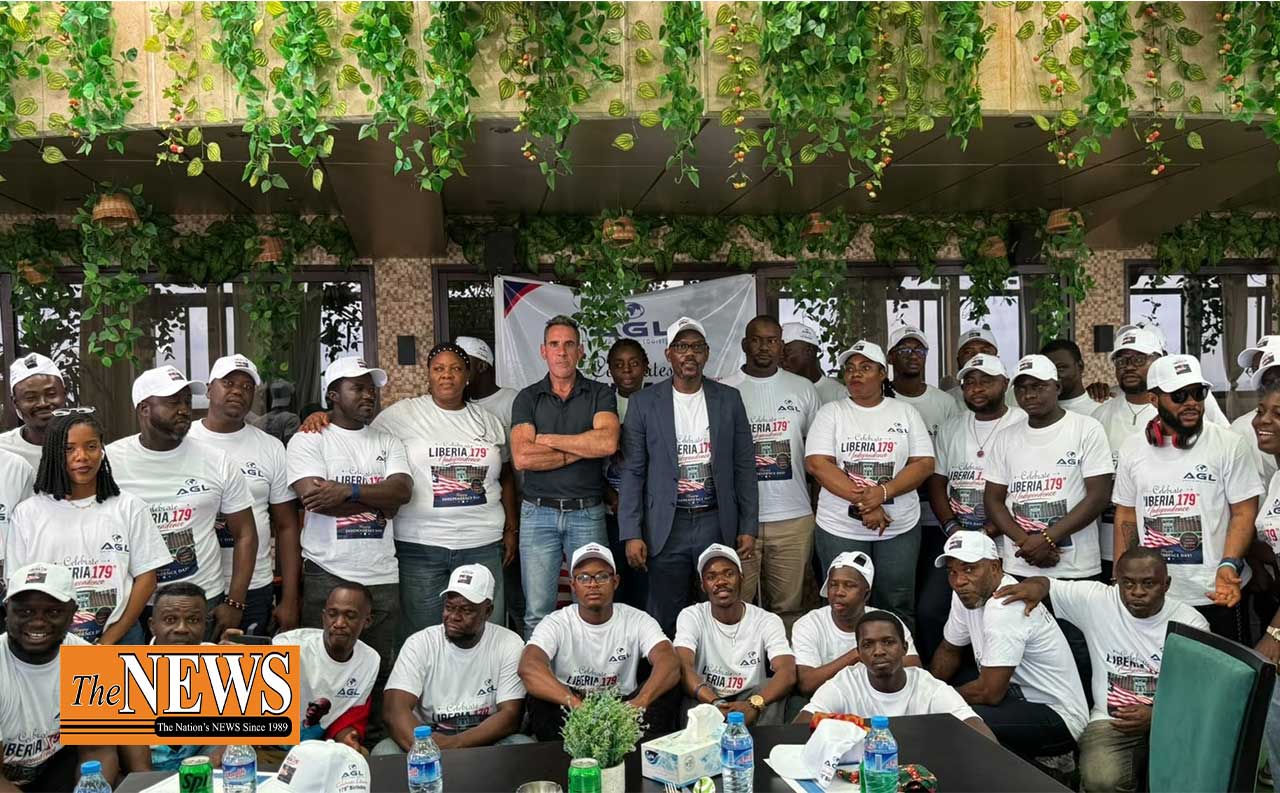
Liberia on Monday, July 27, 2026, officially celebrated the nation’s 179th Independence Anniversary in Buchanan, Grand Bassa County, with thousands of citizens joining President Joseph N. Boakai, government officials, diplomats, and international guests in the national observance.
Although July 26, Liberia’s Independence Day, fell on Sunday, the official celebration was held on Monday, July 27. The event featured a military parade, cultural performances, and a presidential address.
Speaking during the celebration, the President announced a sweeping national initiative to reclaim and preserve Liberia’s historical identity, unveiling a National Historical Recovery and Repatriation Initiative, ordering the revitalization of the country’s neglected National Archives and National Museum, and reviving the long-delayed National History Project, as Liberia commemorated its 179th Independence Anniversary with a call for Liberians to reclaim ownership of their national story.
Addressing thousands of Liberians and international guests in Buchanan under the theme, “Strengthening National Identity Through Liberian-Led Historical Leadership,” President Boakai declared that the nation must move beyond merely celebrating independence to understanding the history that defines its identity.
“A nation that understands its history is better prepared to shape its future, stressing that Liberia’s history should be researched, interpreted, and preserved primarily by Liberians through professional, evidence-based scholarship.
Also, Boakai announced the creation of the National Historical Recovery and Repatriation Initiative, which will work with international universities, museums, and cultural institutions to repatriate copies of historical records relating to Liberia that are currently housed abroad.
Moreover, he committed his administration to modernizing the National Archives and National Museum, promising investments in infrastructure, digitization, preservation systems, and improved public access for researchers, students, and citizens.
The President further directed the establishment of an intergovernmental technical committee to study the restoration and modernization of the long-abandoned Kendeja Cultural Center, describing it as a vital symbol of Liberia’s cultural heritage.
In another major policy announcement, Boakai said his government will revive the National History Project, first recommended by the Truth and Reconciliation Commission (TRC), to comprehensively document Liberia’s history through the work of professional historians, archivists, archaeologists, anthropologists, linguists, and educators, free from political influence.
The Liberian leader emphasized that while international scholars remain important partners, Liberians must remain at the center of researching and telling their own history. Reflecting on Liberia’s nearly two centuries of statehood, Boakai described the country as “a people born in freedom,” whose identity has been shaped by indigenous civilizations, the return of freed Africans from the Americas and the Caribbean, and enduring ties with the African Diaspora.
He urged Liberians to embrace their shared identity above political, ethnic, and religious differences, arguing that nation-building requires more than strong institutions. “The strongest nations are united by shared values, common purpose, mutual respect, and a deep sense of identity,” he said.
The President also noted that 2026 marks the centenary of both the 1926 Firestone Concession Agreement and the Harvard African Expedition to Liberia, saying both events significantly influenced Liberia’s economic development and historical documentation while calling for future scholarship to be increasingly led by Liberian voices.
Concluding his Independence Day address, Boakai thanked the people of Grand Bassa County for hosting what he described as an unprecedented national celebration and called on Liberians at home and across the diaspora to preserve the country’s heritage while working together to build “a confident nation that understands itself.”