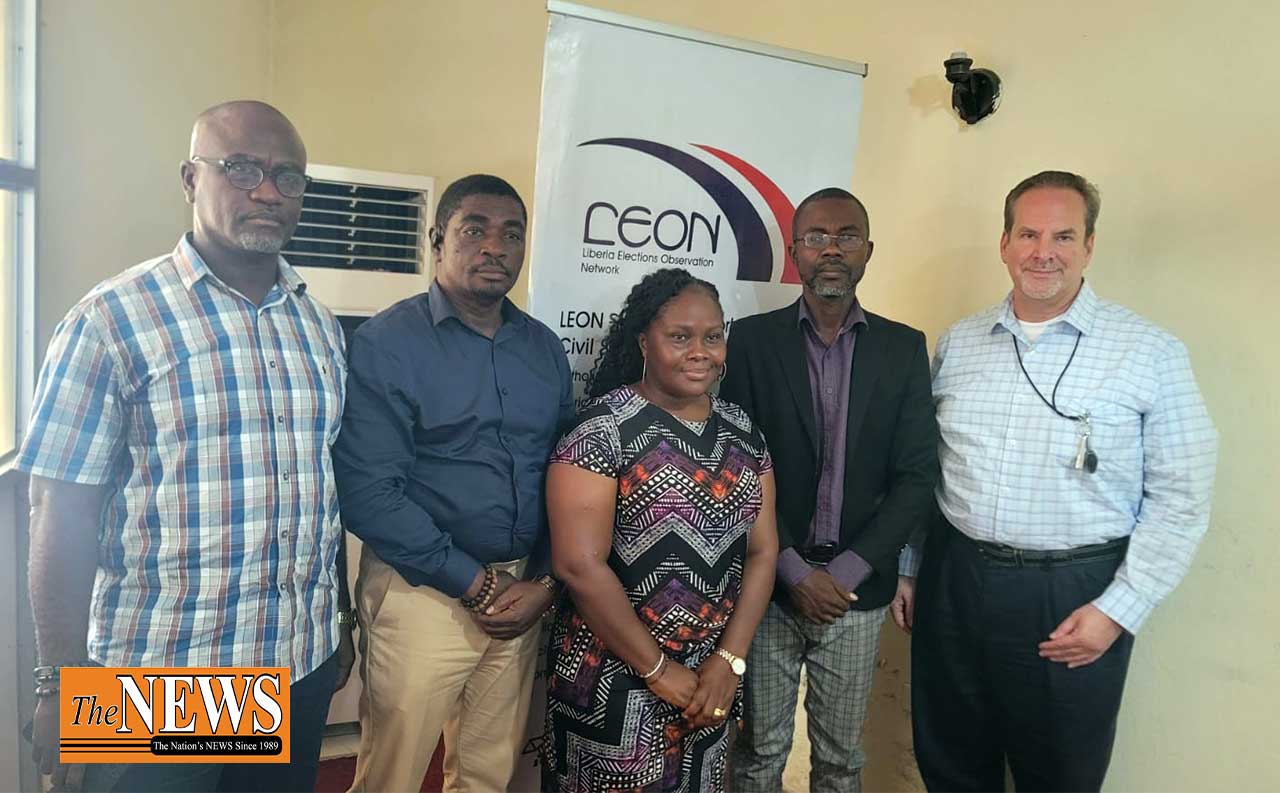
Two of Liberia’s leading domestic election observation networks have signed a Memorandum of Understanding (MOU) aimed at strengthening collaboration and advancing inclusive electoral reforms in the country.
The Elections Coordinating Committee (ECC) and the Liberia Elections Observation Network (LEON) announced the agreement on Wednesday, November 4, saying the partnership will amplify the voices of diverse stakeholders and promote broader participation in Liberia’s electoral and democratic processes.
Speaking with reporters, Pilate Johnson, LEON Executive member said that the joint initiative is being implemented with technical support from the Netherlands Institute for Multiparty Democracy (NIMD) under the Liberia Electoral Support Project (LESP), managed by the United Nations Development Programme (UNDP).
According to him, the project is being implemented in partnership with UN Women and NIMD, with support from the European Union and the Embassies of Ireland and Sweden. Under the agreement, he said, ECC and LEON will coordinate advocacy activities, facilitate stakeholder engagements, raise public awareness, promote dialogue on priority electoral reform issues, and conduct public outreach campaigns across Liberia.
The LEON Executive member explained that the two organizations have identified increased women’s political representation through Temporary Special Measures (TSMs) as one of their key priorities. Speaking, Johnson intend to promote the participation of underrepresented groups, including young people and persons with disabilities, in political and electoral processes. Additionally, he revealed that the partnership will advocate for compliance with the legal framework governing legislative seat apportionment and constituency boundary delimitation, issues considered important to ensuring fair and inclusive political representation.
Also, Johnson said the two institutions would jointly document recommendations from citizens and other stakeholders and present them to relevant electoral authorities and policymakers for consideration during the electoral law reform process.
According to him, the National Elections Commission (NEC) and the National Legislature are among the institutions expected to receive and consider recommendations emerging from the engagement. Moreover, he stressed that electoral reform should go beyond institutional and technical adjustments, arguing that it must also address the barriers preventing citizens, particularly women, young people, and persons with disabilities, from fully participating in the electoral process.
Johnson said that the institutions have further committed to working alongside the Netherlands Institute for Multiparty Democracy, civil society organizations, and other democratic stakeholders to promote a transparent, participatory, accountable, and inclusive electoral reform process.
He disclosed that the partnership comes amid ongoing discussions about strengthening Liberia’s electoral framework and addressing challenges affecting equal political representation and citizen participation. ECC and LEON are therefore calling on political parties, the NEC, civil society organizations, the legislative and executive branches of government, development partners, the media, and citizens across the country to actively participate in the national discourse on electoral reforms. LEON Executive member said that the success of the reform process would depend on collective engagement and a shared commitment to building a democratic system that responds to the aspirations of the Liberian people.