Liberia has presented what it describes as compelling evidence of economic recovery and steady progress toward the Sustainable Development Goals (SDGs), with Finance and Development Planning Minister Augustine Kpehe Ngafuan telling the United Nations that the country has reduced poverty, expanded electricity access, increased domestic revenue, and strengthened critical social services despite mounting global and domestic challenges.
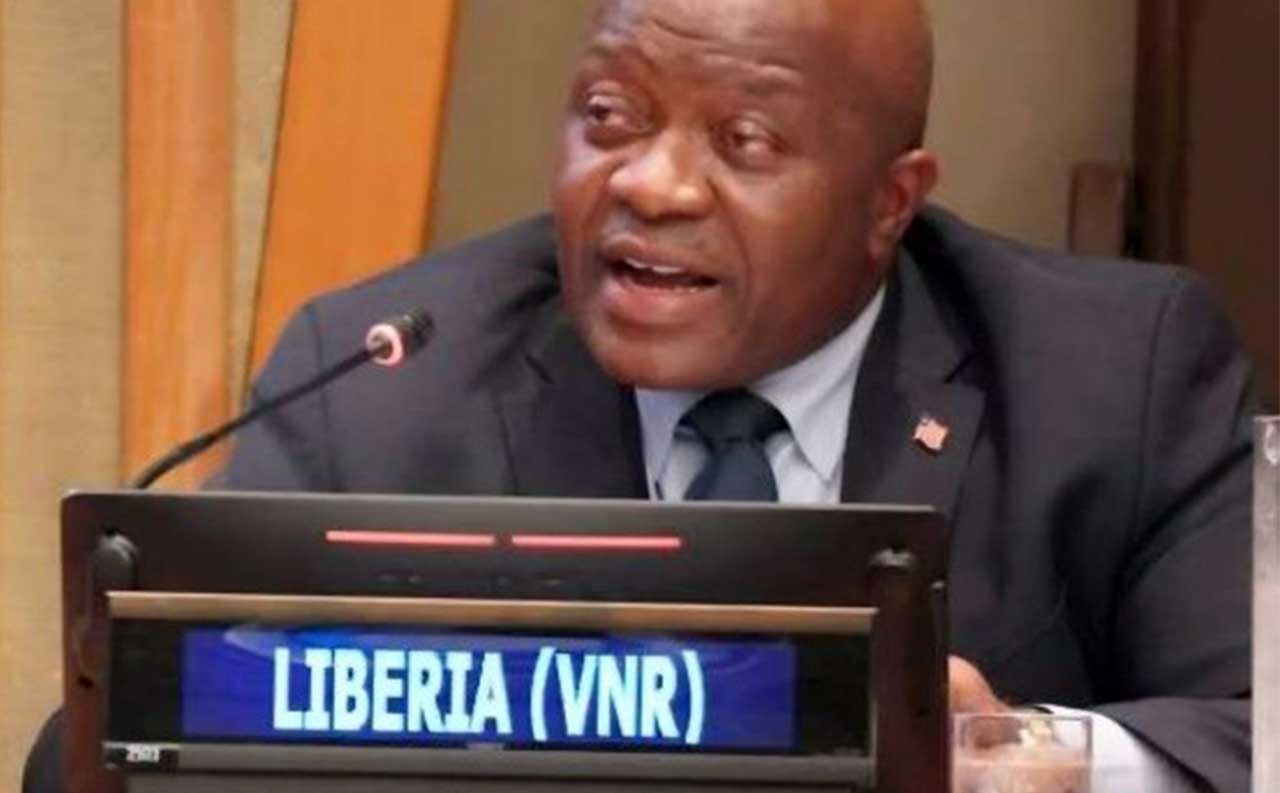
Delivering Liberia’s third Voluntary National Review (VNR) at the United Nations High-Level Political Forum on Sustainable Development at UN Headquarters in New York on Friday, July 10, 2026, Ngafuan said Liberia’s ARREST Agenda for Inclusive Development (2025–2029) is driving measurable progress, with 83 percent of its interventions directly aligned with the SDGs.
“Our progress is measurable, and our trajectory is upward, noting that Liberia’s economy is projected to grow by 5.5 percent this year while inflation has fallen to 5.3 percent, down from double digits in 2023. He added that national poverty has declined from 34 percent in 2020 to 29.6 percent in 2024, describing the figures as evidence that the lives of millions of Liberians are improving,” he explained.
Also, the minister highlighted major gains across key sectors, including health, education, agriculture, infrastructure, digital transformation and public finance, disclosing that Liberia’s Human Development Index has reached 0.510-the highest recorded since the country’s civil conflict, while mobile money accounts have surged from 1.5 million in 2020 to more than 3.5 million, expanding financial inclusion nationwide.
Ngafuan outlined progress on five SDGs under review, saying access to improved drinking water has climbed to 78.8 percent, sanitation coverage has increased from 18 percent to 28 percent, electricity access has risen from 32.7 percent to 38 percent, and national power generation now stands at 146 megawatts due to investments in renewable energy.
He further reported that Liberia has expanded its paved road network from 1,300 kilometers in 2023 to approximately 1,450 kilometers by the end of 2025, while 4G network coverage has reached 80 percent. According to him, the government is also constructing the country’s first Special Agro-Industrial Processing Zone to promote industrialization and create jobs.
On public finance, the Minister announced that domestic revenue increased from US$606.3 million in 2023 to US$698.6 million in 2024, before surpassing US$840 million in 2025, raising the country’s revenue-to-GDP ratio to 15.8 percent, adding that the government is strengthening fiscal accountability through decentralized treasury services across five counties.
Despite the progress, the finance minister acknowledged that Liberia continues to face serious obstacles, including the withdrawal of support by its second-largest donor in 2025, rising debt service obligations, climate-related disasters, declining overseas development assistance, and global shocks that have increased fuel and food prices.
Nevertheless, Ngafuan stressed that Liberia is determined to rely more on domestic resource mobilization and institutional reforms rather than retreat from its development ambitions. “We are taking ownership, citing investments in tax administration, digitalization, technical and vocational education, and climate resilience, while emphasizing that civil society, women, youth and persons with disabilities played a central role in preparing the country’s Voluntary National Review,” he added.
Looking ahead, Liberia’s Finance Minister reaffirmed Liberia’s commitment to accelerating inclusive economic growth, expanding renewable energy, deepening digital governance, strengthening the rule of law, and increasing domestic financing to meet the 2030 Sustainable Development Goals.
He, however, urged the international community to strengthen partnerships, increase private sector investment, support innovative financing mechanisms, and expand technology transfer, warning that achieving both Liberia’s national development agenda and the SDGs will require significantly greater resources. “We stand ready to work with all of you to transform our challenges into generational opportunities and to ensure that no Liberian is left behind,” Ngafuan told delegates.