Thousands of Liberian workers who power the country’s informal economy remain exposed to exploitation, weak legal protections, unsafe working conditions, and limited access to justice, according to two newly launched reports that call for urgent reforms to strengthen labor rights across the sector.
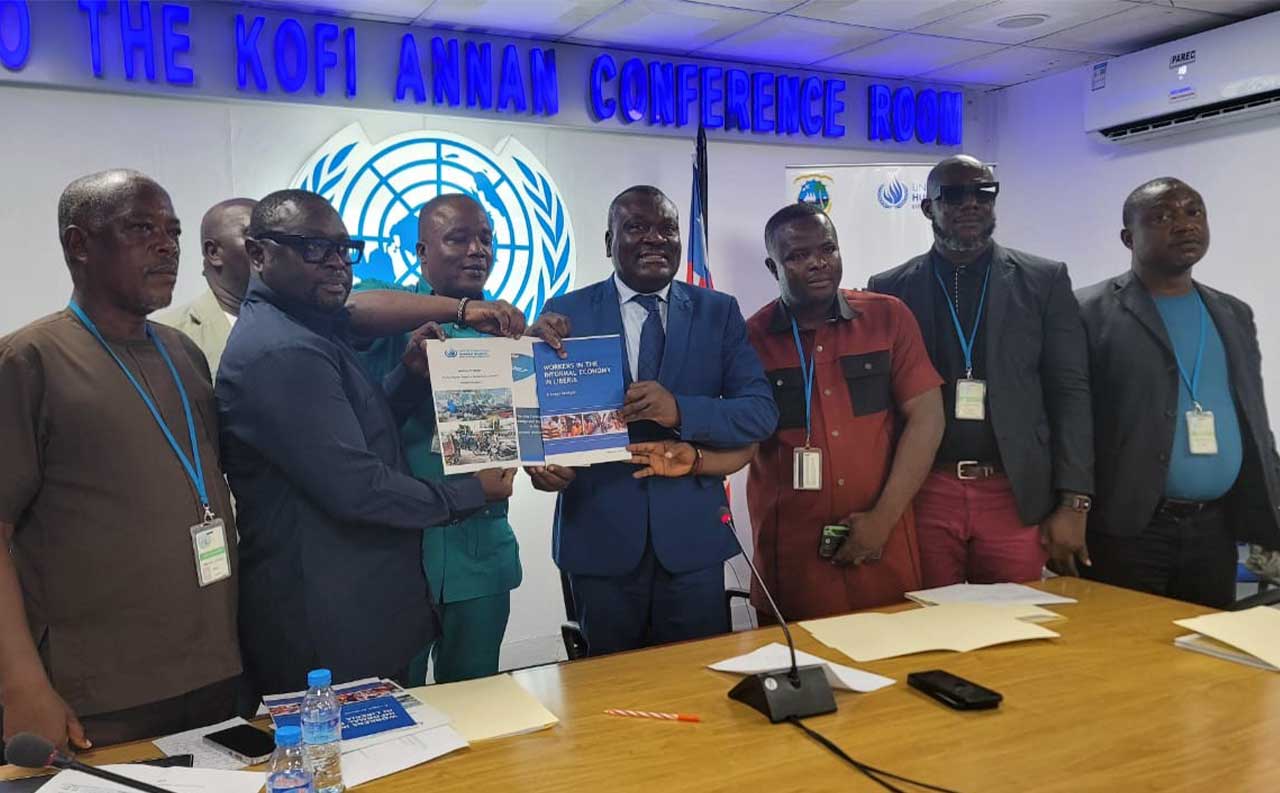
The reports, unveiled on Wednesday, June 10, 2026, by the Office of the United Nations High Commissioner for Human Rights (OHCHR) in collaboration with the Ministries of Justice and Labor, revealed significant gaps in Liberia’s legal and institutional framework affecting workers in the informal economy, which employs the majority of the country’s workforce and contributes substantially to national economic growth.
Launching the reports at One UN House in Monrovia, Leekor Dymacole Williams, OHCHR Human Rights Officer, said the studies were commissioned after years of engagement with government institutions, civil society organizations, and labor groups highlighted persistent concerns about the lack of protection for informal workers.
“We are seeing a lot of gaps when it comes to the protection of people in the informal sector. Most of the people working in Liberia are in the informal sector. They contribute significantly to the country’s development, and they should not be forgotten,” she narrated.
According to her, the first report provides a comprehensive legal analysis of Liberia’s labor laws and policy framework, examining how existing legislation protects workers operating outside the formal economy.
Madam Williams stated that the second report assesses actual working conditions, economic realities and awareness of labor rights among workers in Grand Cape Mount County, focusing on fishers, artisanal miners and small-scale traders.
According to Christian Mukosa, OHCHR Executive Director, the legal review found shortcomings in the implementation of existing labor laws and identified areas where new legislation or regulatory reforms may be necessary to ensure broader and more effective protection for vulnerable workers.
Mukosa said the reports are intended not only to inform policymakers but also to serve as advocacy tools that empower workers to understand and claim their rights while encouraging government institutions to strengthen protections for one of Liberia’s largest and most economically significant labor sectors.
Assistant Justice Minister for Administration and Public Safety, Atty. Edrick F. Noah, speaking on behalf of the Ministry of Justice, described the reports as a critical contribution to Liberia’s National Action Plan on Business and Human Rights.
“These reports are timely and significant because they highlight the realities and challenges faced by workers in the informal economy, identify legal and institutional gaps, and strengthen efforts to protect labor rights,” the minister said.
Moreover, he reaffirmed the government’s commitment to ensuring that all workers, including those in the informal sector, have access to justice and legal protection.
“Access to justice is a fundamental pillar of inclusion, protection, and equal participation in society and must remain accessible to all persons, particularly vulnerable and marginalized groups,” Atty. Noah added.
For his part, the President of the newly established Federation of Workers in the Informal Economy, Elvis A. Tamba, welcomed the findings, noting that the federation was formed to provide a unified voice for workers often overlooked in national policymaking.
Tamba said the federation currently brings together more than 20 organizations and associations representing informal workers across Liberia and is working with local and international partners, including the International Labour Organization, to advance workers’ rights and protections. The reports are expected to be reviewed by the Ministry of Labor, which will determine how the recommendations can be incorporated into future labor policy reforms.
Among the key recommendations in the reports are calls for the government to develop regulations and codes of good practice under the Decent Work Act, adopt regulations governing child labor, review provisions relating to children’s engagement in work, and strengthen legal protections for workers operating in the informal economy.
The reports also urge labor unions and worker organizations to intensify efforts to organize informal workers, strengthen their capacity to advocate for their rights and push for legislative reforms that address longstanding vulnerabilities.