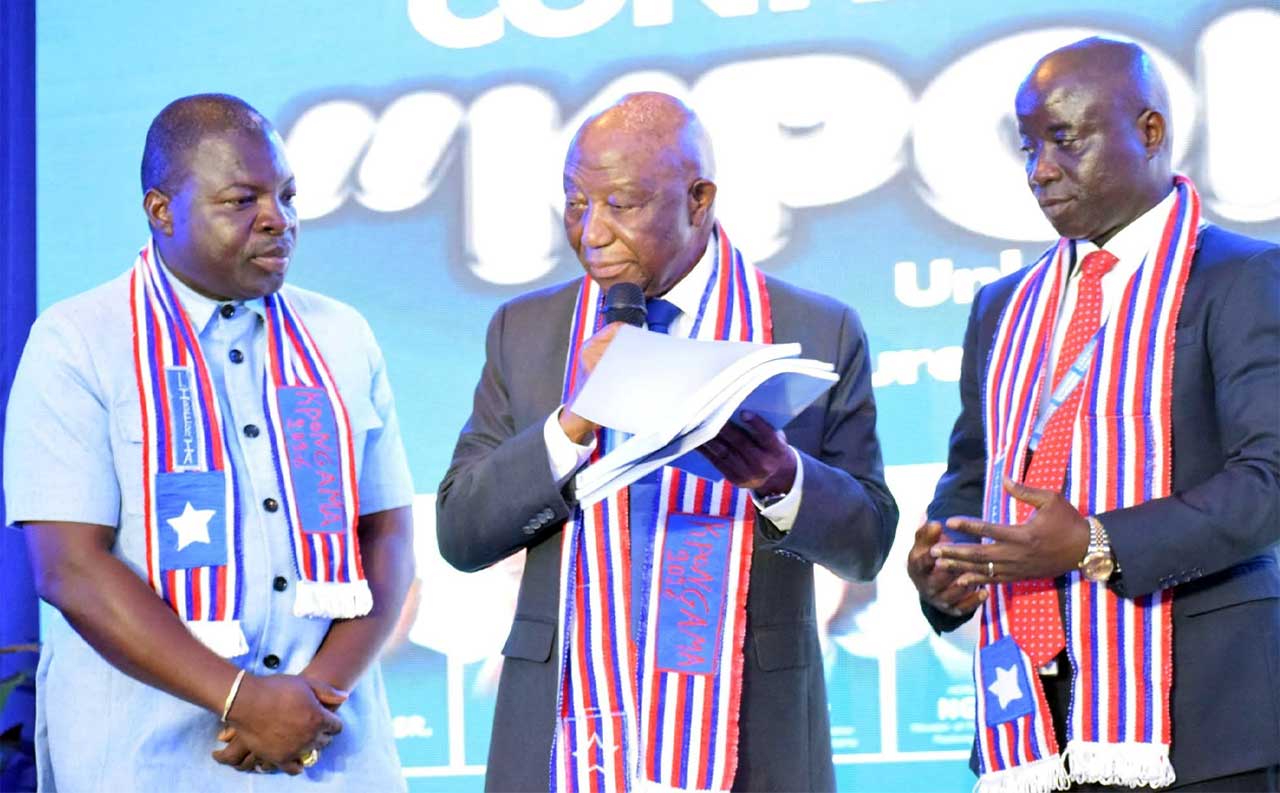
Liberian President Joseph N. Boakai has extended an open invitation to global investors and regional partners to seize emerging opportunities in the country’s fisheries sector, declaring that Liberia is “open for business, but not for exploitation.”
Speaking on Monday, March 30, 2026, during the opening of the National Fisheries Investment Conference in Lower Margibi County, the keynote speaker emphasized Liberia’s determination to harness its vast but underutilized marine resources as a driver of economic growth, job creation, and food security.
According to him, despite boasting over 570 kilometers of coastline and abundant marine life, Liberia continues to import more than 3,000 metric tons of fish annually, a paradox the government says it is determined to reverse through targeted reforms and investment. “Our fisheries sector can no longer remain a sleeping giant. We are not just talking about transformation, we are building it,” he added.
However, Boakai outlined sweeping reforms aimed at shifting away from reliance on industrial fishing license fees toward a more inclusive, private sector-driven model anchored on public-private partnerships and value chain development.
According to the President, the approach will ensure jobs and revenues remain within Liberia while boosting exports. Among key milestones, President Boakai spoke about a 25-year fisheries support program secured from the European Union, alongside partnerships with the World Bank to strengthen infrastructure, improve livelihoods, and modernize the sector.
Moreover, he announced ongoing collaboration with Orange Liberia to deploy mobile-based solutions and solar-powered cold storage facilities aimed at reducing post-harvest losses and improving efficiency for small-scale fishers.
The Liberian leader further revealed plans to operationalize key infrastructure, including the long-idle Mesurado fisheries cluster, and to construct a modern national fisheries complex to serve as a hub for processing, logistics, and exports.
In a move to support artisanal fishers, who produce roughly 80 percent of Liberia’s domestic fish supply, Boakai disclosed a 34 percent reduction in industrial fishing license fees, alongside grants, improved fishing gear, and training programs, particularly targeting women and youth.
Regionally, President Boakai reaffirmed Liberia’s commitment to combating illegal, unreported, and unregulated fishing through cooperation with member states of the Fisheries Committee for the West Central Gulf of Guinea. Meanwhile, he warned that unchecked illegal fishing threatens the sustainability of marine resources and the livelihoods of future generations. “We must act together. Fish do not recognize borders, but our cooperation must,” he stated.
Looking ahead, he said that the conference also marked the unveiling of a 10-year National Fisheries Strategic Plan, an investment roadmap, and a public-private partnership framework, documents officials say will guide sector growth and attract responsible investment.
Boakai emphasized that while Liberia welcomes investors, it will prioritize partnerships that promote environmental sustainability, local capacity building, and equitable benefits for communities. “Liberia is increasingly being recognized as a destination for responsible, sustainable, and profitable investment. The time to invest is now,” he said.
The conference, which features an investment marketplace showcasing opportunities across the fisheries value chain, the President disclosed that it is expected to catalyze new deals and deepen regional collaboration. Declaring the event officially open, President Boakai expressed optimism that the gathering would yield tangible outcomes.
“When the net comes up heavy, the entire village celebrates. Today, we cast our nets wide; may this effort bring prosperity to all Liberians,” he said.