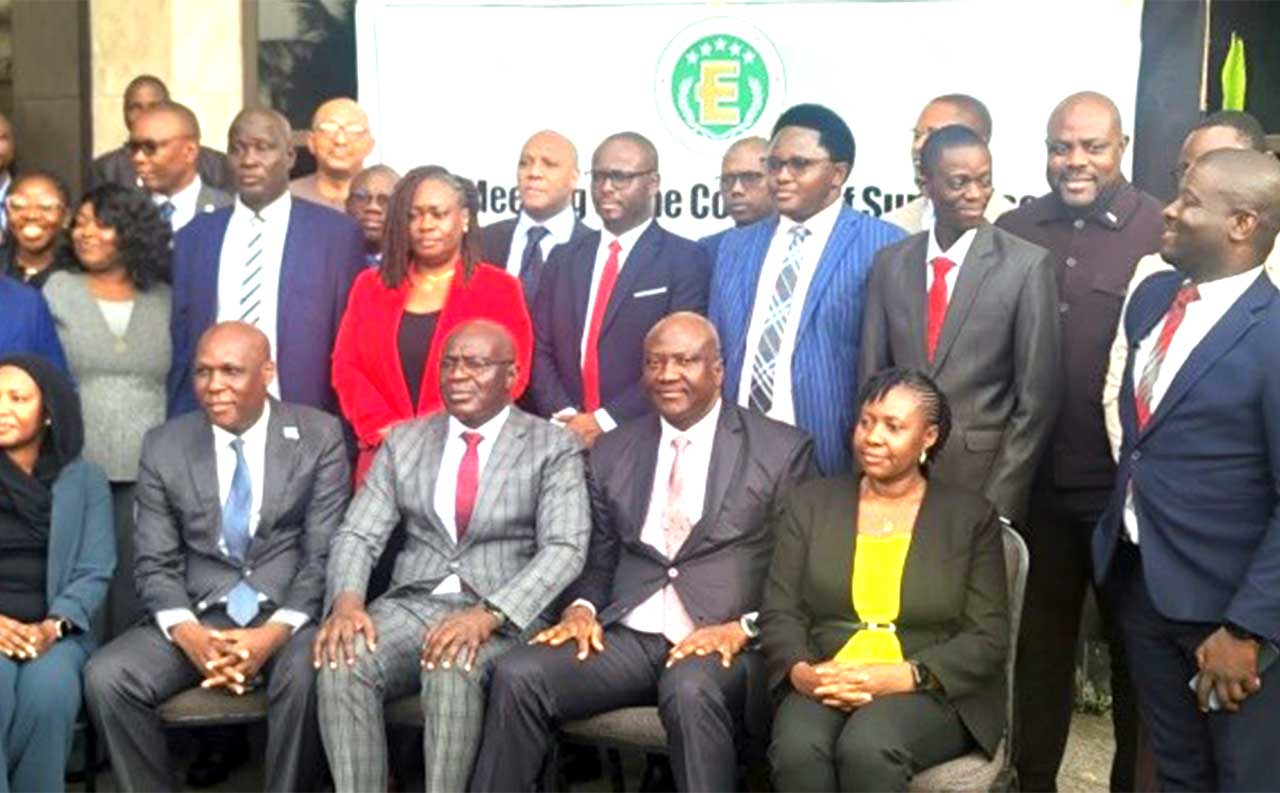
The 56th Meeting of the College of Supervisors of the West African Monetary Zone (CSWAMZ) opened in Monrovia on Wednesday, February 4, 2026, with calls for deeper cross-border supervisory cooperation, accelerated macroeconomic convergence, and renewed commitment to regional monetary integration.
Delivering the opening remarks, Mrs. Mahawa Korjie, Chairperson of the College welcomed delegates from member countries and regional institutions, describing the in-person meeting as a critical platform for strengthening collaboration among banking supervisors across the Zone. Madam Korjie praised the Government and people of Liberia for the “excellent hospitality” and reaffirmed that a sound, resilient and well-supervised banking sector remains central to sustaining economic growth and financial confidence in West Africa.
Speaking on behalf of the host country, Executive Governor of the Central Bank of Liberia, Henry F. Saamoi, said the convening of the College of Supervisors in Liberia underscores the spirit of cooperation and shared purpose underpinning the WAMZ and broader ECOWAS vision.
He described supervisors as “guardians of financial stability,” whose responsibilities extend beyond national borders to harmonizing standards, building trust, and laying the foundation for a unified financial and monetary system. Governor Saamoi disclosed that Liberia has undertaken major financial sector reforms in recent years, including a phased increase in minimum bank capital from US$10 million to US$15 million over three years to strengthen balance sheets and support private-sector-led growth.
Saamoi also announced significant progress in payment system reforms, highlighting the 2025 launch of the Inclusive and Instant Payment System (IPS) and ongoing deployment of the National Electronic Payment Switch to deepen financial inclusion and improve transaction efficiency.
“On the regulatory front, the Central Bank of Liberia has enacted new banking and financial institutions legislation aligned with the WAMZ Model Banking Act, strengthening consolidated supervision, corporate governance, risk management, and resolution planning. Additional reforms are underway to modernize non-bank financial regulation, enhance anti-money laundering and counter-terrorism financing supervision, and strengthen cybersecurity oversight,” he added.
Despite the progress, the Liberian central bank governor acknowledged lingering challenges, including elevated non-performing loans, high operating costs, and vulnerability to global shocks. He emphasized the need for regional cooperation in joint stress testing, crisis simulation exercises, and coordinated resolution planning to prevent systemic instability.
Saamoi disclosed that Liberia’s macroeconomic outlook was also highlighted, with real GDP growth reaching 5.1 percent in 2025, inflation declining to about 4 percent, and improvements in foreign reserve buffers under an IMF-supported program. He reported that Liberia met key ECOWAS convergence benchmarks, reaffirming its commitment to full compliance over the medium term.
For his part, Director-General of WAMI, Dr. Abdulsalam Sikiru Abidemi, highlighted improving macroeconomic conditions in the Zone, noting gradual declines in inflation and signs of economic recovery across member states. However, he warned that persistent risks, including tight global financial conditions, exchange rate volatility, rising debt service costs, and geopolitical and trade tensions, continue to pose challenges to macroeconomic and financial stability.
Dr. Abidemi stressed that the meeting goes beyond a statutory requirement, describing it as a key opportunity to review developments in the banking sector, address regulatory and supervisory gaps, and identify emerging risks. He also pointed to rapid technological changes, particularly the expansion of mobile banking and digital financial services, which have significantly boosted financial inclusion but also heightened exposure to cybercrime, fraud, and regulatory fragmentation. The meeting brought together senior officials from central banks, the West African Monetary Institute (WAMI), the West African Institute for Financial and Economic Management (WIFEM), the Commission Bancaire, and other regional partners.