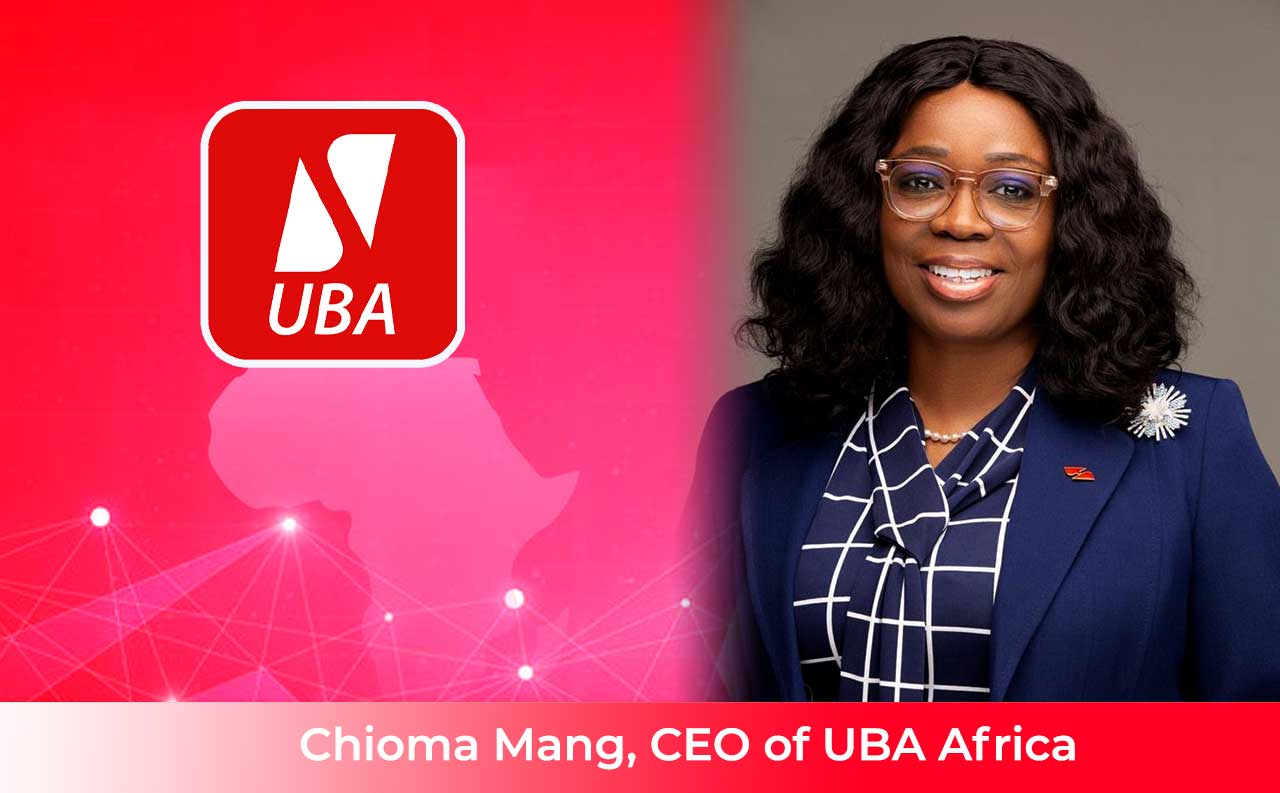
Africa’s trade landscape is entering a decisive phase, with growing volumes but limited internal integration, according to Chioma Mang, CEO of UBA Africa. In 2024, the continent recorded an estimated US$1.5 trillion in total trade, yet it still accounts for only about 3.3% of global trade, based on data from the World Trade Organization (WTO).
While intra-African trade has risen to roughly US$220 billion, it remains modest at 15–18% of total trade, far below levels seen in Europe and Asia. Also, recent WTO indicators show only slight improvement, with intra-African trade edging from about 11% to 12% in early-to-mid 2024, underscoring the continent’s untapped regional potential.
Mang emphasized that Africa’s challenge is not just increasing trade volumes, but strengthening trade within the continent and with global partners. She pointed to growing trade ties with major economies, including the United States, where total goods and services trade reached approximately US$104.9 billion in 2024, and the United Kingdom, where exports and services trade continue to expand, albeit from a smaller base.
However, she noted that inefficient payment systems remain a key barrier to growth. “Trade cannot thrive where payments are slow, costly, or uncertain, highlighting the need for robust financial infrastructure to support cross-border commerce,” she narrated.
A major step forward has been the rollout of the Pan-African Payment and Settlement System (PAPSS), which enables instant cross-border payments in local currencies and reduces reliance on foreign exchange. Moreover, UBA, operating in 20 African countries and key global financial centres, is among the first banks to integrate the system, expanding its reach across the continent.
Mang said UBA has developed solutions such as Africash, Afritrade, and UBA Connect to facilitate seamless payments, improve liquidity for businesses, and enable customers to operate across multiple African markets.
She stressed that Africa’s trade ambitions, especially under the African Continental Free Trade Area (AfCFTA), will depend on efficient payment systems, regulatory trust, and strong financial institutions capable of bridging local and global markets. “Africa’s trade future will not be unlocked by policy alone. It requires payment systems that work, institutions that connect markets, and innovation at scale,” Mang said.
She concluded that improving payment systems and reducing transaction friction will be critical to boosting intra-African trade and strengthening economic ties with global partners, ultimately accelerating the continent’s growth.