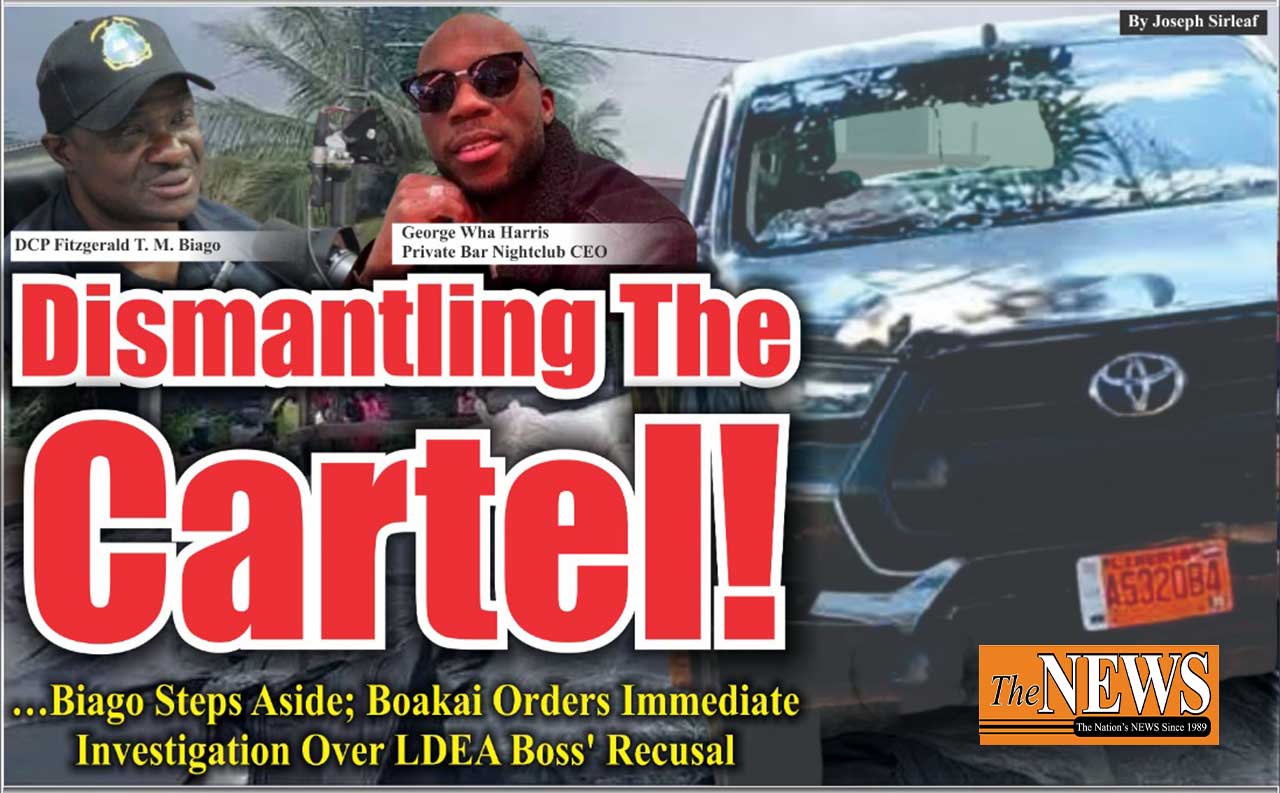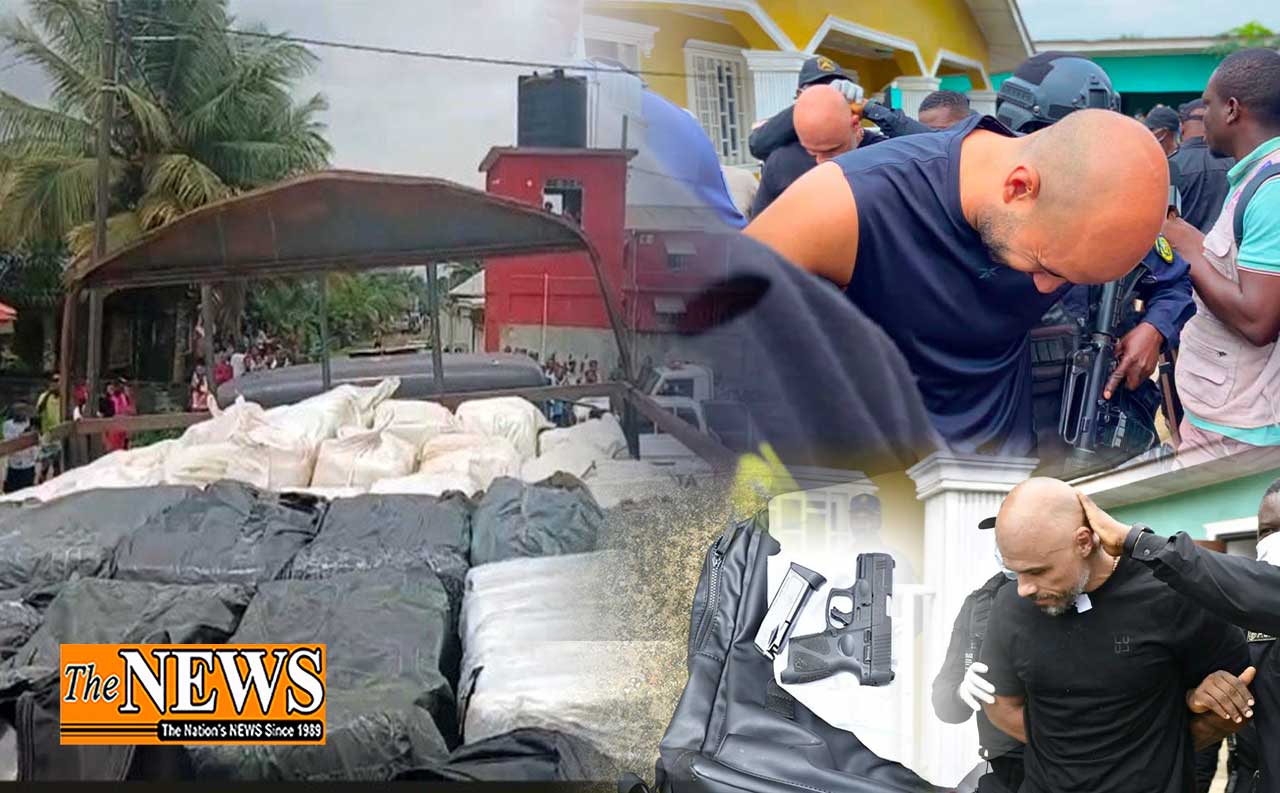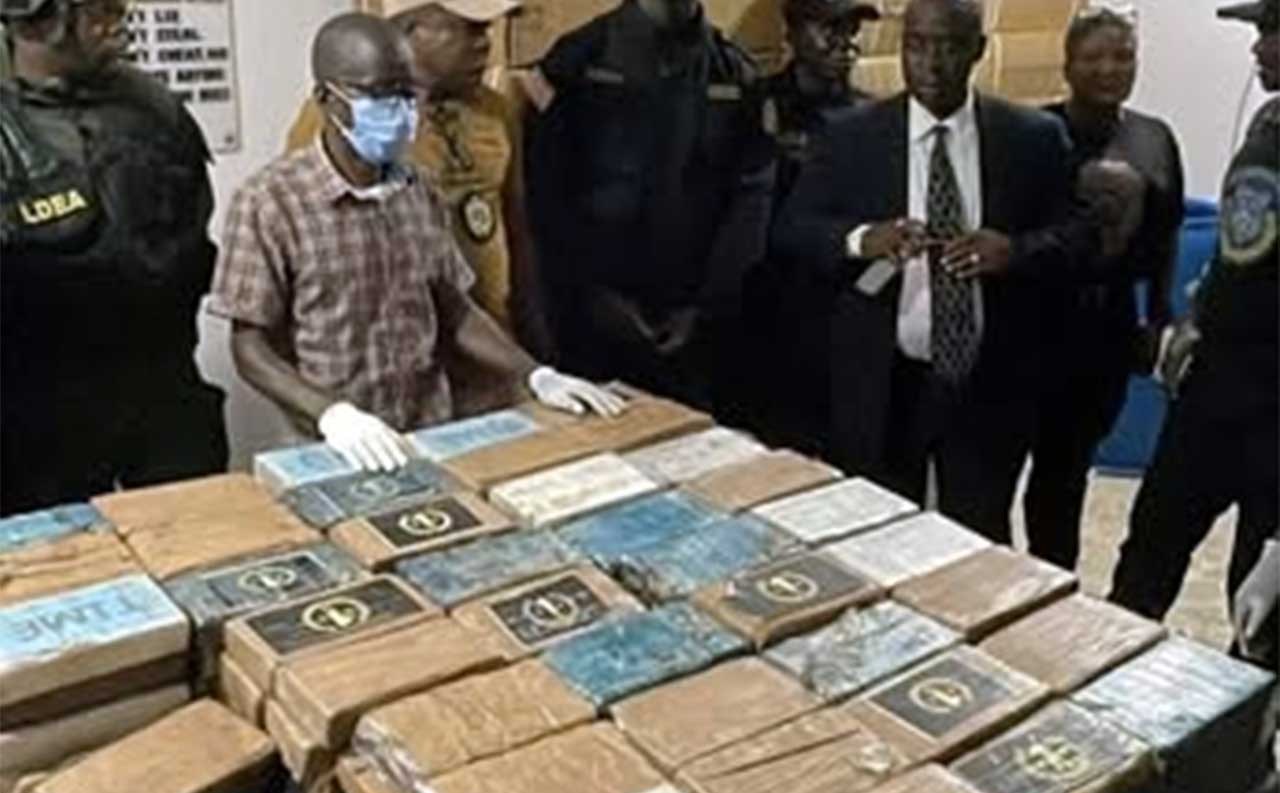
The Liberia Drug Enforcement Agency has confirmed that the June 8, 2026 seizure of 237.6 kilograms of cocaine at the Roberts International Airport is not just a narcotics case, but a national security emergency.
Valued at more than US$19 million, the shipment according to LDEA account, was discovered in cargo boxes being processed for Brussels Airlines after intelligence officers noticed a weight discrepancy on the manifest.
That single mismatch triggered a physical inspection and exposed one of the largest drug interceptions in West African history. LDEA disclosed that the consignment was brought to the airport on June 5 by an individual identified as Emmanuel Zeon, who has since become a person of interest and is being actively sought by law enforcement.
In response to the scale and cross-border nature of the bust, the National Security Council elevated the investigation to a Joint National Security Operation. LDEA and the Liberia National Police are coordinating, with operational support from the National Security Agency, Executive Protection Service, Financial Intelligence Agency, Liberia Immigration Service, Customs, Airport Security, the Ministry of Justice and other institutions.
As a result of the trafficking route spans multiple continents, the Government of Liberia has requested and secured the involvement of key international partners. Brussels, United States, Denmark and Britain intelligence agencies have now joined the investigation alongside Liberian authorities to trace the full chain of financiers, facilitators and transshipment nodes.
In his article, “From Where I sit,” Philipbert S. Brown, a former Liberian Defense staff, narrates that LDEA’s public statement explains why the names of suspects have not been released despite intense public pressure.
He disclosed that investigators warn that premature disclosure could tip off additional actors, allow evidence to be destroyed, compromise international cooperation, and endanger witnesses.
LDEA insists that confidentiality is not secrecy for its own sake, but a requirement of active, multi-border operations. With Brussels, USA, Denmark and Britain agencies now part of the intelligence-sharing framework, maintaining investigative integrity across five jurisdictions has become even more critical to avoid jeopardizing prosecutions.
Brown noted that emphasis must be placed on accountability within the state’s own ranks. As of current reporting, six government employees have been arrested, primarily from airport security structures at RIA. LDEA and the Joint Security Team stress that these detentions are part of securing the chain of custody and testing internal vulnerabilities.
Authorities at the LDEA noted that no government officials of the Unity Party administration have been linked or implicated in the drug bust. The investigation remains focused on operational staff and the networks that may have enabled the shipment to move through airport layers.
Security experts noted that the logistics of the case have complicated the probe. Investigators note that the packaging and wrapping of the cocaine do not match the methods typically associated with South American cartels. Analysts are exploring the possibility that the repackaging was done by amateurs, and early leads suggest the wrapping may have occurred within the region. With Sierra Leone having tightened border security, investigators are examining whether transshipment routes have shifted and whether neighboring territory was used to prepare the consignment before it reached Monrovia.
Public interest has also focused on the cargo itself and how it moved. Investigators are tracing the path of the shipment from its delivery point to the airport warehouse. The Joint Security Team says several individuals and institutions involved in the shipment process, including shipping agencies, airport personnel and security officers, continue to cooperate. The focus is not only on those directly linked to the seized drugs but on identifying financiers, logistical coordinators and any corrupt enablers, domestic or international, who sought to exploit Liberia’s aviation and security infrastructure.
The international dimension raises the stakes. Authorities say the drugs were allegedly destined for Brussels, with investigative threads also pointing toward Britain and Denmark. That means Liberia, while holding custody of the seizure and leading the Joint Investigation, can only speak in one accord with the Brussels, USA, Denmark and Britain intelligence agencies now at the table.
Disclosures, evidence sharing and public statements will be coordinated to protect the integrity of prosecutions across borders. This is standard practice in transnational cases where premature statements in one country can derail investigations in another.
For citizens watching from Monrovia and beyond, the demand for answers is legitimate. Brown notes that the government acknowledges that Roberts International Airport is a critical gateway for commerce, tourism and investment, and that public confidence depends on transparency. LDEA’s assurance is clear: no individual, regardless of position, status, influence, affiliation or institutional connection, will be shielded from investigation. Authorities noted that where evidence is sufficient, arrests will be made, charges filed, and prosecutions pursued without fear or favor.
Brown added that the investigation will not end with the seizure of 198 compressed plates of cocaine adding that the Joint Security Team has committed to identifying, disrupting and dismantling every individual and network connected to the operation, whether inside Liberia or beyond its borders.
With Brussels, USA, Denmark and Britain intelligence agencies now joined to the probe, Liberians are being asked to support the process through vigilance and credible information. “The weight on the manifest may have exposed the drugs, but it is the weight of collective responsibility that will determine whether Liberia breaks this transnational chain for good,” Brown concluded.