President Joseph N. Boakai has issued a stern warning to members of his cabinet, declaring that government officials who fail to deliver results could be replaced as his administration enters the final three years of its six-year term.
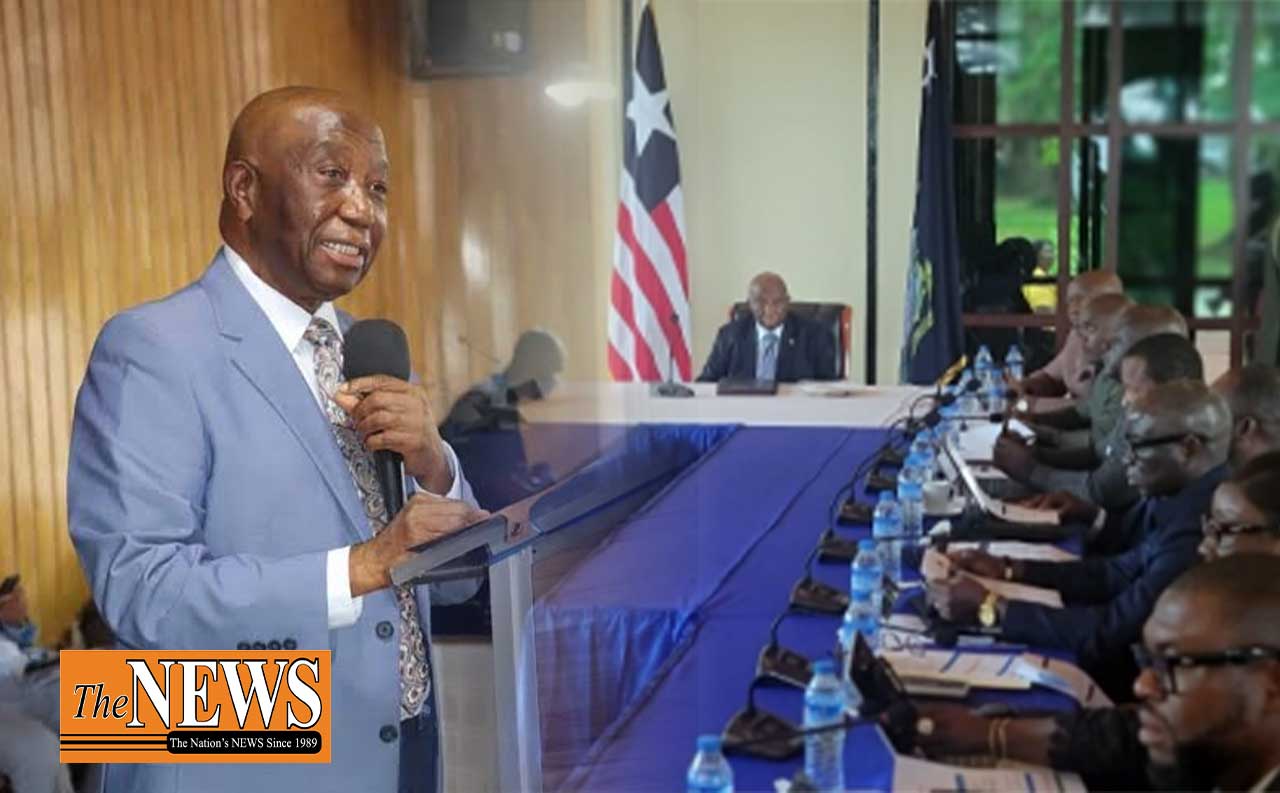
Addressing ministers and other senior government officials during the 25th Cabinet meeting on Friday, October 23, 2026, at the Executive Mansion, President Boakai demanded stronger performance, regular accountability reports and improved implementation of government programs, warning that public office must produce tangible benefits for Liberians.
“It’s not friendship club, it’s not family club, make people work, if they don’t work, sometimes we have to replace them,” Boakai said, directing ministers to hold their deputies, assistants and other officials accountable for their responsibilities.
The President said his administration was preparing to intensify performance monitoring across government, with regular reports expected to show what ministries and agencies are accomplishing, how much progress they are making and whether their work is producing meaningful results. “If we don’t know what you’re doing, we don’t know how to grade you,” he said.
Speaking further, the Liberian leader disclosed that he had spoken over the weekend with a newly appointed official at the Performance Delivery Unit (PDU) to ensure that regular reporting begins, adding that some officials would receive unfavorable assessments because they had not been performing at the expected pace.
President Boakai stressed that accountability must extend beyond cabinet ministers to deputy ministers, assistant ministers and other public officials whose responsibilities include supporting leadership and ensuring the effective execution of government policies.
The Liberian Chief Executive warned ministers against allowing officials to occupy positions without making meaningful contributions, insisting that those who fail to perform must be held responsible. The president’s remarks signal a tougher approach to government performance as the Boakai administration seeks to demonstrate progress during the remaining three years of its tenure.
Beyond performance monitoring, Boakai acknowledged that Liberia continues to struggle with longstanding development challenges, many of which he said should have been addressed decades ago.
He further lamented the lack of basic public amenities, including playgrounds for children and parks where residents can relax, arguing that national development must go beyond building private houses and accumulating land. “We all take land, we build houses, but that’s not all to life,” he said.
The President questioned why Liberia has failed to provide sufficient recreational spaces and other basic amenities, suggesting that the country needs a broader approach to urban planning and public infrastructure.
He acknowledged that development has become increasingly expensive, citing the rising cost of road construction as an example of the financial pressures facing the government. Boakai recalled that a mile of road once cost approximately US$25,000, compared with more than US$1 million today.
Despite the challenges, he urged cabinet members not to use the country’s longstanding problems or limited resources as excuses for poor performance. Boakai said the government must focus on implementation and ensure that public resources translate into visible improvements in people’s lives.
The Liberian leader criticized contractors who attempt to cut corners on public projects, warning government officials responsible for awarding and supervising contracts not to compromise quality.
He said Liberians deserve high-quality infrastructure and services, regardless of the cost involved in delivering them. “You’re giving it to the Liberians. They deserve the best, and you should not compromise on quality,” Boakai declared.
He urged officials to insist on quality workmanship and timely completion of government projects, warning against the use of substandard materials and poor construction practices.
The President cited renovation work at the University of Liberia as an example of the need to provide the country with quality public facilities, describing the institution as a national asset that deserves the best.
He said public infrastructure reflects the standards government sets for itself and the value it places on citizens. Boakai’s remarks place renewed emphasis on contract supervision and the responsibility of public officials to ensure that contractors deliver projects according to required standards.
The president also warned that the delivery of equipment and machinery to counties should not be treated as an achievement unless the resources are effectively used to improve the lives of residents.
Referring to machinery delivered for development activities, including in Lofa County, he said the equipment must help improve roads and expand access to health facilities, education and other essential services. “The machines are here, they’ve been delivered, but those machines, they mean nothing if we don’t use them effectively and benefit the people,” he said.
He expressed concern about communities where children remain outside the formal education system and residents struggle to access essential services, urging officials to pay greater attention to neglected rural areas.
The President said government programs must be evaluated based on their actual impact rather than the mere completion of administrative processes or delivery of equipment. He emphasized that officials must take their responsibilities seriously because their records in public service will ultimately be judged by what they accomplish for the country.