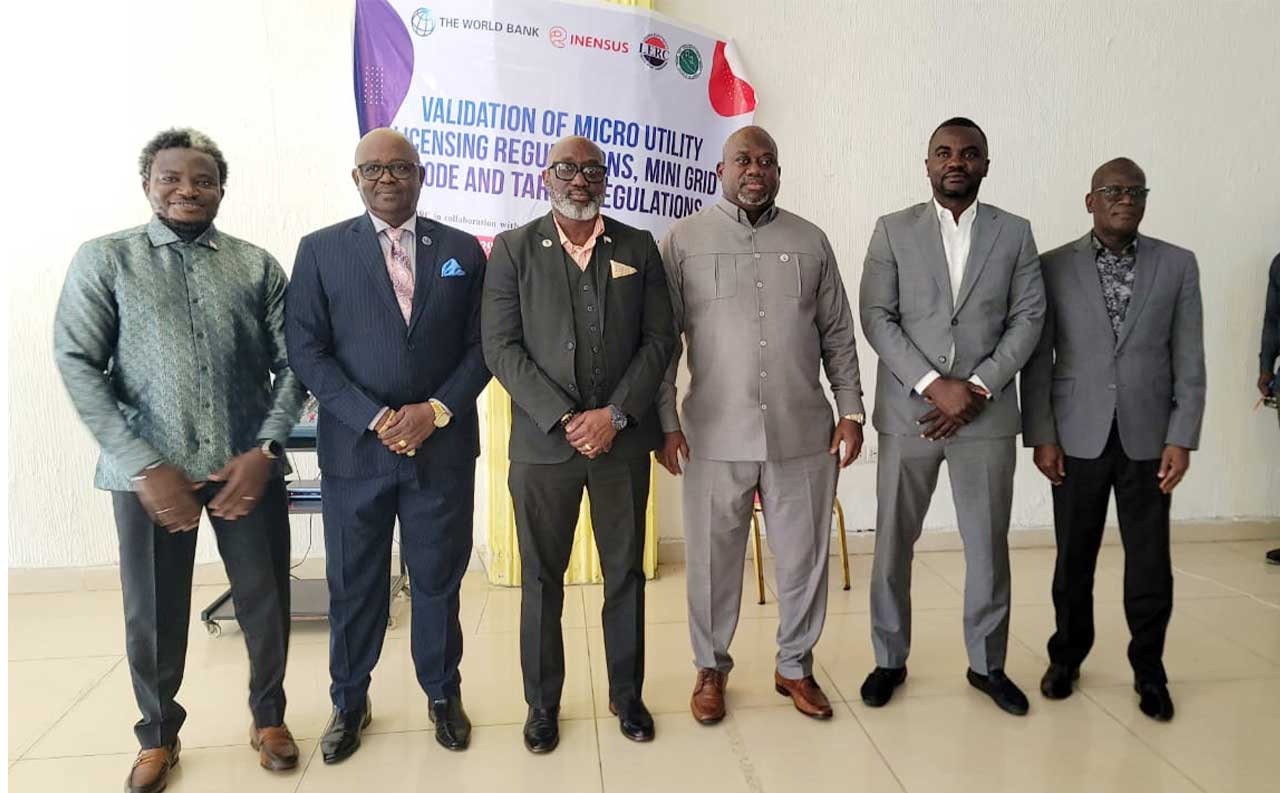
Liberia took a decisive step toward expanding electricity access to underserved communities as key government institutions, regulators, private sector players, and development partners convened in Monrovia to validate sweeping reforms to the country’s micro-utility licensing, mini-grid operations and tariff regulations.
The stakeholder validation workshop was hosted on Wednesday, January 28, 2026, by the Liberia Electricity Regulatory Commission (LERC) in collaboration with the Rural and Renewable Energy Agency (RREA) and the Ministry of Mines and Energy. It focused on finalizing the Micro-Utility Licensing Framework, the Mini-Grid Code, the Multi-Tier Tariff Methodology, and the Tariff Regulation, including instruments expected to reshape off-grid electricity delivery nationwide.
Deputy Minister for Mines and Energy Charles Umehai described the reforms as “fundamental tools” rather than mere technical documents, stressing that they will determine how electricity is planned, delivered, priced and regulated, especially in rural and peri-urban areas beyond the reach of the national grid.
According to him, mini-grids and micro-utilities are central to Liberia’s drive toward universal energy access, noting that regulatory clarity is essential to protect consumers, attract investors and ensure safety and quality of service. Deputy Minister Umehai underscored government’s commitment to building an enabling environment for private sector-led electricity development, noting that transparent and predictable tariff rules will balance investor confidence with affordability for consumers.
He also praised the technical contributions of regional and international partners, saying their support has strengthened Liberia’s regulatory capacity at a critical moment for the energy sector.
For his part, the head of the Board of Commissioners at LERC, Claude J. Katta, said the workshop marked the final stage in amending key electricity regulations aimed at making the sector more inclusive and sustainable. The Commission explained that the review process addressed gaps in existing micro-electricity regulations and the mini-grid code, while ensuring that operators, communities and investors were adequately consulted.
“Once validated, the regulations are expected to be formally published and brought into full legal force,” he stated.
Executive Director of RREA, Samuel B. Nagbe Jr., linked the reforms to Liberia’s broader regional and international commitments, including off-grid electrification initiatives supported by the World Bank and multi-country programs designed to accelerate access to electricity for health facilities, schools, agriculture, and households.
He said harmonizing Liberia’s regulatory framework with regional and global best practices is vital to attracting private investment under public-private partnership arrangements. Participants at the two-day workshop included policymakers, regulators, mini-grid developers, technical experts, and development partners, all tasked with refining the draft instruments to reflect Liberia’s realities.
With energy access still a major constraint on economic growth and service delivery, the government says the new regulatory regime is aligned with the national development agenda and Liberia’s electricity compact under Mission 200. If successfully implemented, the reforms could unlock new investment, expand rural electrification, and improve the quality of life for thousands of Liberians currently living without reliable power.