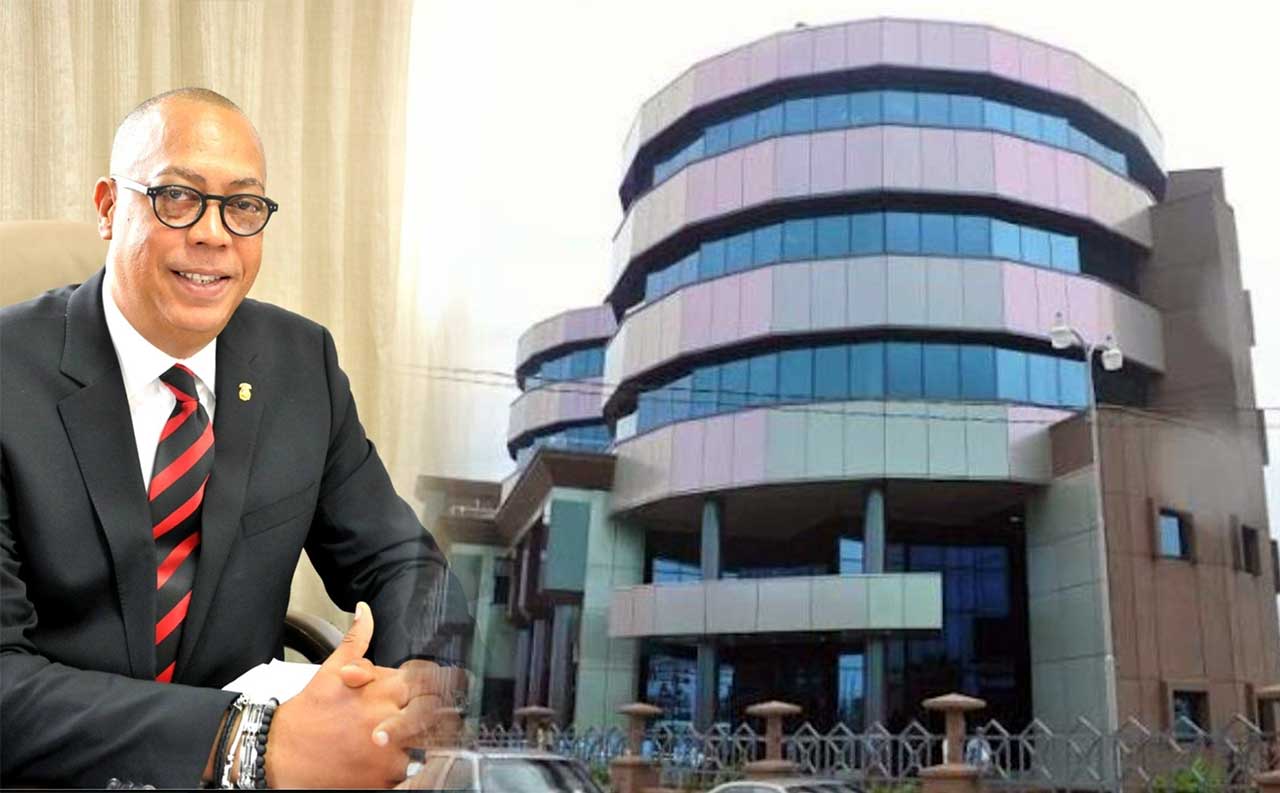
The National Social Security and Welfare Corporation (NASSCORP) was established on July 10, 1975 by an Act of the Legislature to protect Liberian workers through social insurance.
Fifty years later, it stands as the country’s most consequential public-sector social program, administering three core schemes-the Employment Injury Scheme for workplace accidents, the National Pension Scheme for retirement and survivor benefits, and a Welfare Scheme designed to support vulnerable populations. Its statutory mandate is to provide income protection and welfare for employees in both the public and private sectors, while investing contributions to ensure long-term solvency.
Director General Dewitt vonBallmoos has led NASSCORP since 2013 after serving as Deputy Director General in 2006 and Acting Director General in 2012. He was reappointed in 2017 and again in 2022, giving him more than 11 consecutive years as DG and nearly two decades in senior leadership at the institution. Under his tenure, the corporation has been credited with sweeping reforms that modernized operations, expanded infrastructure, and grew assets from $4.7 million in 2006 to $50 million by 2025, with ECOWAS Parliament reports valuing total assets at approximately $141 million. In October 2025, he was elected Chairman of the International Social Security Association’s Technical Commission on Contribution Collection and Compliance for a three-year term, reflecting international recognition of NASSCORP’s systems.
Financially, NASSCORP has posted strong results. Between February 2006 and December 2022, the Corporation paid out $106.47 million to 15,602 beneficiaries under the EIS and NPS. From 2020 to 2025 alone, $69.4 million was disbursed, and decades-old arrears were cleared to restore timely payment cycles. Investment income jumped to $3.65 million in 2022, driven by rental income, Treasury Bill interest, and other returns. Rental income doubled year-on-year to $823,495 from properties including the Kakata Commercial Building, Lofa Guest House, and the main administrative building. The 2022 audit by the Auditor General highlighted strong internal controls, transparent reporting, and effective governance, calling NASSCORP a standard-setter for social security institutions in Liberia.
Infrastructure and real estate have become central to NASSCORP’s development strategy. The flagship is NASSCORP House, a high-rise multi-purpose building at ELWA Junction in Paynesville that now houses the Liberia Revenue Authority. The corporation has built and furnished regional offices and guest houses in Kakata, Buchanan, Tubmanburg, and Voinjama, including a 10-bedroom regional office in Kakata and a regional hub in Tubmanburg complete with staff residences. In Buchanan, it owns residential and commercial facilities, and in Lofa, it operates the Voinjama Guest House. In 2021, it dedicated the Jahmale Medical Solutions Diagnostic Center in Paynesville, a three-story laboratory and adjacent four-story clinic named for President Ellen Johnson Sirleaf’s grandfather. The facility provides advanced diagnostics to reduce medical travel abroad and is slated to become a full-service hospital and revenue-generating asset.
NASSCORP’s project pipeline continues to expand. It recently procured two acres in Ganta, Nimba County, to construct a modern regional headquarters that will give the corporation its first owned property in the county after decades of renting. The move follows rapid beneficiary growth in the region from under 100 to over 950 active beneficiaries. The corporation also completed 160 low-income housing units in Montserrado and Margibi Counties in partnership with other institutions, and in 1985 distributed relief supplies to JFK Medical Center and rehabilitation centers during its 10th anniversary. Its investment portfolio is diversified: 2,000,000 shares in ECO Transnational Incorporated, 125,000 shares in LBDI, plus agriculture, hospitals, and commercial real estate.
On service delivery, NASSCORP has modernized through biometric identification to eliminate duplicate claims, direct bank transfers for benefits, and a centralized database for verification. Retirees like Cheslie Mennoh, a 57-year teaching veteran in Sinoe County, report consistent monthly payments since 2020 with no delays, though he notes the $7,700 LD benefit is inadequate amid rising costs. In response, vonBallmoos announced in 2025 that each beneficiary would receive a $50 anniversary bonus and that the minimum monthly pension is now set at US$50.00 or L$8, 500 equivalent to address poverty and inflation. The corporation also played a role in disaster response, providing relief during the West Point fire, Sinkor floods, Buchanan rainstorm, Ebola, COVID-19, and emergency aid in Grand Gedeh.
Failures and challenges remain. The most public is the welfare component of NASSCORP’s mandate, which is solely the prerogative of the Government of Liberia. Despite the name “Welfare Corporation,” the institution has not rolled out broad social assistance programs. In August 2025, NASSCORP representative Jenneh Kumba Tamba stated in Ganta that “the government doesn’t have the money to carry on or implement the welfare aspect,” and cautioned that introducing it could create dependency and burden government finances. Beneficiaries also cite low benefit levels relative to cost of living, and the corporation depends on contribution compliance in a largely informal economy. Senator Nya Twayen has urged Government to settle outstanding debts to NASSCORP, signaling fiscal pressure.
NASSCORP’s overall development goal is to provide sustainable social protection while driving national development through strategic investments. VonBallmoos has described the vision as “protection, progress, and purpose,” using real estate, healthcare, and financial instruments to grow reserves and expand coverage. The corporation is now Liberia’s largest domestic institutional investor and has created Liberia Property Incorporated to manage real estate assets, including leasing NASSCORP House back to itself as an efficiency measure. It is also pushing legislative reform to amend the NASSCORP Act so coverage can extend to the informal sector, which comprises most Liberian workers.
Looking ahead, NASSCORP’s projects include completing the Ganta regional headquarters, upgrading Jahmale Medical Solutions into a full hospital, and continuing regional office expansion. It is participating in the Liberia Household Social Registry and REALISE Project to strengthen targeting for social protection. With 50 years of operation, over $106 million paid to beneficiaries, $141 million in assets, and a footprint of offices, guest houses, clinics, and housing across Liberia, NASSCORP has transformed from a modest welfare agency into a cornerstone of economic resilience. Its next test will be closing the welfare gap, raising benefit adequacy, and extending coverage to informal workers while maintaining the financial stewardship that earned it regional praise.