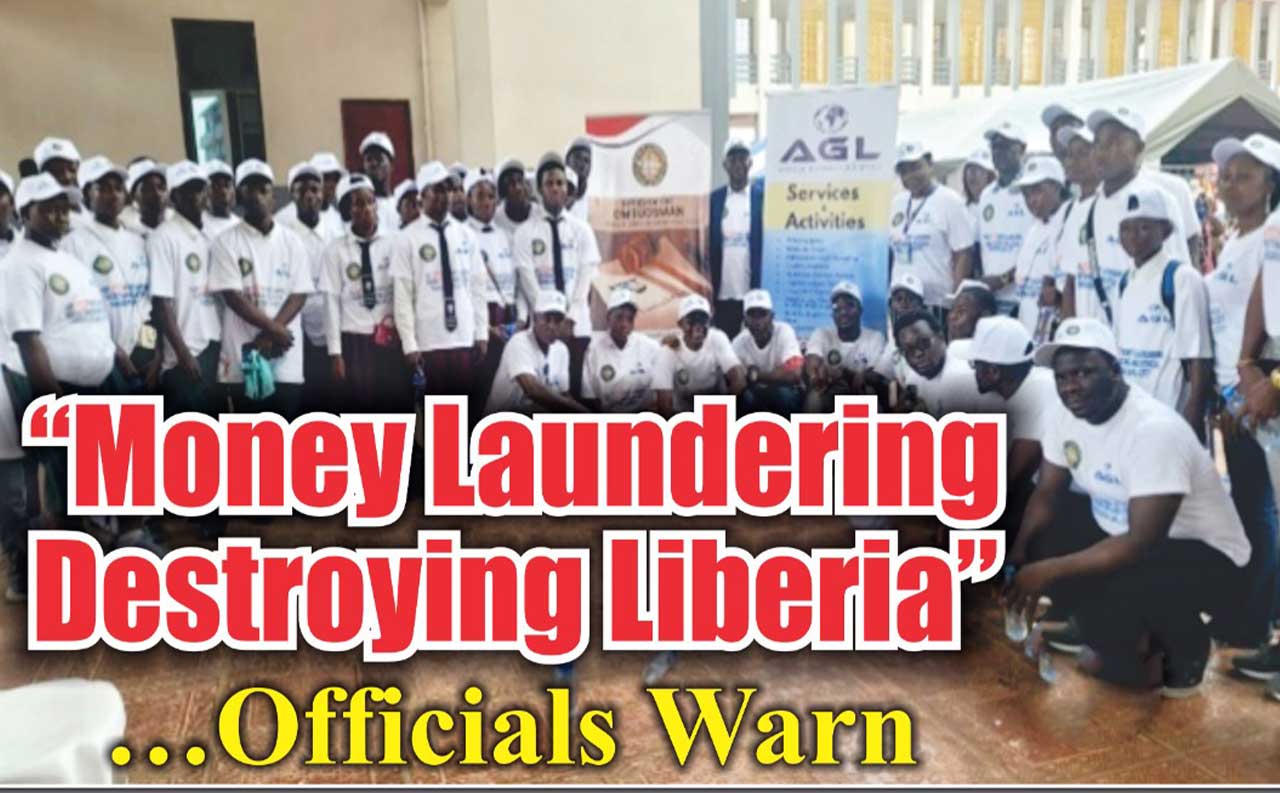
Liberia’s integrity institutions have issued a stark warning that corruption, money laundering, and illicit financial crimes are silently choking the nation’s future, urging students and citizens to take personal responsibility in the fight against wrongdoing. At a one-day observance of International Anti-Corruption Day in Monrovia, officials from the Financial Intelligence Agency (FIA), the Office of the Ombudsman, the Governance Commission, and African Global Logistics (AGL) emphasized that the battle against corruption must begin with individual choices, even when no one is watching.
Speaking at the celebration on Tuesday, December 9, 2025, FIA’s Technical Officer, Mohamed Nassar, delivered one of the event’s most eye-opening presentations, breaking down Liberia’s 21 predicate offenses of money laundering. He warned that illegal proceeds from activities such as human trafficking, tax crimes, fraud, corruption, kidnapping, and counterfeit currency operations are fueling a dangerous economy of what he calls “dirty money.”
“Any money used to carry out harm, terrorism, illegal arms, trafficking, bribery, is dirty money. Our job is to chase it, trace it, and prosecute it. We don’t arrest, but we expose,” Nassar told the students. According to him, Liberia risks being placed on the FATF gray or black list if the country fails to comply with global anti-money laundering standards, a move that could cripple the country’s financial system and weaken international trade.
For his part, Philippe Labonne, CEO of African Global Logistics, the company that cosponsored the event, reaffirmed the private sector’s duty to maintain transparency and ethical business practices. “Trust can only be sustained through uncompromising integrity. Corruption undermines trade and erodes investor confidence,” Labonne said.
Governance Commission head Jallah Kesselly echoed similar concerns, reminding students that development, public trust, and the success of the government’s ARREST Agenda all depend on eliminating corruption at every level of society. Organizers encouraged students to see themselves as future custodians of Liberia’s governance structure and urged them to engage, ask questions, and uphold ethical behavior in both public and private spaces. The event concluded with a commitment from the Office of the Ombudsman to support students returning to their campuses and with renewed calls to build a Liberia where integrity becomes a shared national value.