The Government of Liberia has reaffirmed its commitment to implementing the Global Compact for Safe, Orderly and Regular Migration, emphasizing that migration should be viewed not as a crisis to be contained, but as an opportunity for development, economic growth and national stability.
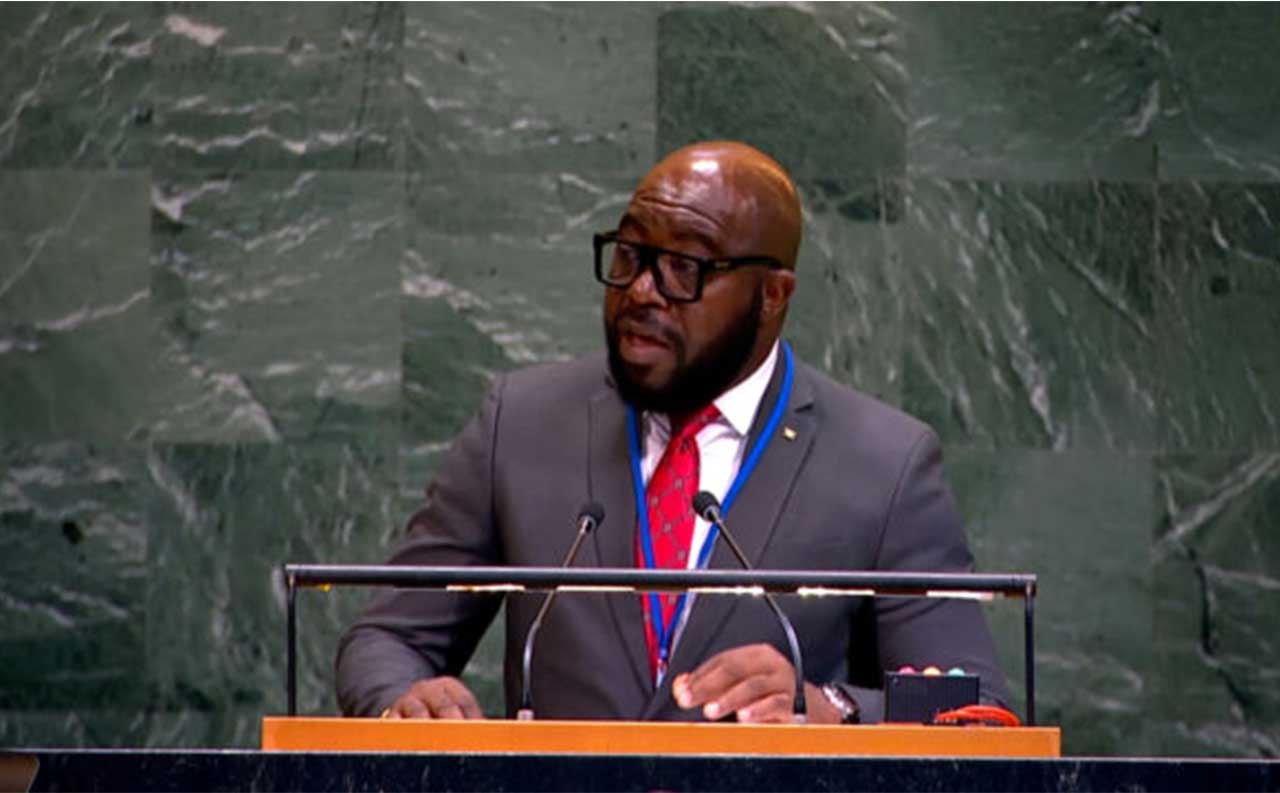
Delivering Liberia’s national statement at the International Migration Review Forum 2026 during the Second Plenary Meeting of the General Debate at the United Nations Headquarters in New York City, Deputy Foreign Minister for Legal Affairs, Jeddi Mowbray Armah, said Liberia remains steadfast in strengthening migration governance and improving institutional coordination.
The forum, held from May 5 to 8, 2026, brought together global leaders, policymakers and international stakeholders to review progress made under the Global Compact for Migration and discuss strategies for addressing migration-related challenges worldwide.
Speaking on behalf of the Republic of Liberia on Thursday, May 7, Minister Armah said the Liberian Government has, since 2022, taken deliberate actions to strengthen migration governance mechanisms and improve inter-agency coordination under the leadership of the Ministry of Foreign Affairs.
According to him, one major milestone has been the establishment of the Technical Coordination Mechanism on Migration, which he described as a critical framework reinforcing a “whole-of-government approach” to migration management. “Liberia approaches migration not as a challenge to be contained, but as a reality to be governed and an opportunity to be harnessed,” Armah declared before the General Assembly Hall.
He disclosed that migration governance has now been fully integrated into Liberia’s national development framework, particularly the government’s ARREST Agenda for Inclusive Development 2025-2029.
The Deputy Minister said the integration reflects Liberia’s belief that properly managed migration can contribute significantly to economic resilience, social stability, and national development. Armah further noted that Liberia has strengthened its migration data systems through the 2022 Population and Housing Census and Migration Governance Indicator Assessments, which are helping policymakers identify institutional gaps and guide ongoing reforms.
“These tools are informing policy, guiding reforms and helping us identify critical gaps that we are actively addressing,” he stated.
The Deputy Foreign Minister also highlighted efforts by the Liberian Government to modernize border management systems, strengthen legal frameworks to combat trafficking in persons, and improve coordination among institutions responsible for migrant protection.
He said Liberia remains equally committed to engaging its diaspora community through structured initiatives intended to translate diaspora participation into tangible national development outcomes.
Despite the progress made, Armah acknowledged that Liberia continues to face significant implementation challenges, including fragmented data systems, limited institutional capacity and uneven service delivery.
However, he stressed that such challenges are sharpening the government’s focus rather than discouraging reform efforts. “These challenges do not deter us. They sharpen our focus and define our priorities,” he emphasized.
According to Armah, Liberia is currently advancing efforts toward the development and adoption of a comprehensive national migration policy aimed at consolidating institutional mandates and strengthening long-term migration governance. He said the government is also prioritizing investments in data harmonization, border infrastructure, digital systems and protection frameworks, especially for vulnerable populations.
The Deputy Minister further called for stronger international cooperation and targeted technical support to ensure that national commitments are matched by global solidarity and partnership. “Liberia remains steadfast in its commitment to the full, effective and inclusive implementation, follow-up and review of the Global Compact for Migration,” Armah concluded.