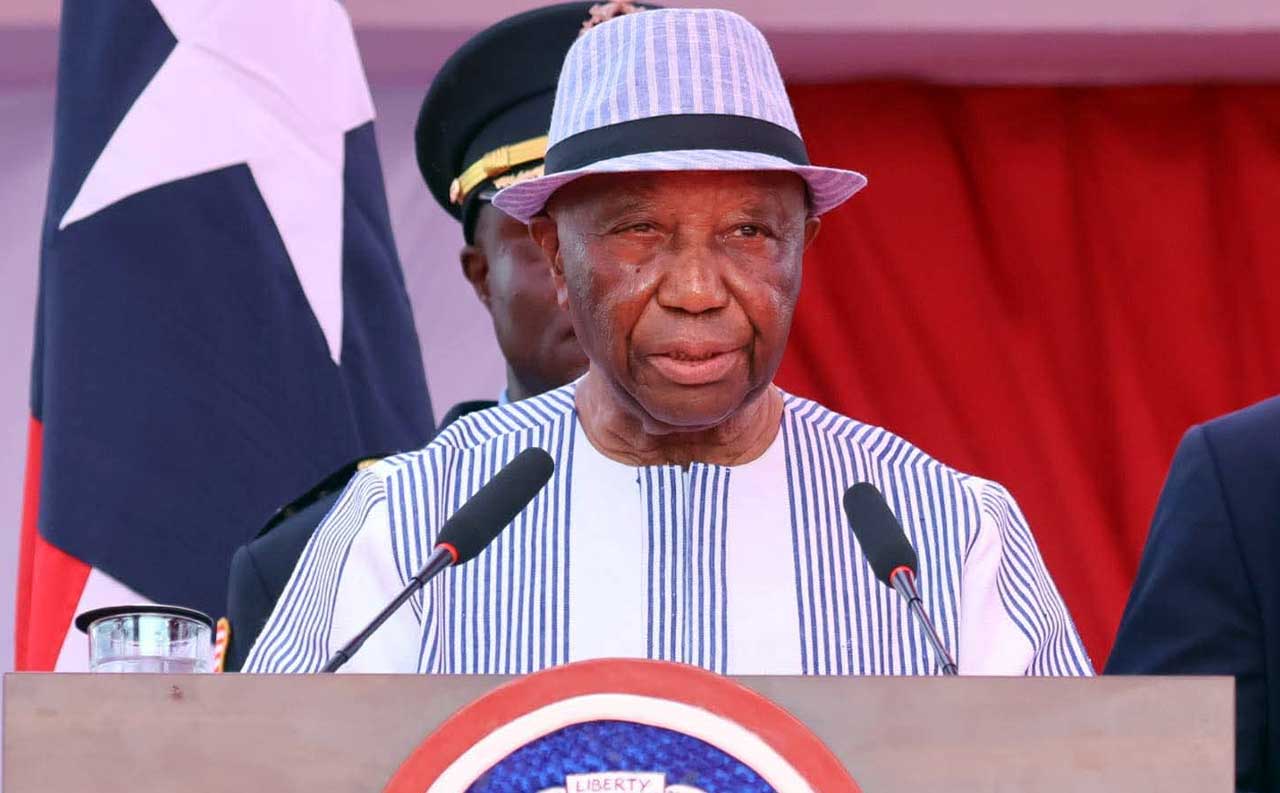
President Joseph Nyuma Boakai has informed the Liberian Legislature that the country experienced a 5.1% economic growth in 2025, exceeding the previous projection of 4.0. President Boakai, on Monday, January 26, 2026, delivered his third State of the Nation Address (SONA) in accordance with Article 58 of the Liberian Constitution, using the moment to reaffirm Liberia’s democratic resolve, defend the rule of law, and announce what he described as the country’s strongest economic performance in years, despite shocks from donor funding disruptions.
Opening his address with a sober reflection on last year’s violent attack on the Capitol Building, President Boakai said the incident, still under judicial review, would not intimidate the state or weaken democratic institutions. He assured Liberians that his administration is pursuing the matter with “resolve and impartiality,” vowing that all those found guilty would face the full weight of the law.
Turning to governance and legislation, the President said his administration, in collaboration with the Legislature, had focused over the past two years on stabilizing the economy, addressing inherited challenges, and laying foundations for long-term development. He said progress had been made across agriculture, infrastructure, education, health, tourism, and justice, noting that “Liberia is in a better state than it was a year ago.”
Among key legislative achievements signed into law, he highlighted the Ministry of Local Government Act to deepen decentralization, the Liberia National Tourism Act to boost economic diversification, and measures aimed at food security and financing agreements with international partners.
Moreover, the Liberian leader urged lawmakers to prioritize pending bills critical to governance reforms, including the Presidential Transition Act, the establishment of a Civil Service Commission, and amendments to strengthen anti-corruption laws by addressing illicit enrichment and removing statutes of limitation on corruption cases.
The President also announced an ambitious pipeline of proposed legislation for 2026, including bills to establish a National Planning Commission, a National Road Authority, a universal health insurance scheme, reforms to the University of Liberia, and the repeal of outdated decrees from the People’s Redemption Council era.
He said 16 executive orders had already been issued to advance economic and social priorities in line with national development goals. On the state of the economy, Boakai reported that Liberia recorded 5.1 percent growth in 2025, exceeding both projections and the 4.0 percent growth posted in 2024.
He attributed the expansion to strong performance in mining, agriculture, fisheries, and services, with mining alone growing by 17 percent and exports rising by more than 21 percent.
Inflation, he said, fell to 4 percent by December 2025, the lowest level in two decades, while gross international reserves climbed from US$475 million in 2024 to US$576 million in 2025. The Liberian Dollar also appreciated modestly, supported by improved liquidity management and fiscal discipline.
Despite these gains, the President acknowledged that an abrupt decline in donor support during the second quarter of 2025 disrupted key social and economic programs, leading to job losses and hardship for many families. But the government responded with tighter fiscal controls, protection of priority spending in health and education, and stronger domestic revenue mobilization.
President Boakai disclosed that Liberia secured more than US$334 million in loans and grants in 2025 to support infrastructure, human capital development, and natural resource management, and confirmed that the United States had reaffirmed Liberia’s eligibility for a second Millennium Challenge Corporation (MCC) compact in December 2025, with a focus on energy and job creation.
Meanwhile, the Liberian leader described last year’s donor shock as a “wake-up call” on the dangers of overreliance on external aid. He said Liberia’s future lies in strengthening domestic revenue, improving tax compliance, and building resilient institutions that can finance national development from within, for the benefit of all Liberians.