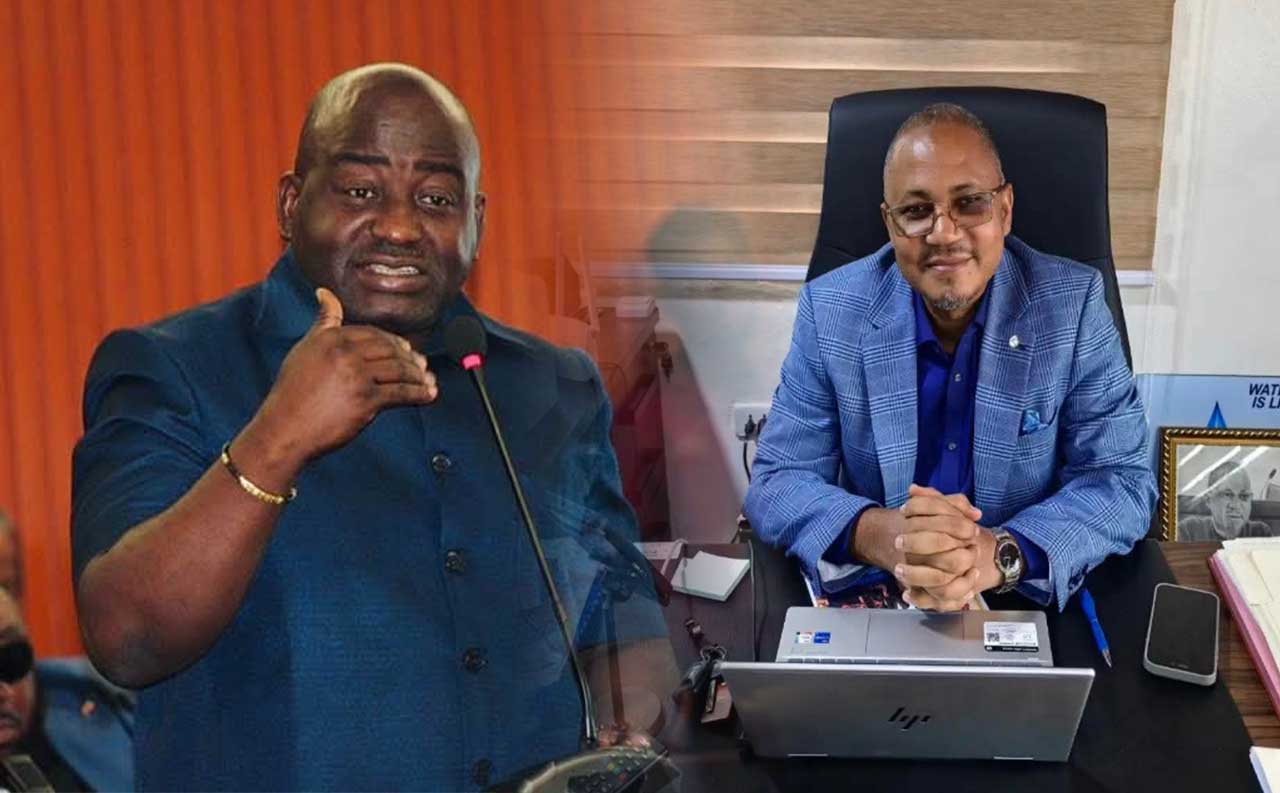
Representative Musa Hassan Bility has written a communication to the Plenary of the House of Representatives to summon the Liberia Water and Sewer Corporation (LWSC) Managing Director to clarify his recent statement that 76% Liberians have access to safe drinking water.
In a communication presented to the office of the Chief Clerk on May 19, 2026, Nimba County District #7 Representative Musa Hassan Bility respectfully requested the indulgence of this Honorable Plenary to invite the Managing Director of the Liberia Water and Sewer Corporation (LWSC), Mr. Mohammed Ali, to appear before that August Body to provide clarification and a comprehensive report regarding a recent public statement published on his official Facebook page concerning access to safe drinking water within the Republic of Liberia.
In his publication, the Managing Director asserted that approximately seventy-six percent (76%) of the population currently has access to safe drinking water. Using Liberia’s estimated population of approximately 5.5 million people, this representation suggests that nearly 4,180,000 Liberians now have access to safe drinking water services across the country.
According to the communication, while such a declaration, if accurate, would represent significant national progress and a major achievement for the country, it is important that the House, as representatives of the Liberian people, fully understands the basis, methodology, and geographic distribution of these statistics across many parts of the Republic. Concerns remain regarding the actual availability and accessibility of safe drinking water for ordinary citizens.
Bility emphasizes that the communication is not intended to dispute the figures presented by the Managing Director. Rather, it seeks to ensure that the People’s Representatives are properly informed so that they may accurately communicate national progress and development realities to their respective constituents and the Liberian people at large.
He noted that obtaining clarity on this matter is essential to ensuring transparency, accountability, and informed public engagement on issues affecting the health and welfare of the people of Liberia.
Meanwhile, the Managing Director of the Liberia Water and Sewer Corporation, Mo Ali, has taken note of the communication requesting him to appear before the Honorable House of Representatives regarding my recent statement on access to safe drinking water in Liberia. However, he noted that he hadn’t received any official communication from the Honorable House and only became aware of the matter through social media and news reports.
Addressing the concern via his official Facebook page, Ali said that the figure cited was not created by him or the Liberia Water and Sewer Corporation (LWSC). It is based on internationally recognized estimates from the WHO/UNICEF Joint Monitoring Program (JMP), the globally accepted monitoring mechanism used for tracking Sustainable Development Goal (SDG) indicators on water, sanitation, and hygiene.
He said the latest JMP data for Liberia indicate that approximately 75–76% of the population has access to basic drinking water services, adding that JMP defines “basic drinking water service” as the use of an improved water source where the round-trip collection time does not exceed 30 minutes, including waiting time. Improved sources include piped water, boreholes, protected wells, protected springs, rainwater collection systems, and packaged or delivered water.
According to him, the distinction is important because the national figure does not suggest that 76% of Liberians receive piped water from the LWSC. Rather, it reflects access from all improved water sources nationwide — including community hand pumps, boreholes, protected wells, rural water systems, and utility systems supported by multiple actors and partners across Liberia. The LWSC is only one component of a broader national WASH ecosystem.
Noting that the data also remind the country that substantial challenges remain, nearly one-quarter of Liberians still lack access to basic drinking water services, and access levels differ significantly between counties and between urban and rural communities.
He emphasizes that as Managing Director of the LWSC, he remains fully prepared to appear before the Honorable House and provide clarification on the methodology, county realities, challenges, and the Corporation’s plans for expanding access nationwide. He, at the same time, calls on Representative Bility and the entire Legislature to give the issue of water supply the seriousness and national attention it deserves.
“Water is not a luxury; it is a fundamental necessity for public health, education, economic productivity, and national development. I encourage lawmakers to place greater emphasis on the water and sanitation sector during national budget deliberations and appropriations. Expanding water infrastructure across Liberia will require sustained investment, stronger policy support, and increased budgetary prioritization. If we truly want universal access, then our national discussions must move beyond statistics and focus equally on financing and building the infrastructure that the people need,” the LWSC Managing Director said.