Criminal Court “A” at the Temple of Justice has imposed one of the harshest penalties under Liberia’s Amended Trafficking in Persons Act of 2021, sentencing seven members of a human trafficking syndicate to 50 years’ imprisonment each for orchestrating a fraudulent Canada employment scheme that exploited dozens of vulnerable Liberians.
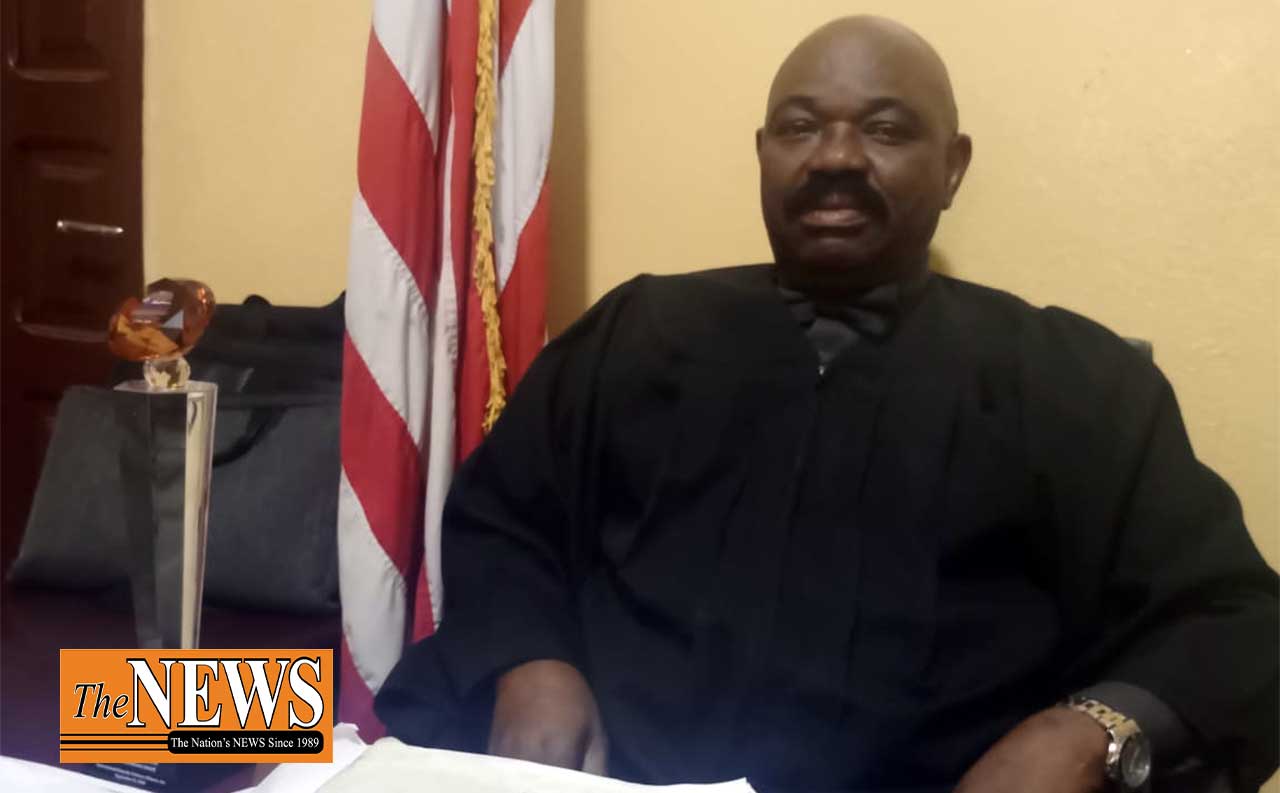
Resident Judge Roosevelt Z. Willie handed down the sentences on Friday, July 10, 2026, following a unanimous guilty verdict returned earlier in the week by a trial jury in the closely watched case involving Bill Plato and several co-defendants.
Judge Willie convicted Bill Plato, Wuo Zegarsco Garteh, Daylue Kargo, Rudolph S. Flomo, Stanley Wonanbaye, Jerome Genseh, and Alexander Plato of Trafficking in Persons, Criminal Conspiracy, and Theft of Property.
Each was sentenced to 50 years’ imprisonment, fined US$10,000, and ordered to jointly pay US$90,000 in restitution to the victims for medical and psychological treatment, lost income, emotional distress, pain, and suffering.
Three other defendants Maxi Wonanbaye, Marthaline Y. Tompia, and Preston Godfrey who pleaded guilty during the trial were each sentenced to 20 years’ imprisonment. However, the court suspended 10 years of each sentence in recognition of their guilty pleas. Each was also fined US$500 and ordered to pay US$10,000 in restitution to the victims.
In his final ruling, Judge Willie cited four principal reasons for imposing sentences above the law’s 20-year minimum.
First, the court found that the prosecution proved beyond a reasonable doubt that the defendants recruited, transported, harbored, and exploited at least 57 victims from Nimba, Bong, Grand Gedeh, Bomi, Lofa, and other counties by falsely promising employment opportunities in Canada.
Second, Judge Willie rejected the defense’s argument that no human trafficking occurred because the victims never left Liberia. He ruled that under the Amended Trafficking in Persons Act of 2021, cross-border movement is not an essential element of the offense.
Recruitment, transportation, harboring, confinement, and exploitation through fraud, deception, or coercion are sufficient to establish the crime. Third, the court found overwhelming evidence that the defendants acted together in a coordinated criminal enterprise, with each playing complementary roles in recruiting victims, collecting money, transporting them to Monrovia, confining them, and forcing them to solicit additional funds from relatives.
Fourth, Judge Willie relied on the Probation Office’s report, which indicated that several of the convicted defendants were recidivists, having previously committed crimes against the State. Considering the gravity of the offenses and the inhumane treatment inflicted on the victims, the court held that a sentence exceeding the statutory minimum was warranted.
Evidence Presented During Trial
The prosecution alleged that the defendants operated through Infinity Millennials and Platinum Star Limitless, commonly known as Q-Net, using the entities as fronts to recruit victims under the false promise of overseas employment and business opportunities in Canada.
Evidence showed that approximately 57 victims paid between US$950 and US$4,500 each, totaling about US$124,921, believing they were paying processing fees for travel abroad. Instead, the victims were taken to a fenced compound in Gbangba Town along the Stop Robertsfield Highway, where they were unlawfully confined.
Victims testified that their mobile phones were confiscated and that they were forced to contact relatives to request additional money. Those who refused were allegedly punished by being made to pump vehicle tires, kneel or remain under the hot sun for prolonged periods, drink excessive amounts of water, endure food deprivation, verbal abuse, and forced labor.
Several female victims also testified that they were sexually assaulted by Bill Plato and Wuo Zegarsco Garteh.
During closing arguments, prosecutors urged the jury to convict all of the defendants, arguing that the evidence established every element of Trafficking in Persons, Criminal Conspiracy, and Theft of Property beyond a reasonable doubt.
The prosecution relied on testimony from 11 witnesses, nine rebuttal witnesses, and three subpoena witnesses, maintaining that the defendants deliberately recruited, harbored, confined, and exploited vulnerable Liberians through fraud and deception.
Lead defense counsel Cllr. Sennay Carlor II, representing all of the defendants, asked the jury to acquit his clients, arguing that the prosecution failed to prove its case beyond a reasonable doubt. Carlor maintained that Infinity Millennials Platinum Star Limitless was a legally registered company in Liberia, relying on testimony from officials of the Liberia Revenue Authority (LRA), who confirmed the company’s registration. He argued that the complainants voluntarily joined the organization, paid for products, received official receipts, and entered into business transactions with a legally registered corporate entity.
According to the defense, any dispute arising from those transactions should have been pursued as a civil matter rather than through criminal prosecution. The defense further argued that the prosecution failed to establish both the criminal act (actus reus) and the guilty intent (mens rea) against each defendant individually, emphasizing that the burden of proof rested entirely on the State and that the defendants had no obligation to prove their innocence.
Carlor also contended that the number of prosecution witnesses was irrelevant unless their testimony was credible, reliable, and sufficient to remove every reasonable doubt. Throughout the trial, all of the defendants maintained their innocence and testified in their own defense.
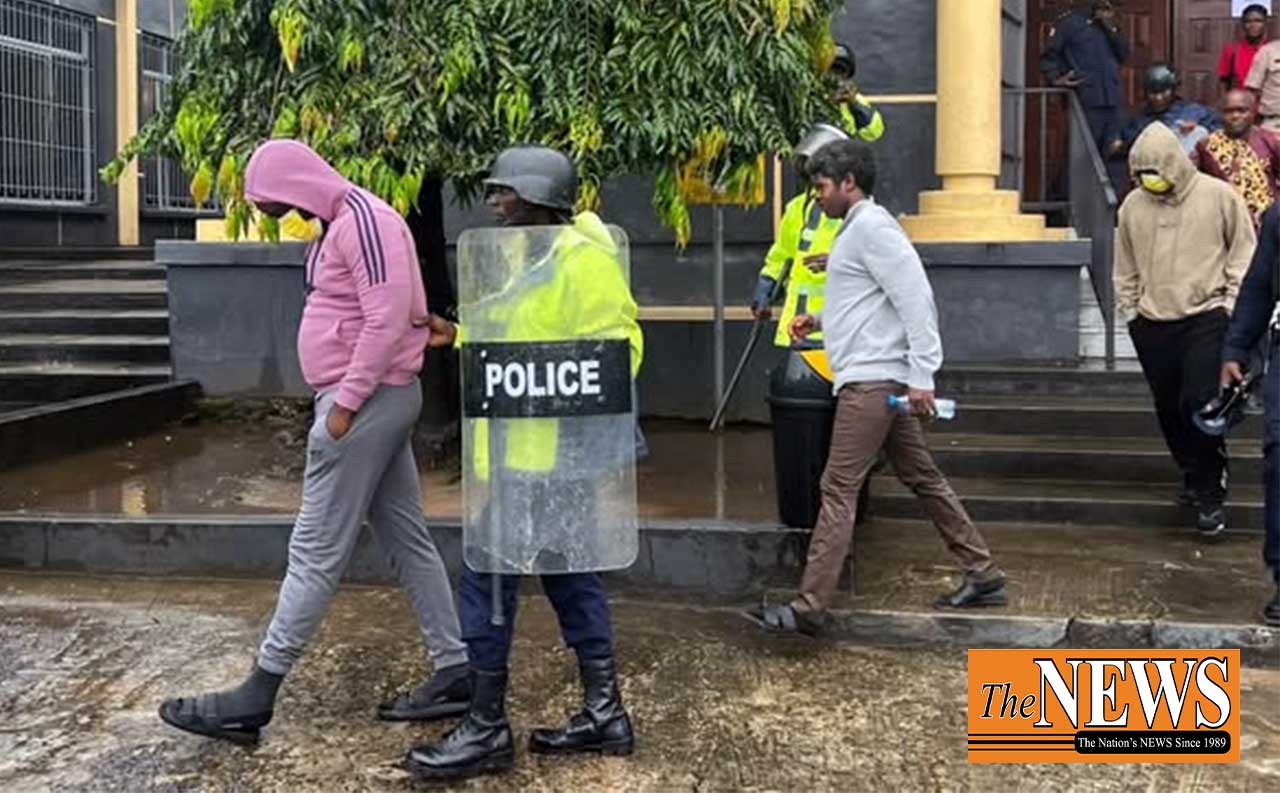
After weeks of testimony and legal arguments, the trial jury unanimously found Bill Plato and his co-defendants guilty on all counts. Following sentencing, defense lawyers formally excepted to the ruling and announced an appeal to the Supreme Court of Liberia.
Judge Willie acknowledged the appeal, noting that it is a constitutional right guaranteed to every convicted person, and ordered that the defendants be remanded to the Monrovia Central Prison pending further judicial proceedings.
The judgment is widely regarded as one of the most significant convictions under Liberia’s anti-human trafficking law and sends a strong warning to individuals engaged in fraudulent overseas employment schemes and the exploitation of vulnerable persons.