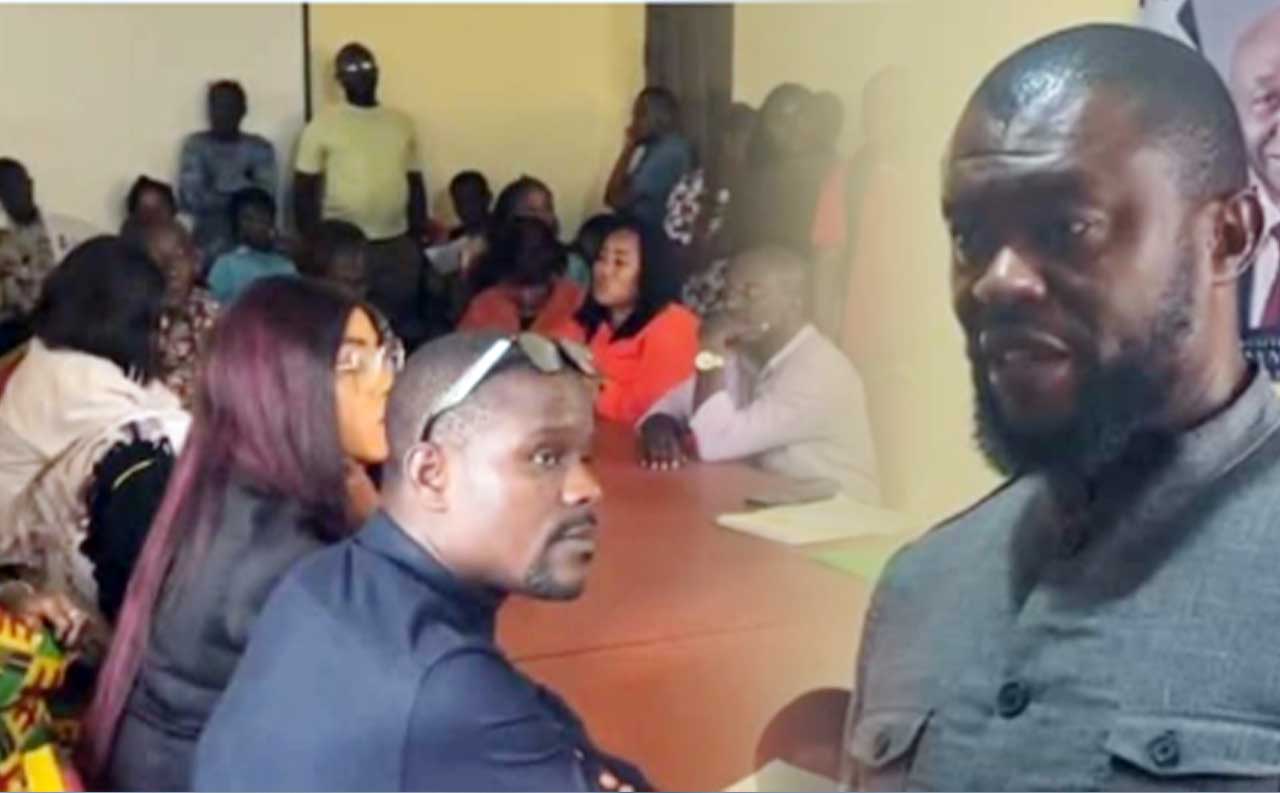
The Government of Liberia has intensified its public sector reform agenda as the Civil Service Agency (CSA) rolls out its Credential and Physical Verification Exercise at the National Housing Authority (NHA). The exercise is geared towards identifying ghost names and improves transparency, accountability, and workforce productivity. The NHA is the 43rd government institution to undergo the nationwide audit. The verification led by CSA Director-General, Dr. Josiah F. Joekai Jr., forms part of a broader government strategy to sanitize the public payroll, eliminate ghost workers, and ensure that civil servants are properly qualified for the positions they occupy.
Liberia’s civil service has historically struggled with skills mismatch, weak personnel records, payroll irregularities, and political interference, challenges that intensified during and after the country’s 14-year civil conflict (1989–2003). According to World Bank and IMF governance assessments, public sector wage inefficiencies have consumed over 40 percent of Liberia’s recurrent national budget in some fiscal years, leaving limited space for service delivery and infrastructure investment.
Government payroll audits conducted between 2018 and 2023 uncovered thousands of irregular entries, including duplicate names, unverified staff, and individuals receiving salaries without reporting to work. In response, the CSA has been mandated to lead a systematic reform of human resource management across ministries, agencies, and commissions. Speaking during the launch at the NHA, Dr. Joekai emphasized that the verification exercise is government-led, lawful, and non-punitive, designed to align competence, qualifications, and experience with assigned roles.
“We cannot continue to put square pegs in round holes and round pegs in square holes,” Dr. Joekai said. “This process ensures that the right people are placed in the right positions, based on merit, competence, and professional background.” He disclosed that similar exercises at other branches of government, including the Judiciary, resulted in the retirement of ineligible staff, the redeployment of personnel, and the reclassification of employees whose qualifications did not meet the standards of their positions.
At the House of Representatives alone, Dr. Joekai revealed, 263 staff members were reassigned or repositioned following CSA recommendations, while payroll cleanups at institutions such as the Monrovia City Corporation (MCC) led to staff movements and the removal of ghost workers.
According to the CSA, the NHA verification process scheduled to run for a short but intensive period includes: physical verification of employees, photographic documentation, cross-checking of academic and professional credentials, comparison of employee-submitted documents with CSA payroll data, review of personnel files at the NHA and Identification of broken or missing records
Dr. Joekai stressed that the exercise also involves academic and professional credential authentication, a critical step in restoring credibility to Liberia’s classified civil service. “Some people may be professionally competent on paper, but their core values make them institutionally incompetent,” he noted, emphasizing integrity as a key benchmark. The CSA Director-General clarified that Liberia operates a classified civil service system, reserved for professionals, technical experts, supervisors, directors, deputy directors, and senior managers.
He warned that any director or senior official who refuses to submit credentials for verification automatically risks reclassification, as refusal suggests non-compliance with civil service standards. “If you do not qualify for the classified civil service, you will be professionally reclassified. There is no magic, no pretense, and no witch-hunt in this process,” he said.
Those found occupying roles beyond their qualifications will be reassigned accordingly, while individuals with valid credentials will be confirmed or repositioned into appropriate roles. Dr. Joekai reassured NHA employees that the exercise is transparent, factual, and institutionally driven, adding that the CSA does not outsource credential verification to external firms.
“This is our core mandate. Government does not need to pay external institutions to do what the CSA is legally empowered to do,” he stated. He issued a stern warning against bribery and interference: “No bribe. Our teams will report it, just as they have done in other institutions.” Employees have been instructed to channel concerns through their Human Resources Department and to sign voluntary consent forms as part of the verification process.
In a brief response, NHA Managing Director Florence K. Geebae welcomed the CSA initiative and pledged the authority’s full cooperation.
“When we took over, we identified serious lapses in personnel documentation and capacity gaps,” Madam Geebae said, noting that the verification will complement the NHA’s internal reclassification, capacity needs assessment, and staff development plans. She emphasized that the process is not intended to dismiss workers but to strengthen institutional performance.
“Government pays salaries that are the input. But what is the output if people are not placed where they can contribute meaningfully?” she asked. Madam Geebae directed all NHA staff, including those on leave, sick leave, or involved in court proceedings, to participate in the exercise without exception.
“I will ensure that every personnel of the National Housing Authority goes through this process,” she assured the CSA team. The CSA verification exercise aligns with Liberia’s broader governance reform efforts under the current administration, aimed at building a professional, efficient, and accountable civil service capable of delivering public services to citizens. Dr. Joekai called on staff to cooperate. “The role of the CSA is to support, strengthen, and collaborate. This exercise will help government functionaries become more productive individually and collectively for the benefit of the Liberian people.”