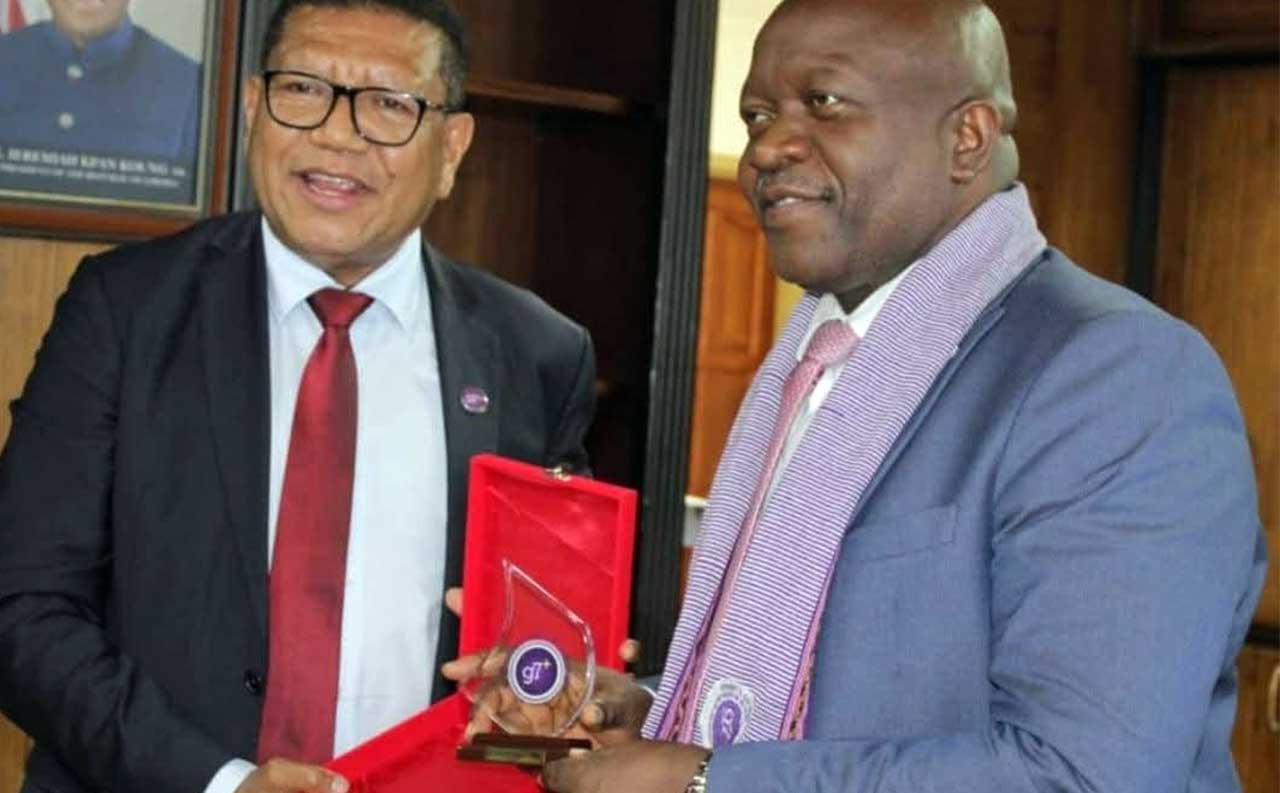
Liberia’s rising prominence in global diplomacy and development cooperation came into sharp focus on Wednesday, March 17, as a high-level delegation from the G7+ held strategic talks with Finance and Development Planning Minister, Augustine Kpehe Ngafuan.
The visit signals growing international confidence in Liberia’s leadership among fragile and conflict-affected states, as well as its expanding role in shaping global peace and development priorities.
Formed in 2010 in Timor-Leste, the G7+ is a coalition of countries emerging from conflict, committed to promoting peace, stability, and sustainable development through shared experiences and collective action.
The group has since gained significant international recognition, including securing observer status at the United Nations in 2019 and contributing to the global push for Sustainable Development Goal 16, which emphasizes peace, justice, and strong institutions.
Liberia currently serves as Deputy Chair of the G7+, working alongside the Democratic Republic of the Congo in support of the Solomon Islands, which chairs the bloc.
The country’s influence is further amplified by its current position as a non-permanent member of the United Nations Security Council for the 2026–2027 term, placing it at the center of critical global peace and security deliberations.
Discussions during the meeting centered on deepening collaboration through the g7+ peer-learning platform, with key focus areas including strengthening public financial management systems, advancing the ratification of the g7+ Charter, and reviewing progress on the Rapid Response Advisory Centre (RARC).
The delegation and Liberian officials also explored how the country can effectively use its dual leadership roles to advocate for the priorities of fragile states within International Financial Institutions and Multilateral Development Banks, institutions often criticized for not fully addressing the unique challenges of post-conflict nations.
The engagement underscores Liberia’s determination to not only consolidate its own post-war recovery gains but also to serve as a voice and bridge for similarly situated nations striving for stability and sustainable growth.
As Liberia continues to transition from a history marked by conflict to one defined by resilience and diplomacy, the visit reinforces its evolving identity, not just as a beneficiary of international support, but as a key architect of global solutions for fragile states.