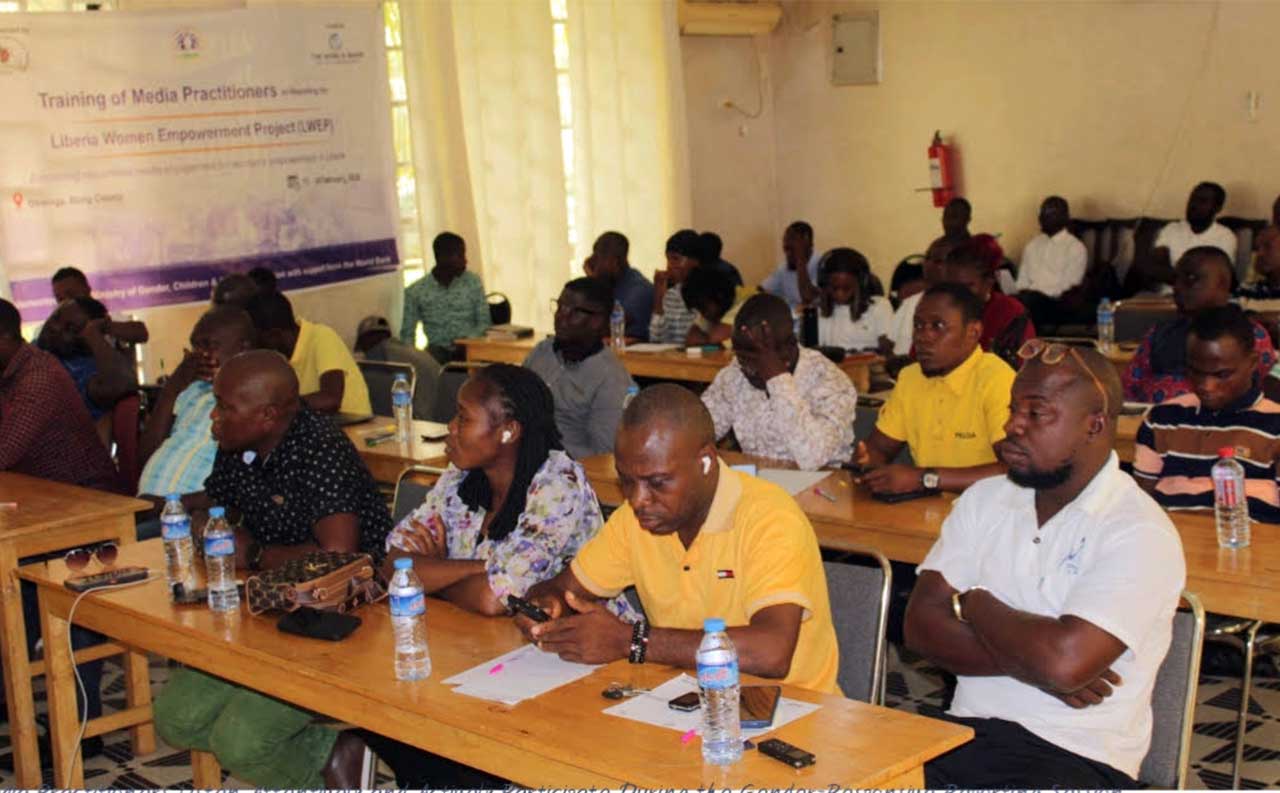
Fifty journalists from across Liberia have undergone intensive training in ethical and gender-responsive reporting, as authorities and development partners push to strengthen media accountability amid persistent gender inequality and rising concerns over the handling of gender-based violence stories.
The two-day training, held in Gbarnga under the Liberia Women Empowerment Project (LWEP), brought together reporters from community radio stations, print media, and digital platforms across six counties: Montserrado, Bomi, Gbarpolu, Grand Cape Mount, River Cess, and Grand Gedeh.
Implemented by the Ministry of Gender, Children, and Social Protection with funding from the World Bank, the US$44.6 million project targets over 267,000 beneficiaries, including 36,000 women-led businesses, with a strong focus on transforming harmful social norms and expanding economic opportunities for women and girls.
At the opening of the training, Lisa T. Diasay of the Project Management Unit underscored the media’s influence in shaping public understanding of gender issues and in ensuring that citizens are aware of opportunities under the project.
She said the initiative prioritizes counties with high vulnerability and reported cases of gender-based violence, stressing that effective media coverage is essential to reaching affected communities.
A central component of the training focused on gender-sensitive reporting, with facilitator Carolyn D. Myers urging journalists to abandon sensationalism and adopt survivor-centered storytelling when covering gender-based violence. “Responsible reporting protects survivors and helps shift the narrative from blame to accountability,” Myers said, warning that careless reporting can expose victims to stigma and retaliation. Participants were cautioned against publishing identifying details, using victim-blaming language, or prioritizing headlines over human dignity.
The training also emphasized ethical journalism and fact-checking, with media professional Varmah V. Kamara reminding participants that credibility remains the cornerstone of the profession.
“Accuracy must always come before speed,” Kamara said. “Journalists must resist the pressure to publish unverified information, especially in today’s fast-moving digital space.”
Despite the training’s objectives, journalists highlighted systemic challenges, including weak editorial policies, limited access to professional development, and difficulties verifying information in rural areas with poor internet connectivity.
Some participants also pointed to chronic underfunding within media institutions, which continues to undermine investigative reporting on critical gender and development issues. In response, attendees called for expanded training beyond the media, urging that police officers, healthcare workers, and civil society actors also receive similar capacity-building to improve responses to gender-based violence.
They further emphasized the need for sustained collaboration between government, development partners, and media institutions to strengthen journalism standards nationwide. The training marks a significant intervention in reshaping how gender issues are reported in Liberia, positioning the media as a critical force in promoting accountability, amplifying marginalized voices, and driving social change.