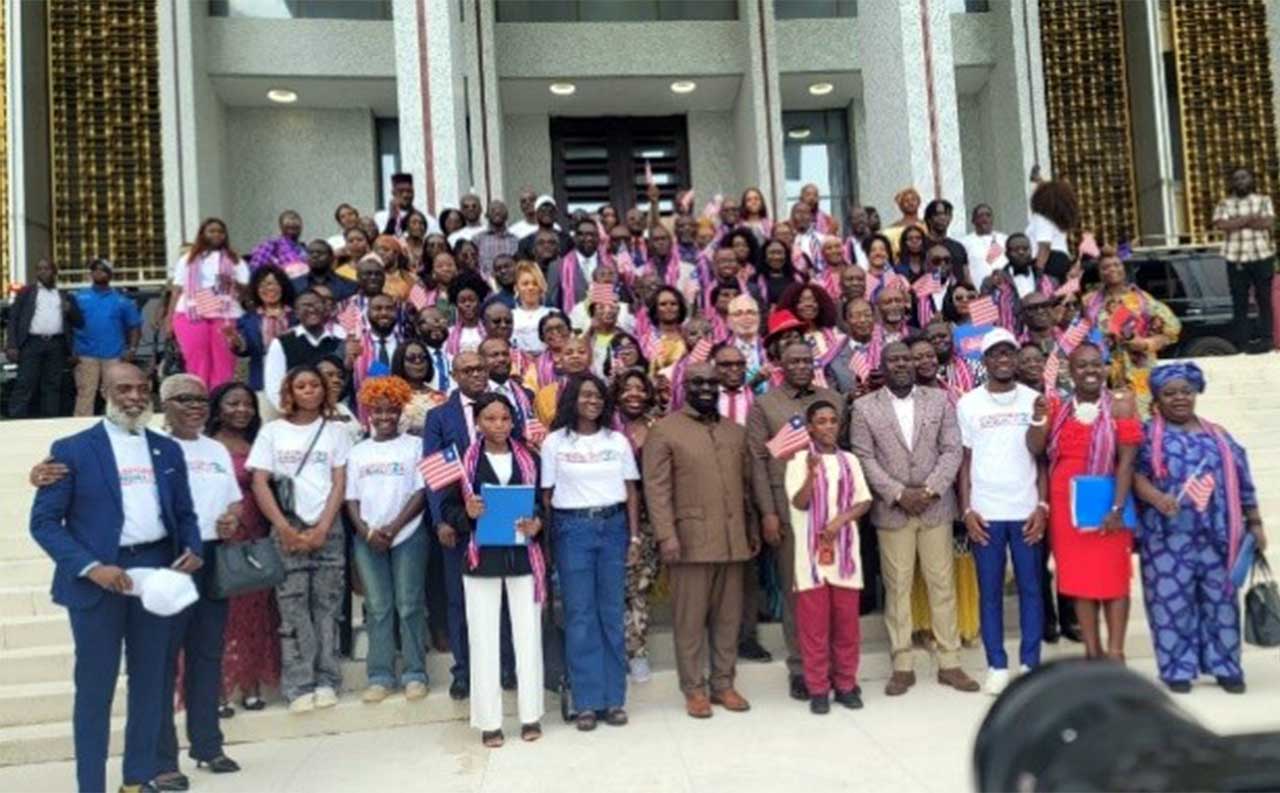
The Government of Liberia has renewed calls for Liberians in the diaspora to return home, invest collectively, and take advantage of economic opportunities in the private sector, as national leaders addressed a gathering of returning Liberians at the Executive Mansion in Monrovia on Friday, December 12, 2025.
Speaking on behalf of President Joseph N. Boakai, the Minister of State for Presidential Affairs, Minister Samuel A. Stevquoah welcomed members of the diaspora and praised them for their historic role in restoring peace, democracy, and stability to Liberia during its darkest years of conflict. Minister Stevquoah reminded the audience that Liberia’s peace today is inseparable from the sacrifices of Liberians abroad who mobilized international attention during the civil war.
He recalled how diaspora advocacy helped push global leaders to act, leading to the departure of former President Charles Taylor and opening the door to lasting peace. The Minister of State for Presidential Affairs noted “Through your efforts, we have peace. Through your tenacity, we have had three successive democratic elections and peaceful transfers of power; describing the diaspora as a pillar of accountability and national progress.”
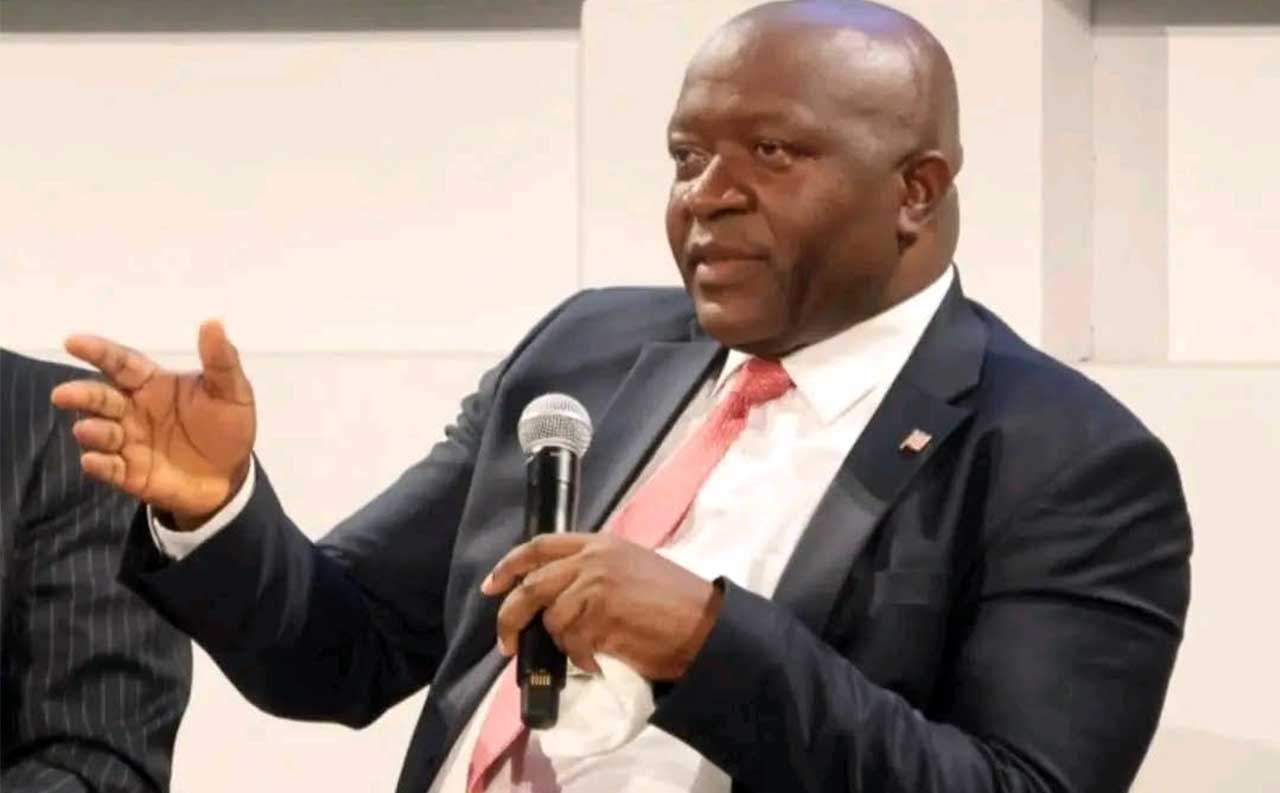
For his part, Vice President, Jeremiah Kpan Koung, emphasized that the diaspora return initiative is not symbolic but economic in nature, aimed at transforming Liberia’s development trajectory. Drawing from his own life experience growing up in Liberia’s slums, the Vice President said the country holds immense untapped wealth, particularly in the private sector; arguing that while government service is important, real freedom and prosperity often lie in entrepreneurship and investment.
“There is money in this country, If you take advantage of the private sector, you will be surprised you won’t even want a government job,” he narrated. Koung highlighted Liberia’s unique land ownership laws, which restrict property ownership to citizens of Negro descent, as a strategic advantage that Liberians must urgently leverage before future reforms open the market more broadly to foreigners.
According to him, failure by Liberians to collectively invest has allowed foreign interests to dominate sectors such as hospitality, construction, retail, and even basic food supply, leaving Liberians as consumers rather than owners. The Vice President challenged the diaspora to abandon individualism and embrace joint investment models; citing examples where pooled resources could build hotels, housing estates, resorts, and tourism infrastructure capable of generating long-term wealth.
“Twenty Liberians with two hundred thousand dollars each can build what one person alone cannot; collaboration remains Liberia’s greatest weakness and greatest opportunity,” he added. Moreover, he proposed the creation of a diaspora investment corporation, suggesting that if 200,000 Liberians contributed just US$100 each, a US$20 million fund could be raised as seed capital to unlock larger financing from commercial banks.
Koung pointed to tourism sites such as Lake Piso and Cape Mount County as high-potential areas where diaspora-backed investments could transform local economies, create jobs, and attract international visitors. Beyond tourism, he underscored opportunities in healthcare, diagnostics, housing, agriculture, and small-scale trading, revealing that Liberia currently loses millions of dollars annually to medical travel abroad for services such as MRI scans. He also addressed trust issues that have long discouraged diaspora investment, calling for stronger legal frameworks, bank guarantees, and professional management structures to protect investors and ensure transparency.