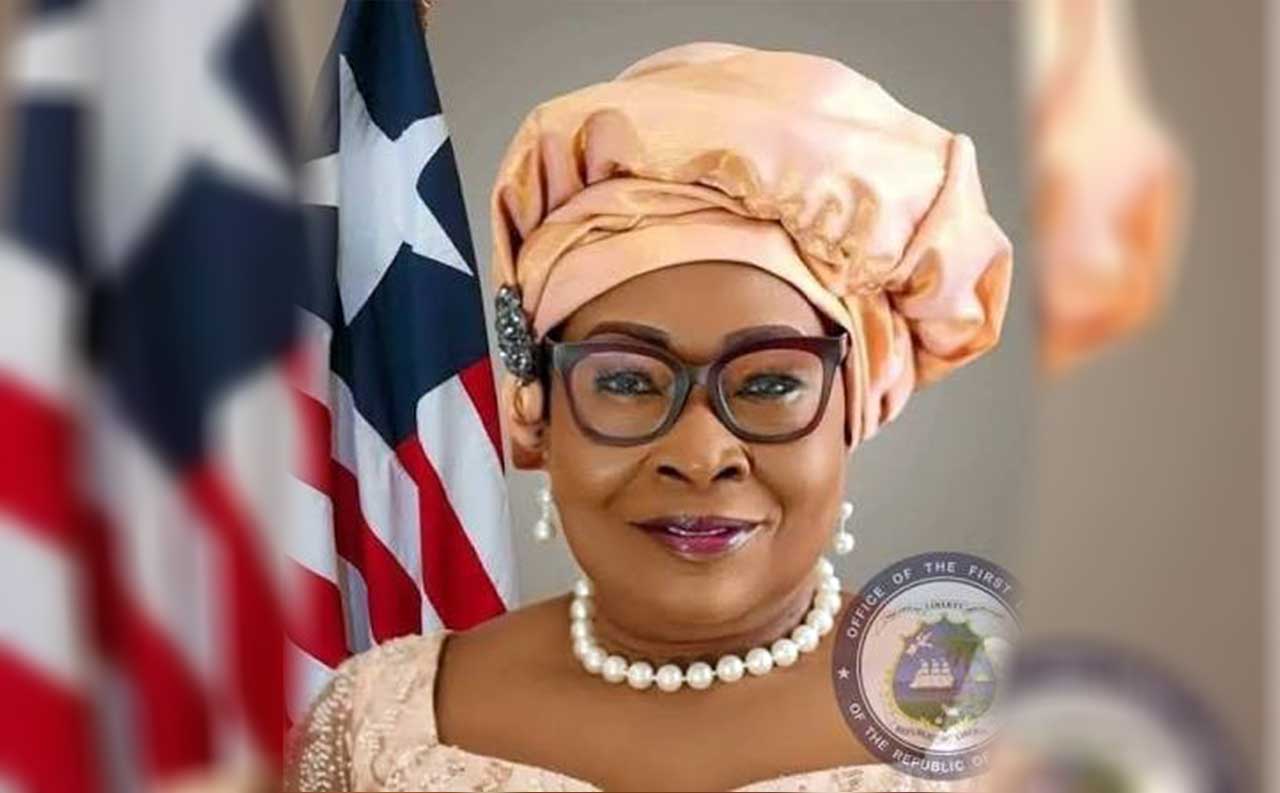
The First Lady of Liberia delivered a forceful and emotionally charged address at the 30th General Assembly of the Organization of African First Ladies for Development in Addis Ababa, Ethiopia, declaring that “resilience must be a right, not a reaction” as she called for bold, systemic reforms to protect and empower women and girls across the continent.
Speaking under the theme, “Building Resilience for Women and Girls: Climate, Conflict, and Sustainable Futures,” Madame Katumu Boakai framed the gathering not as a ceremonial milestone but as a decisive moment for Africa’s future. “There is something sacred about this soil, Addis Ababa,” she said, invoking the historic ties between Liberia and Ethiopia as two nations that resisted colonial rule. When the continent bowed under the weight of colonialism, we remained upright and fearless because we believed in a free Africa before the world did,” Madam Boakai stated.
The First Lady’s address quickly shifted from historical reflection to urgent reality. Climate shocks, armed conflicts, and systemic exclusion, she warned, are converging in ways that disproportionately burden women and girls. “When the sky refuses to rain, it is the girl who walks farther. When food becomes scarce, it is the mother who eats last. And when violence erupts, it is the woman’s body that bears the memory of war,” she declared, drawing sustained applause from fellow First Ladies, African Union officials, and development partners.
She challenged African leaders to move beyond celebrating women’s resilience as a cultural virtue and instead institutionalize it as public policy. “We must stop applauding women for surviving systems that fail them. We must design systems that serve their dignity, protect their dreams, and advance their leadership,” she added.
Referencing the African Union’s 2026 theme on sustainable water and sanitation, the Liberian First Lady described water access as a “gendered emergency,” linking inadequate infrastructure to school dropouts among girls and heightened vulnerabilities in rural communities. “Water is not neutral. It is political. It is spiritual. If we fail to guarantee it for women and girls, we are not building a sustainable future; we are tolerating collapse,” she said.
Turning to Liberia’s domestic efforts, Madam Boakai credited President Joseph N. Boakai Sr. for championing a governance agenda that centers on women and girls in national recovery efforts. She highlighted the activation of a High-Level Women’s Coalition for Maternal and Newborn Health, the renovation of rural maternity and neonatal wards, expansion of the Merck “Educating Linda” scholarship program for vulnerable girls, and increased attention to trauma and addiction linked to conflict and climate distress.
“Our vision is not to make women strong; they already are. Our vision is to build systems strong enough to be worthy of them,” she stated. Throughout the speech, the First Lady of Liberia pressed for women’s full inclusion in climate adaptation planning, peace negotiations, and national budgeting processes.
“There can be no climate justice without gender justice. And there can be no peace settlement without women’s signatures,” she asserted. As the 30th Assembly marked three decades of collective advocacy by African First Ladies, she urged her counterparts to transform symbolic influence into measurable impact. “We did not gather to admire the strength of women; we gathered to multiply it,” Madam Boakai narrated.