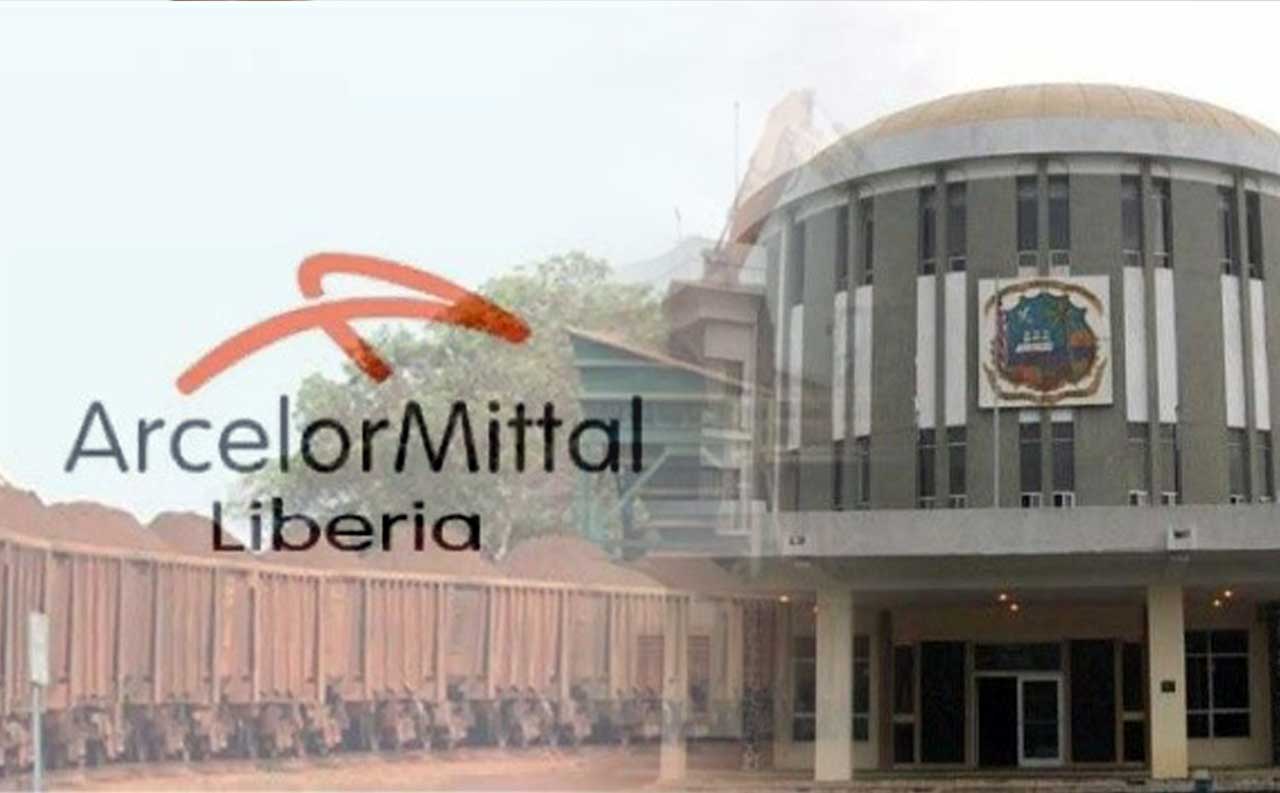
Integrating Rail System Operating Principles {RSOP} within ArcelorMittal Liberia’s third amendment risks undermining the authority of elected decision makers. On Tuesday, January 20, 2026, the House of Representatives passed Amendment No. 3 of ArcelorMittal Liberia’s (AML) Mineral Development Agreement (MDA). The passage followed presentation of a report by the Joint Committee on Investment and Concessions, Lands, Mines, Energy, Natural Resources and Environment, and Judiciary.
However, mineral experts familiar with the third amendment of the deal, are alarmed that submitting the RSOPs within AML’s revised MDA will grant significant decision-making powers over the Yekepa-Buchanan rail line to a private company thus, undermining the authority of democratically elected lawmakers.
“Binding a sovereign government to operating principles set by a single incumbent is not only unprecedented, but it also raises multiple barriers to the development of a fair, competitive multi-user rail system. It is an effective “state within a state,” lawmakers who opposed the passage of the third amendment disclosed.
Risks with the RSOPs in their Current Form The RSOPs would impose binding obligations on all current and future rail users without their consultation or consent. Additionally, AML would retain unilateral authority to change the RSOPs without legislative sign-off, regardless of their size or scale.
Concerns are mounting that any future transition from AML’s control would require concessionaires to achieve capacity of five metric-tonnes per annum. This moves the transition timeline outside of the government’s control and risks creating a prolonged period of instability and disputes.
Citizens of affected communities knowledgeable of the third amendment of the MDA are also concerned by how decision-making power would be weighted by capacity, stressing that it gives the incumbent a competitive advantage because new users only gain influence after substantial capital investment, thereby increasing the risk of delays.
There is also the risk of the RSOPs being terminated when the AML MDA terminates. If AML decides to do this before the end of its concession in 2050, it risks undermining the entire rail line’s operating framework, an action which could deter investment and provoke disputes. A legislator who preferred anonymity, said the terms grant AML preferential rights to expand, which undermines the equal-access principles of a multi-user rail line.
Call to Action A single user should never set the access rules for shared national infrastructure because it limits policy flexibility, complicates the transition to independent regulation, and increases the risk of disputes, all of which will deter economic growth.
They said “To ensure the RSOPs become genuine neutral guidelines, they must be separated from the AML MDA’s ratification process; the framework should be developed through a neutral, inclusive, and transparent process, with participation from all ratified rail concessionaires, clear oversight by the Liberian government, and input from independent technical and regulatory experts. The RSOPs must be designed to facilitate a smooth transition into a future open-access operating regime.”