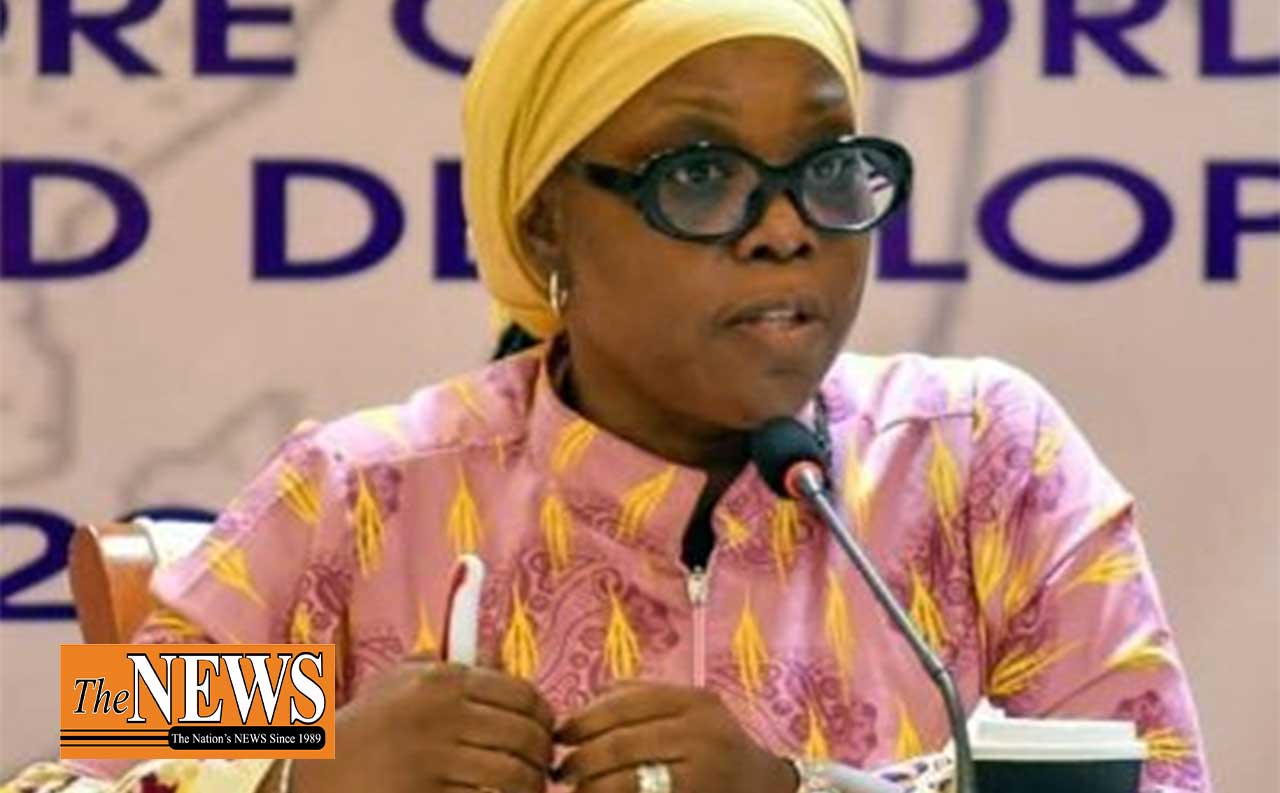
Liberia has taken a historic step in reshaping its international relations, becoming the first African country to adopt a Feminist Foreign Policy, a move Foreign Minister Sara Beysolow Nyanti says will challenge women’s exclusion from diplomatic decision-making and redefine how the country engages with the rest of the world.
Speaking Tuesday, November 17, 2026, at the official launch of the policy, Minister Nyanti declared that Liberia’s diplomacy could not achieve its full potential while women, who constitute half of the country’s population, remain inadequately represented in positions where national and international decisions are made.
She maintained that the policy is not intended to create divisions between men and women, but to ensure equal opportunities, meaningful participation and stronger representation of women across Liberia’s Foreign Service and international engagements. “A foreign policy speaks for the whole nation. It cannot speak fully for Liberia if half of Liberia is missing from the room,” Nyanti stressed.
Foreign Minister Nyanti described the initiative as a major milestone in Liberia’s diplomatic history, noting that it reflects President Joseph N. Boakai’s commitment to women’s empowerment and gender equality. She said the responsibility of the Ministry of Foreign Affairs was to translate the President’s domestic commitment to gender equality into Liberia’s diplomatic institutions, Foreign Service and relationships with other nations.
Nyanti acknowledged the contributions of generations of Liberian diplomats, particularly Ambassador Angie Elizabeth Brooks Randolph, who became the first African woman to preside over the United Nations General Assembly, and former President Ellen Johnson Sirleaf, Africa’s first elected female head of state. The Minister said their contributions, alongside those of other Liberian diplomats, laid an important foundation for the country’s current diplomatic transformation.
According to her, the policy was developed through extensive consultations involving serving and former Liberian ambassadors, former foreign ministers, civil society organizations, gender advocates, technical experts and international partners. Nyanti said Liberia was initially met with resistance when it presented its feminist foreign policy roadmap in February 2025.
Further, she recalled that representatives of the African Union and ECOWAS advised the country against prominently using the word “feminist,” warning that the terminology could generate resistance among African leaders, many of whom are men.
However, the Foreign Minister said Liberia remained committed to its decision, expressing confidence that President Boakai would support the initiative despite the concerns raised. She said the country’s determination has since attracted growing continental interest, with Liberia now being invited to share its experience and present the policy at regional and international forums, including ECOWAS.
However, Nyanti disclosed that Nigeria and Morocco have demonstrated support for the movement, while male foreign ministers from both countries have participated in the broader global initiative.
Beyond women’s representation in leadership, she emphasized the need to establish a sustainable professional development system that prepares women for senior diplomatic responsibilities. The minister argued that appointing women to leadership positions without providing them with the necessary experience, training and professional exposure would undermine the objectives of the policy.
“Putting women into positions is not enough. Women, like men, must rise through the ranks. They must gain experience. They must gain knowledge and judgment and tact along the way so that when they reach leadership, they are prepared to succeed,” she said.
Nyanti further cautioned that the success of Liberia’s diplomatic reforms would depend on the quality and character of those entrusted with representing the country abroad. She identified patriotism, nationalism and service as the three essential qualities that must guide every Liberian diplomat, insisting that national interest must take precedence over political, religious and tribal affiliations. “When a Liberian diplomat walks into a negotiating room in New York or Abuja or in Belgium, that diplomat walks in representing a flag, representing a seal, not representing a tribe or a religion or a party,” she declared.
Meanwhile, the Foreign Minister announced additional institutional reforms intended to improve professionalism, discipline and accountability within Liberia’s Foreign Service. She disclosed that the Ministry is developing a code of conduct that will establish standards for the behavior and professional responsibilities of Liberian diplomats serving in foreign capitals.
The proposed code will complement the country’s foreign policy statement, strategic plan and economic diplomacy strategy, which Nyanti described as essential instruments for giving direction to Liberia’s international engagements.
She said the government intends to spend the next three years institutionalizing the reforms through improved training, stronger professional standards and a more disciplined diplomatic culture. Thanking President Boakai for his confidence and support, Nyanti said the administration’s responsibility is to establish a stronger foundation that future generations of diplomats can build upon.
She concluded that the Feminist Foreign Policy represents more than a policy launch, describing it as part of a broader national effort to reposition Liberia, strengthen its international identity and restore confidence in the country’s diplomatic service. “This is not an event. This is a journey. A journey of what people call Liberians. A journey of repositioning, rebirthing that Liberian spirit,” the minister stated.