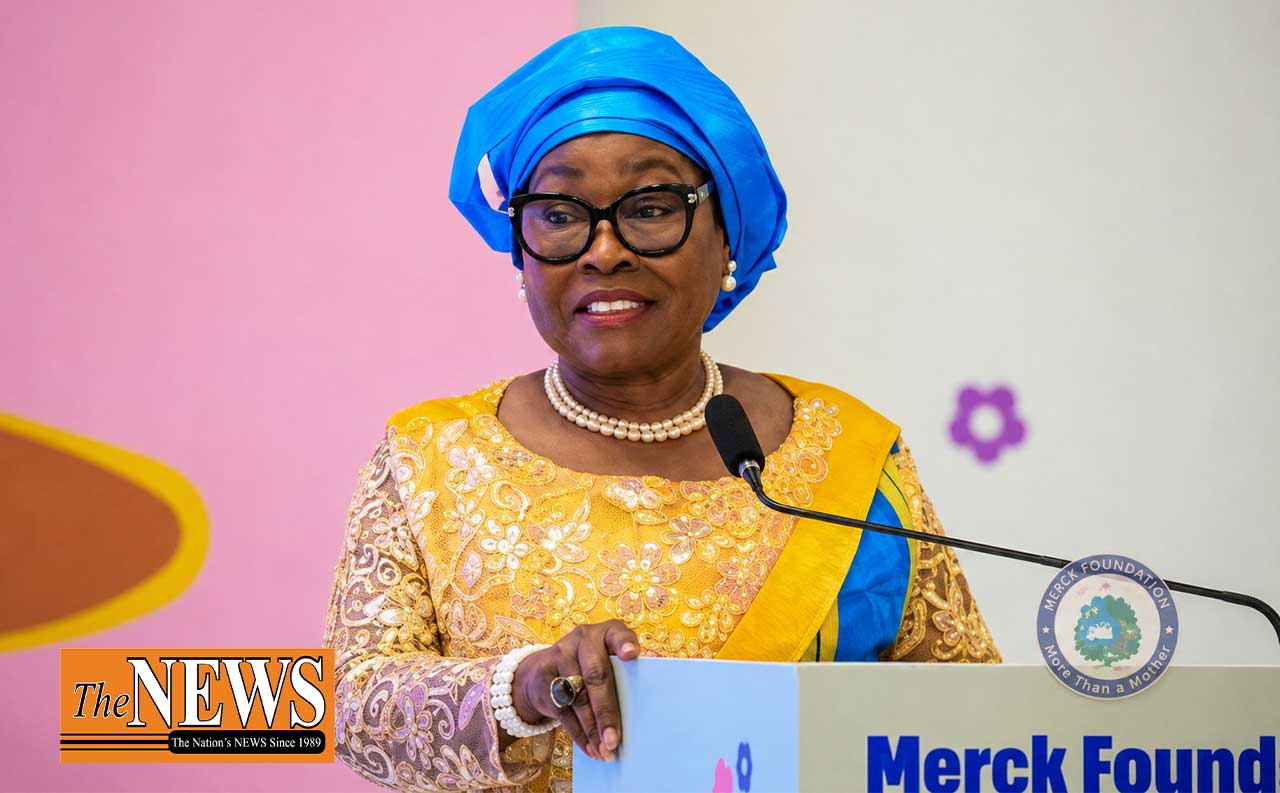
Liberia’s First Lady Kartumu Yarta Boakai has launched a strong national appeal for an end to discrimination, superstition and the rejection of children living with autism, warning that no child should be abused, abandoned or branded demonic because of developmental differences.
Speaking Tuesday, November 10, 2026, at the official launch of the National Autism Awareness Initiative at the Ministerial Complex in Congo Town, the First Lady described the initiative as a national effort to correct longstanding misconceptions about autism and ensure that affected children receive the dignity, protection and opportunities they deserve.
According to her, generations of children with developmental differences have suffered rejection and mistreatment because society failed to understand their conditions, with some being hidden by their families, abandoned or accused of witchcraft and demonic possession.
“Today, we are not launching another program. Today, we are correcting a wrong, insisting that Liberia must move away from harmful beliefs and embrace scientific knowledge, compassion and inclusion,” she declared.
The First Lady emphasized that autism is neither a curse nor a punishment, stressing that children living with the condition are entitled to the same love, protection, education and opportunities as every other child.
She said, “A child with autism is not a curse. A child with autism is not possessed. A child with autism is not a punishment. A child with autism is a child, worthy of love, protection, education, dignity, and opportunity.”
At the same time, Madam Boakai argued that the inability of society to understand children with autism should not become a reason to punish or exclude them, but rather a call for greater public education and institutional support.
The First Lady said the launch follows engagements with the Woods System of Care in the United States approximately one year and two months ago, where discussions centered on autism, intellectual and developmental disabilities, mental health, workforce development, professional training and clinical standards.
Moreover, she welcomed the delegation from the United States for coming to Liberia, expressing hope that the partnership would help translate discussions into practical interventions and strengthen the country’s capacity to respond to the needs of children with developmental disabilities.
According to her, the initiative must go beyond public awareness and establish a sustainable system through which families can access professional assistance, early intervention and appropriate services.
Speaking, she drew attention to the struggles of parents, particularly mothers who are often blamed for their children’s behavior, fathers who struggle to understand their children’s developmental challenges, and families who face condemnation from communities because of misinformation.
Addressing such families, the First Lady assured them that their children are not mistakes or less human because they communicate, learn and experience the world differently.
“As a mother, this touches me deeply. Every mother carries dreams for her child. But motherhood teaches us something profound: Love must be strong enough to release our expectations and embrace the child God actually gave us,” she stated.
Madam Boakai further challenged schools and educational authorities to adopt inclusive practices, emphasizing that inclusion requires more than admitting children with autism into classrooms.
She said teachers must be trained, parents supported, healthcare workers equipped with the necessary knowledge, and communities educated to accommodate children with different developmental needs.
The First Lady identified early diagnosis, trained professionals, early intervention, special education support, family counseling, community awareness and a national policy framework as essential components of the initiative.
She cautioned that awareness without practical services would not adequately address the challenges confronting families. “Because awareness without services becomes sympathy. And sympathy alone is not enough,” she stressed.
However, Madam Boakai described the partnership with the Woods System of Care as an important step toward moving Liberia from isolated responses to organized care, professional understanding and structured support for families.