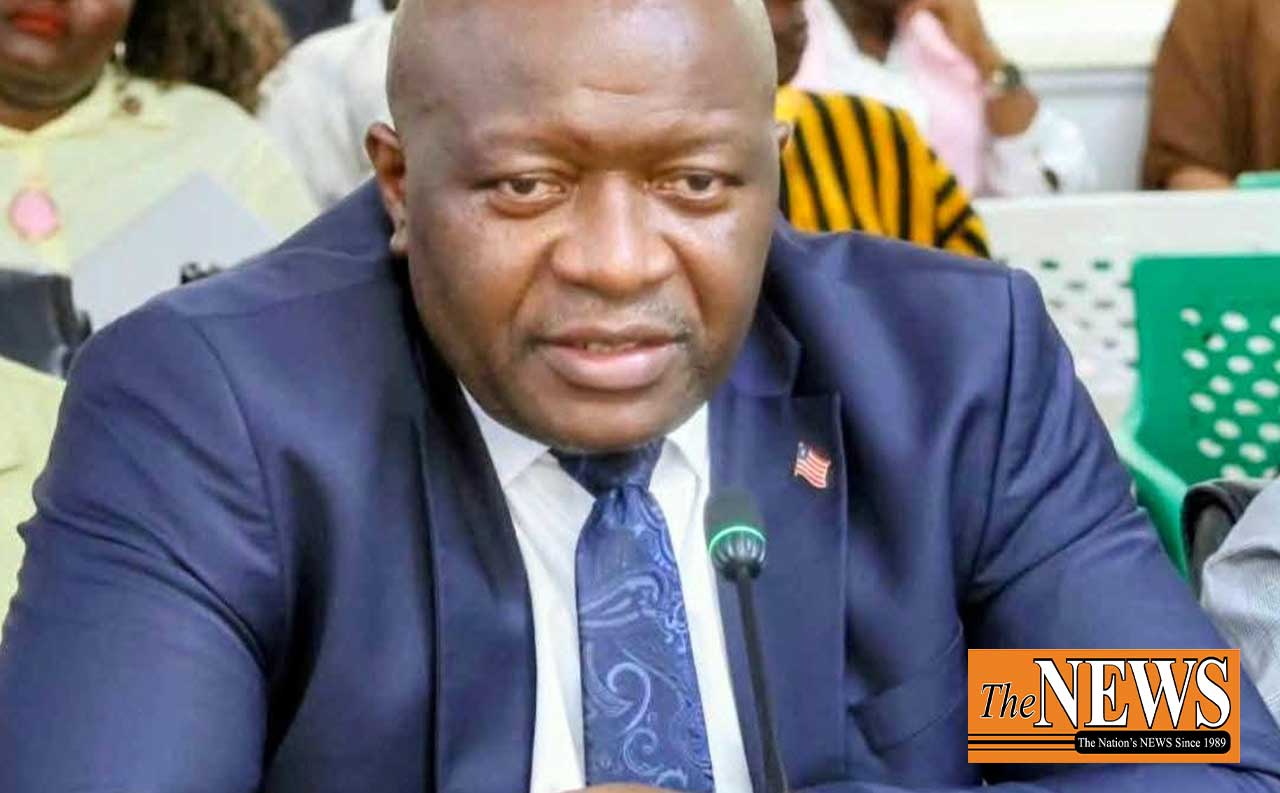
Finance Minister Augustine Kpehe Ngafuan has challenged Liberia’s education authorities to strengthen accountability in the use of public funds, warning that government must be able to track what is actually happening in classrooms before committing additional resources to the sector.
Minister Ngafuan made the remarks Tuesday, October 6, 2026, during the Executive Budget Hearing involving the Ministry of Education, the University of Liberia, Tubman University and other county-based institutions of higher learning.
He said government’s responsibility should extend beyond appropriating money for education to ensuring that the funds reach the people and activities directly responsible for educating Liberian children. “We need to track what’s happening in the classrooms because if we pay those who aren’t in the classrooms, they are taking away money from those in the classrooms,” Ngafuan said.
The Finance Minister’s comments come as the government reviews the performance of ministries, agencies and public institutions under the current national budget while determining priorities for the next fiscal year.
According to Ngafuan, the Executive Budget Hearings are intended to give the Ministry of Finance and Development Planning a clearer understanding of what government institutions have accomplished with funds already appropriated to them and what they consider their most critical priorities going forward.
“What I’m going to do is to clear out many entities to understand quickly what they’ve done with resources appropriated in the current budget and to understand the core priorities going forward,” he said.
Ngafuan at the same time, cautioned education stakeholders against measuring success solely by the amount of money allocated to the sector. “It’s not a matter of how much, it’s a matter of how well,” he stressed.
Liberia’s Finance Minister argued that institutions receiving similar levels of financial support can produce significantly different results depending on how effectively resources are allocated, managed and implemented.
The Minister said this is why the budget process must go beyond financial figures and examine actual performance, implementation and results. He emphasized that limited government resources make it impossible to satisfy every funding request at the level requested by ministries, agencies and public institutions.
As a result, he urged education authorities to help government identify the areas where scarce resources can produce the greatest impact. At the heart of Ngafuan’s message was the need to ensure that education spending translates into improved teaching and learning.
He said resources intended for education should prioritize teachers, students, classrooms and other activities directly linked to educational outcomes, rather than being consumed by individuals or activities that do not contribute to the objectives for which the funds were appropriated.
Ngafuan used the example of a parent with five children but enough resources to educate only three, saying those closest to the situation should help determine which needs deserve priority. “You know those children better than we do,” he told education-sector institutions.