Mr. Paul King, the General Manager of GLS-Menzies-one of the persons of interest in the ongoing US$19.2 million drugs probe has informed investigators that the drugs was given to him by a person identified as Rahem Bah on June 5, 2026 who call his office for quotation.
According to King’s testimony, the shipment was then processed under the name Emre Group of Companies. King further disclosed that he had no knowledge of what was in the shipment because he was not on the ground as he was facilitating a returning customer.
A detailed statement submitted by King to the Ministry of Justice is said to be raising new questions about the direction of the Government’s investigation into the US$19.2 million cocaine seizure at Roberts International Airport, even as official statements suggest investigators are increasingly focused on dismantling what they describe as a broader criminal network.
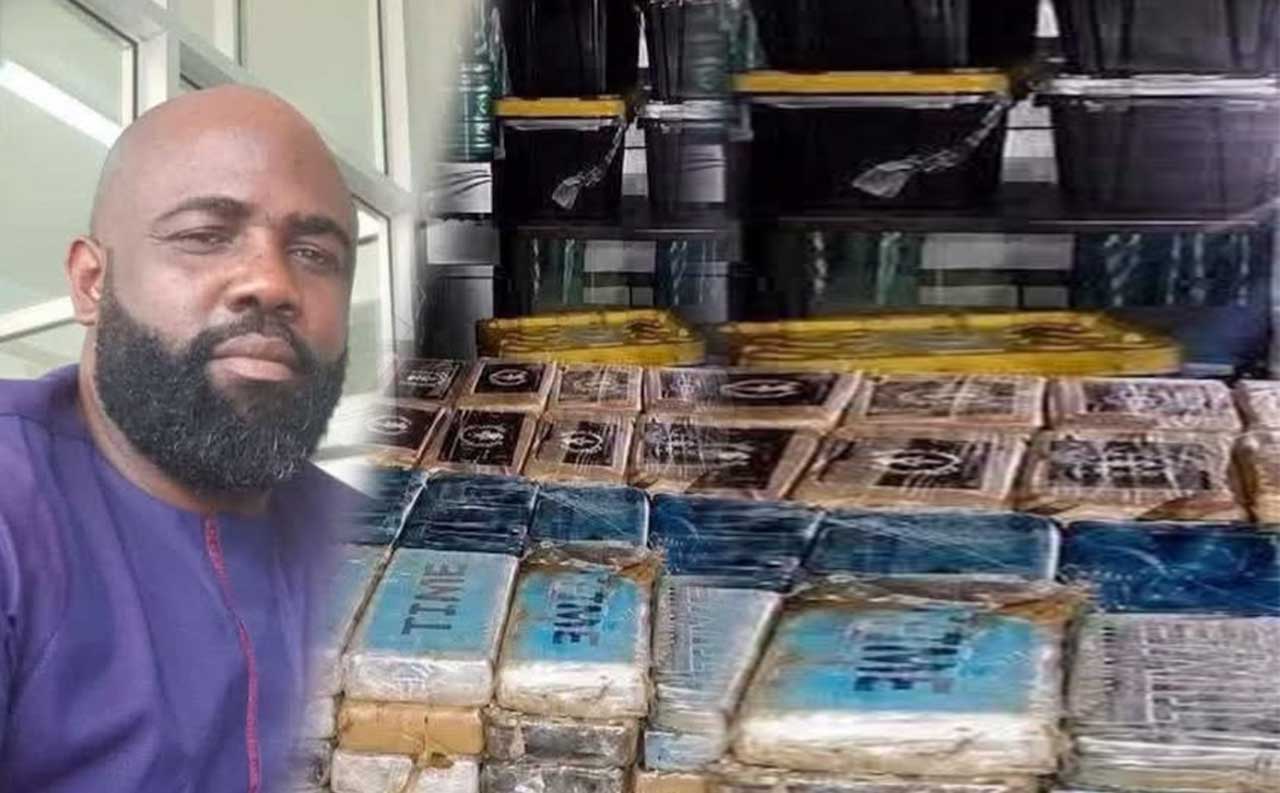
The Government of Liberia appears to be entering a new phase in its investigation into the seizure of approximately 237.6 kilograms of cocaine, with recent statements by the Ministry of Justice and the Witness Protection Agency placing greater emphasis on identifying those who financed, organized and protected the alleged trafficking operation while encouraging insiders to cooperate under the protection of the law.
But as the investigation evolves, several fundamental questions remain unanswered including how the operation was allegedly organized, who directed it, and whether investigators are now moving beyond the immediate handlers of the shipment.
King’s written submission to the Ministry of Justice provides one of the most detailed accounts yet from an individual directly connected to the cargo handling process.
“My involvement was limited solely to my role as a freight broker and intermediary.” King wrote. “I did not package, load, inspect, alter, conceal, or physically handle the contents of the cargo,” King said.
According to observers, many of the claims are capable of corroboration through documentary records, CCTV footage, electronic communications, cargo logs and witness testimony already in the possession of investigators.
Among the most significant assertions is King’s claim that the shipment never completed GLS Menzies’ acceptance process because of unresolved discrepancies in its declared weight.
According to the statement, GLS personnel identified inconsistencies between the declared weight on the Air Waybill and the physical cargo presented for export. The shipment, he says, was placed on hold pending correction of those discrepancies and therefore never advanced through the company’s normal cargo acceptance procedures.
That account is consistent with internal email correspondence showing GLS personnel instructing airline representatives to “wait on acceptance until this is rectified” after discrepancies were discovered in the shipment’s documentation.
King further states that GLS notified the Liberia Drug Enforcement Agency after the irregularities were detected and before the cocaine was ultimately seized. If confirmed by investigators, that chronology could become central to determining precisely when authorities first became aware of the shipment and which agency first initiated the chain of events that culminated in the June 8 seizure.
According to King, the shipment was arranged on behalf of an individual identified as Rahem Bah, whom the statement describes as the customer behind the consignment. It further alleges that Bah had previously utilized the same freight forwarding channels for earlier shipments dating back to late 2024 and urges investigators to examine those transactions as part of the broader inquiry.
The Ministry of Justice has not publicly indicated whether Bah has been located, interviewed or designated as a person of interest.
That omission has become increasingly relevant in light of Attorney General Cllr. N. Oswald Tweh, Sr.’s June 19 statement that investigators are examining whether previous shipments involving the same actors formed part of “a broader criminal enterprise operating within and beyond Liberia’s borders.”
The Attorney General also emphasized that the government’s objective extends beyond arrests and prosecutions to identifying and dismantling any criminal network that financed, coordinated, protected or facilitated the movement of narcotics through Liberia. That objective appears to be reinforced by the Witness Protection Agency’s (WPA) subsequent decision to publicly encourage cooperation from individuals connected to the case.
In a statement issued June 23, the WPA offered statutory protection to Airport Security intelligence official Oscar Brown and other cooperating persons who believe they face threats because of the investigation. The Agency also publicly commended King for voluntarily returning to Liberia and presenting himself before investigators, describing his cooperation as significant to establishing the full facts surrounding the case.
Taken together, the two Government statements suggest investigators may now be seeking not only to establish who physically handled the shipment, but also to identify those who conceived, financed, coordinated and protected the alleged operation.
Many say if GLS reported the shipment after identifying the weight discrepancy, when exactly was the LDEA first notified? Has the Joint National Security Investigative Task Force confirmed the timeline described in King’s statement? Have investigators corroborated the existence of previous shipments allegedly connected to the same customer? And has the investigation established who ultimately stood to benefit from the attempted export?
The statement also reiterates King’s contention that the shipment remained inside the GLS facility because it had not been accepted for carriage and that CCTV footage would show no interaction with the cargo after it was placed on hold pending resolution of the weight discrepancy. Those assertions, too, are capable of verification through surveillance footage and operational records already secured by investigators.
For now, the statement has accomplished one thing: it has shifted the public conversation beyond where the cocaine was found to the more consequential question of who organized the operation that put it there in the first place.
Paul King has reportedly identified the individual he says delivered the shipment at the center of the cocaine investigation and is reportedly seeking witness protection.
According to reports, Paul King told investigators that the shipment was brought to him by a man identified as Rahem Bah on June 5, 2026, after allegedly contacting his office for a quotation. The shipment was reportedly processed under the name Emre Group of Companies.
King reportedly maintains that he had no knowledge of the contents of the shipment, stating that he was not physically present and was simply facilitating a transaction for what he described as a returning customer.
These developments raise several important questions including, who is Rahem Bah, what is his relationship, if any, to Emre Group of Companies, has law enforcement confirmed his identity and role in the investigation, what due diligence was conducted before the shipment was accepted and processed, were standard shipping and verification procedures followed and is there evidence corroborating King’s account?