The A.D. May Term of Court opened today across Liberia with a strong and pointed caution from Resident Judge Geeplah Tiklo Konton of Criminal Court “B,” who urged prospective jurors not to allow themselves to be swayed by money, influence, or external pressure as they prepare to serve during this term.
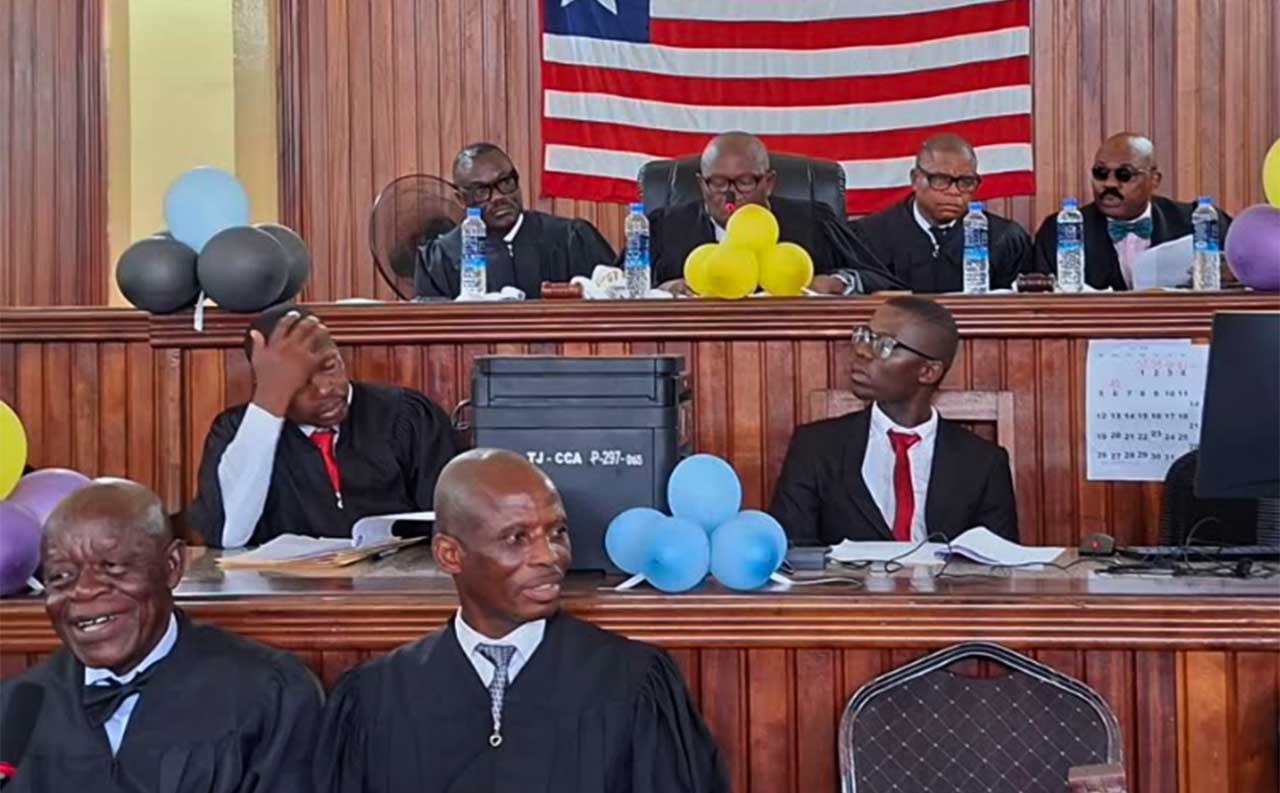
Delivering the formal charge at the Temple of Justice in Monrovia, Judge Konton emphasized that the integrity of the nation’s justice system rests heavily on the honesty, independence, and discipline of the men and women selected to sit as grand and petit jurors.
His comments come at a time of intense public scrutiny over the role of jurors in major criminal cases, especially following last week’s verdict in the US$6.2 million corruption trial involving former Finance Minister Samuel D. Tweah and four other former officials. Tweah and Former Comptroller General of the Financial Intelligence Agency (FIA), Moses Cooper, were acquitted, while three co-defendants were found guilty on some charges.
The mixed verdict sparked debates across social media and in communities around Monrovia, with some individuals openly questioning whether the jurors in that case were influenced or compromised, a speculation the courts have not confirmed and for which no evidence has been presented. During the opening ceremony, Judge Konton cautioned jurors not to be carried away by little or nothing.
In what many observers interpreted as a timely reminder and possibly a subtle response to the current public mood, Judge Konton warned all prospective jurors empaneled for this term to guard their integrity. “Do not allow yourselves to be swayed out of focus by influence or for little or nothing,” he declared.
He reminded grand jurors that Chapters 15 and 19 of Liberia’s Criminal Procedure Law strictly outline their functions: examining evidence presented by prosecutors, listening attentively to witnesses, and issuing True Bills or Bills of Ignoramus based solely on conscience and the weight of the evidence.
“For the next 21 working days, your duty is to listen with patience, examine with meticulousness, and act with the dictates of your conscience,” he said. “Your integrity as individuals and as a body will be on the line.”
Judge Konton also cautioned petit jurors, who will sit on criminal trials throughout the term, to show equal diligence. “You are here to help us dispense justice impartially,” he said. “You must carefully scrutinize every piece of evidence, testimonial, documentary, or material to determine guilt, innocence, or whether the case should end in a hung verdict.” Both groups of jurors, he added, must remain free from inducements or intimidation and resist any attempt to manipulate the outcome of cases.
While Judge Konton made no direct reference to the recent corruption trial, many courtroom spectators and legal observers quietly suggested that the warning may reflect the heated public reaction to that verdict.
Following the acquittal of Tweah and Cooper, segments of the public accused the jurors of being bribed or improperly influenced, claims that remain unproven but have dominated public discourse. Some questioned how two defendants walked free while others were convicted in the same case.
Judge Konton’s caution, though standard in jurors’ charges, carried sharper undertones this term, leading many to wonder whether the judiciary is sending an early message as it works to restore public confidence.
With several high-profile corruption and violent crime cases on the docket for the May Term, today’s warning appears designed to preempt doubts and strengthen the credibility of verdicts to come. Judge Konton ended his charge with a reminder that justice in Liberia depends on the jurors’ willingness to uphold the law without fear or favor.
As the May Term begins, all eyes will remain on the courts and particularly on the jurors to see whether today’s strongly worded caution will translate into decisions that the public views as fair, credible, and uncompromised.