President Joseph N. Boakai has warned against the mismanagement of Liberia’s mineral wealth, declaring that his administration will no longer tolerate opaque practices and weak oversight in the sector.
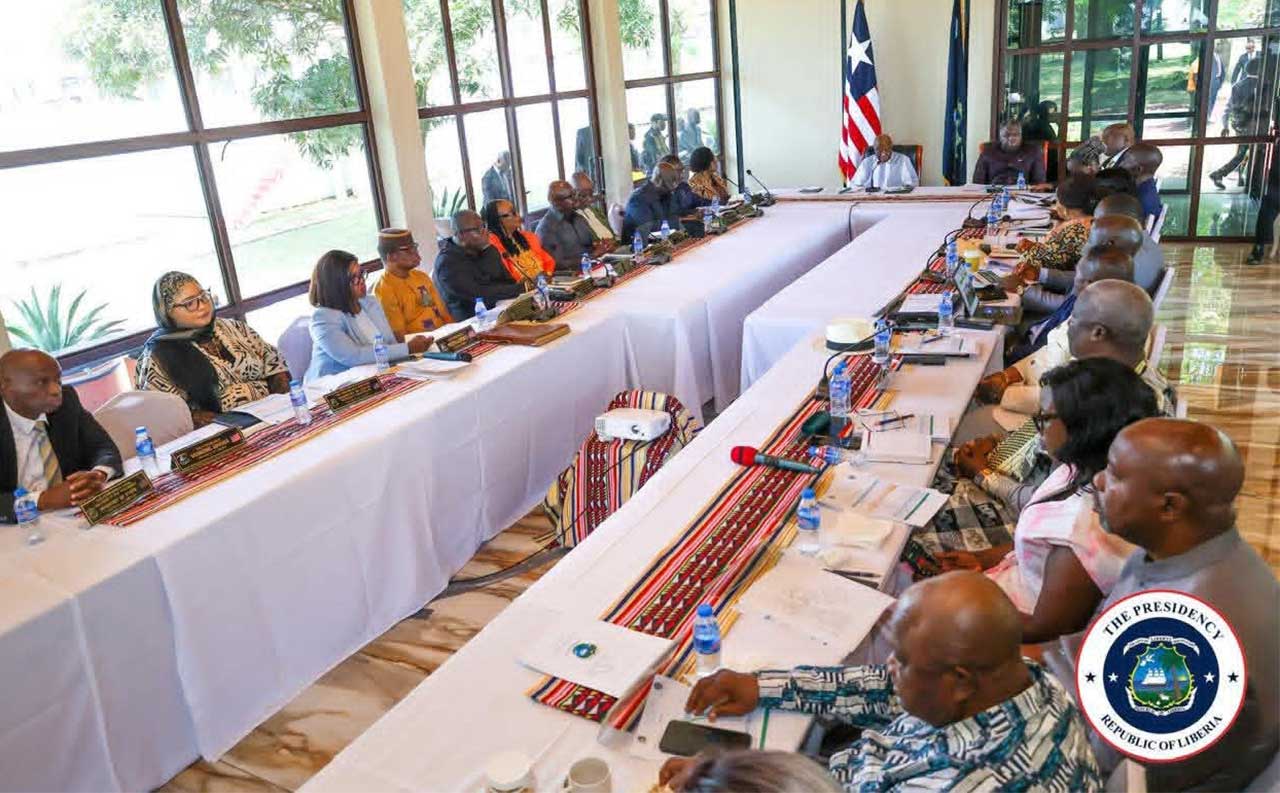
Speaking on Thursday, March 26, 2026, during his third Cabinet meeting at the Executive Mansion Tea House, the President shifted focus to Liberia’s vast mineral resources, stressing that the country must begin to realize returns from decades of concessions and extraction activities.
“We have a responsibility to protect what is here now. Liberia’s natural resources must directly improve the lives of its people. We have to make sure that the benefit will trickle down to our people, because when they are all depleted, there is nothing else to show,” he added.
However, the President acknowledged that many of the country’s mining agreements predate his administration but insisted that current leaders must ensure better outcomes. He spoke against a system where the state lacks full knowledge of what is being extracted, raising concerns about monitoring and transparency.
“It is very difficult to keep up with investors who come through mining. You don’t even know what they are mining… when they go down there, you’re not there,” Boakai stated. The Liberian leader underscored the urgent need to train more Liberians in technical fields related to the mineral sector, arguing that local expertise is key to proper oversight and national benefit.
During the gathering, he highlighted the widespread issue of illegal and informal mining, particularly in rural communities, where unregulated activities continue to deprive the country of revenue.
Boakai: “You go into our bushes; there are a lot of people… taking out our gold. All of that put together, what do we get out of it?” The President further pointed to long-standing structural challenges, including weak infrastructure commitments in concession agreements and poor enforcement at the local level.
Moreover, he called on local authorities to assume greater responsibility, as some officials are complicit in illegal mining. At the policy level, Boakai urged Cabinet ministers to adopt global best practices in resource management and to move swiftly in concluding agreements that can create jobs and stimulate economic growth.
“In this third year of our leadership, we should create some jobs; there is growing frustration among young people awaiting employment opportunities,” the President said. President Boakai also linked effective mineral governance to broader national development goals, including revenue generation, infrastructure, education, and public services.
He called for improved fiscal discipline across government institutions, including the payment of utility bills, as part of a wider push to strengthen domestic resource mobilization. Reaffirming his administration’s commitment, Boakai declared that Liberia must break from past patterns and ensure that its mineral wealth serves as a foundation for sustainable development rather than a missed opportunity.
“The policies we frame and put together will have to make this country move,” he said. The Cabinet meeting, held under the theme “Positioning Liberia for Mineral-Led Development and National Prosperity,” is expected to shape new strategies to reform the country’s mineral sector and maximize its contribution to national growth.