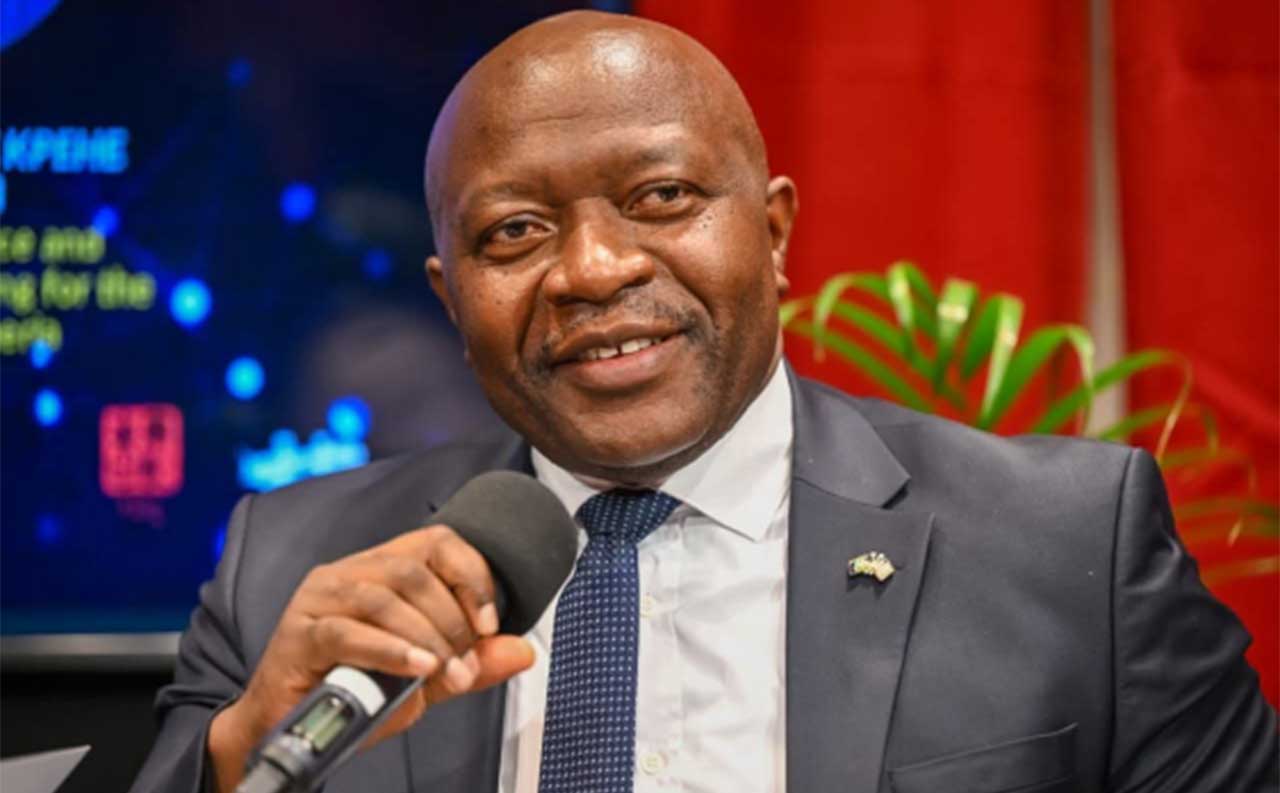
Liberia’s Minister of Finance and Development Planning, Augustine Kpehe Ngafuan, has mounted a robust defense of President Joseph Nyuma Boakai’s administration amid criticism from the opposition bloc, insisting that the government remains firmly focused on delivering tangible economic and infrastructure gains.
Speaking as a guest lecturer on the CLASS Reloaded show, Minister Ngafuan described President Boakai as an energetic and forward-thinking leader, deeply engaged in what he termed “big and consequential plans” aimed at correcting decades of structural underdevelopment. “President Boakai is animated. He is always thinking, thinking deeply about what Liberia should become,” Ngafuan said, adding that the administration is consciously building on historical lessons rather than repeating past policy failures.
At the center of the government’s agenda, according to Ngafuan, is an unprecedented national road connectivity drive, one that seeks to address a long-standing paradox in Liberia’s development trajectory. “Liberia is a small country, yet we are still not fully connected by roads,” the Finance Minister observed, describing the situation as a development anomaly more than 177 years after independence in 1847. Ngafuan revealed that under the Unity Party–led administration, Liberia is on course to witness a historic first: the construction of a continuous paved road corridor stretching from Monrovia to Harper in Maryland County, as well as a second corridor linking Gbarnga in Bong County to Mendicorma in Lofa County.
If completed as planned, the projects would mark the first time in Liberia’s history that the country’s capital is fully connected by paved road to its southeastern extremity, an achievement with major implications for trade, mobility, national integration, and post-war economic recovery. Infrastructure experts note that Liberia’s paved road network has historically covered only a fraction of the country’s nearly 11,000-kilometer road system, with most rural communities remaining isolated during the rainy season.
Turning to macroeconomic performance, Ngafuan acknowledged that the government experienced fiscal turbulence during its first year in office, requiring contingency measures. However, he said the current national budget reflects greater stability and predictability adding, “This year, there is more certainty. We are in better shape,” he said, noting that the government has secured upfront funding to improve budget execution and reduce delays in public spending.
He urged heads of ministries, agencies, and commissions to align closely with procurement teams and administrative deputies to ensure readiness for timely project implementation. According to the Finance Ministry, improved revenue expenditure coordination has helped prevent budget shortfalls, while banking sector indicators such as increased deposit rates point to growing confidence in the economy.
Ngafuan also disclosed that the government has begun a careful reversal of salary harmonization affecting key integrity institutions, including the Liberia Anti-Corruption Commission (LACC), the General Auditing Commission (GAC), and the judiciary, including Supreme Court and judges respectively. The move, he said, is intended to strengthen institutional independence while being implemented “gingerly” to avoid fiscal shock.
In addition, workers at the Liberia Drug Enforcement Agency (LDEA) are expected to receive salary increases this year, a move aimed at boosting morale and operational effectiveness in the fight against narcotics and transnational crime. On job creation, Ngafuan cited data from the Ministry of Commerce indicating that more than 8,000 new businesses were registered in 2025, a figure he said reflects renewed entrepreneurial activity and private-sector confidence.
While he stopped short of providing precise employment figures, analysts say each registered business potentially represents multiple jobs in a country where unemployment and underemployment especially among youth, remain persistent challenges. “International trade is increasing, deposit rates are up, and there is no budget shortfall,” Ngafuan said.
“We haven’t reached where we want to be, but we are certainly not where we used to be”, he re-emphasized. Addressing political criticism, Ngafuan said the government does not view opposition attacks as distractions but as pressure points that can sharpen performance. “Sometimes, the opposition puts fire under our rocket and that helps,” he said. “We are not arrogant. When we slip, we rise, we learn, we implement, and we execute,” he added.
To improve internal efficiency, the Ministry of Finance has deployed suggestion boxes within and around its premises to capture feedback from staff and the public, an initiative aimed at tracking bottlenecks and accelerating service delivery. Ngafuan also warned that President Boakai has little tolerance for unnecessary bureaucratic delays, stressing that officials who undermine execution timelines risk decisive action.
“When there is a real cash crunch, mandated delays can happen. But when there is no reason for delay and people still delay, that is unacceptable,” he said. “At that point, they are not delaying the minister, they are delaying the President”, and we will act”, he maintained. As Liberia continues its post-war reconstruction and reform journey, Boakai’s administration is betting heavily on infrastructure expansion, fiscal discipline, and institutional accountability to unlock long-term growth. “Although we gained independence in 1847,” Ngafuan reflected, “we must sprint now. History should not anger us; it should motivate us to do better for our people.”