Business tycoon, Upjit Singh Sachdeva has given the Suehn Legacy Circle three million Liberian dollars worth of building materials to begin the reconstruction project of the historic Suehn Industrial Academy. The structure has been lying in ruins since the end of the country’s 14 years of civil war.
The Academy, financed by entrepreneurs Solomon Hill and June Moore of the Hill and Moore Trading Company, was one of the cornerstones of Liberia’s education system, educating some of the country’s most prominent leaders, including former Senate President Pro Tempore Charles Walker Brumskine and former Chief Justice Frances Johnson-Morris, among others.
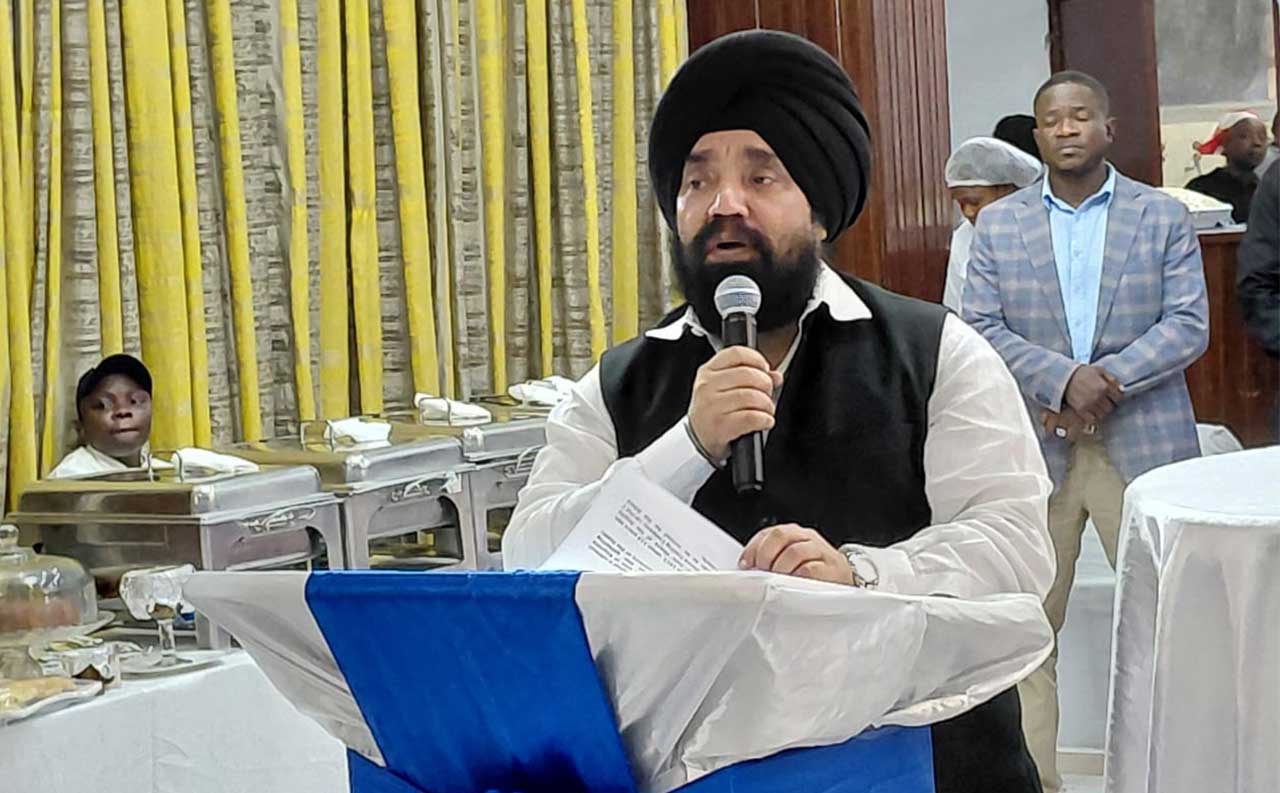
The donation by Mr. Jeety, which was the highest fund the Suehn Legacy Circle raised. In his keynote address at Suehn Legacy Circle Fundraising Gala held at the Monrovia City Hall, Jeety said his support for the reconstruction of Suehn Industrial Academy is driven by commitment and belief that a better Liberia is possible, with education holding the key to unlocking the country’s potential. “The greatest privilege of life is the transformation we have on countless lives that may never know our names yet will live better because of the impact we had on them,” Jeety added.
According to Jeety, while he is an “Indian by passport,” he is a Liberian by heart, noting that the reconstruction of the Suehn Academy means a lot to him as it carries a legacy that needs to be revived for future generations of Liberia. Jeety said the fall of Suehn Industrial Academy means “we lose more than physical structures; we lose memory, continuity, and the pathways that connect one generation to the next.”
“On this note, I am committing, on behalf of myself, my life partner and Jeety Conglomerate, three million Liberian dollars in building materials to kick-start the long-awaited reconstruction of the Suehn Industrial Academy and this commitment is rooted in a belief that a better Liberia is possible, and that education is the key to unlocking Liberia’s huge potential. The task of reconstruction is not a sentimental exercise but a responsibility, and an obligation to the future we cannot afford to miss,” Jeety said.
Mr. Jeety further noted that the greatest privilege of his life is the transformation he has on countless lives that may never know his name, “yet will live better because of the impact we had on them.” Jeety challenged the Suehn Legacy Circle to do whatever they can to ensure that, by 2026, practical gains can be seen in the reconstruction of the Suehn Industrial Academy, with ribbons being cut to some buildings.
“It is my hope that, one year from now, we will be in Suehn cutting the ribbon to a new Suehn Industrial Academy,” Mr. Jeety added. “This transformation is possible, and it is not fantasy; this is something we can achieve together.” Jeety noted that in his humanitarian endeavors, whether the hot-cooked meal feeding program or healthcare outreach assistance, he does so because it is God’s work, not for any glorification, but to manifest the blessings of God in his life.
He noted that the feeding program, which started as a once-a-week initiative in 2017, has since March 2020 evolved into a daily program operating seven days a week, feeding over 2,200 people in Monrovia and its surrounding communities, and Weala, Margibi County. “So, no matter what people say, or the negative criticism spread on social media just because I am an Indian, I will never stop doing God’s work. The criticism motivates me even more to continue,” Mr. Jeety added.
“As a Sikh, I am guided by the principles of Kirat Karō (work hard to earn an honest living), Nām Japō (meditate on His Name), and Vand Chhakō (share your earnings and food with the needy). These teachings light the path of humanity within me, serving as a guide toward a life rooted in truth, equality, and compassion,” he noted. Additionally, the Minister of Foreign Affairs, Sara Beysolow-Nyanti, pledged US$5,000 to the restoration effort. The restoration effort of the Suehn Academy aims to return the school to operational status, rather than preserving it merely as a historical monument.
Organizers believe the school could once again provide character-based education grounded in discipline and compassion for future generations of Liberians to come. In remarks earlier, LeRoy Boikai of Suehn Legacy Circle, noted that Suehn’s history is not one of private memory but national inheritance, deserving national attention. Dr. Boikai added that Liberia stands at a moment when collaboration, shared responsibility, and long-term investment in education are essential, noting that rebuilding the Suehn Industrial Academy offers a strategic opportunity to restore what already carries trust, identity, and legacy.
The gala ended with tributes paid to individuals whose lives embodied Suehn Industrial Academy’s enduring values. Those honored in memoriam were Mrs. Victoria A. Tolbert, celebrated for strengthening Christian education and Baptist schools across Liberia; Rev. Dr. E. Torma Reeves, a pillar of Baptist leadership and historic Providence Baptist Church; and Mrs. Dinah Brown-Barr, a trailblazing home economist whose work advanced family life and nutrition. Others were Rev. Gbessi W.F. Kemah, remembered for compassionate ministry at Suehn Mission; and Hon. Ballah K.M. Davis, a respected educator and statesman instrumental in Suehn’s later years. The honorees also included the late Mrs. Agnes Nebo Von Ballmoos, recognized for preserving Suehn’s legacy nationally and internationally, and Cllr. Charles W. Brumskine, cited for shaping Liberia’s modern democratic discourse.